
Remote consultations are defined as healthcare visits conducted through digital platforms such as video calls, phone appointments, or secure messaging, giving patients direct access to licensed clinicians without leaving home. The case for why use remote consultations comes down to three measurable advantages: reduced travel, shorter appointment times, and broader access to care. A standard telehealth visit lasts 15–20 minutes, compared to the longer time blocks required for in-person appointments that include commuting and waiting rooms. Telehealth, the recognized industry term for this model, has moved from a pandemic-era workaround to a mainstream care delivery method backed by clinical research. Platforms like Renewmd now offer fully integrated programs where patients receive provider consultations, lab testing, and medication delivery entirely through digital channels.
What are the benefits of remote consultations vs. in-person visits?
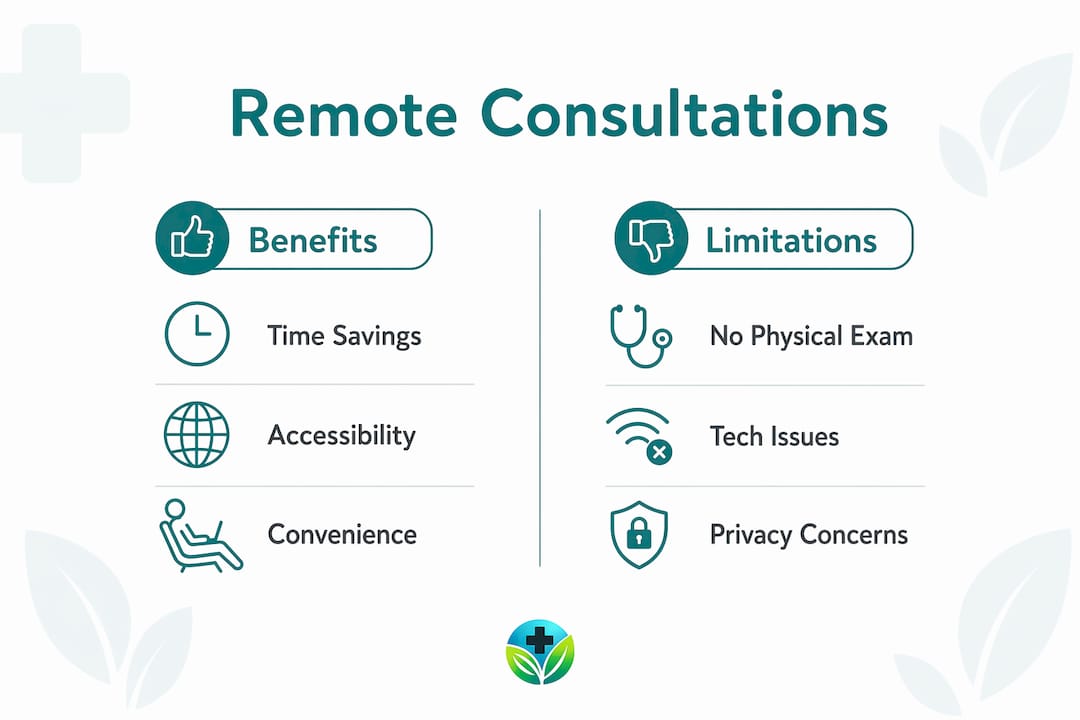
Remote consultations reduce the total time a patient spends on a single healthcare interaction. Telehealth appointments run 30–40% shorter than equivalent in-person visits, which translates directly into better scheduling efficiency for both patients and providers. For someone managing a chronic condition with monthly follow-ups, that time savings compounds quickly over a year.
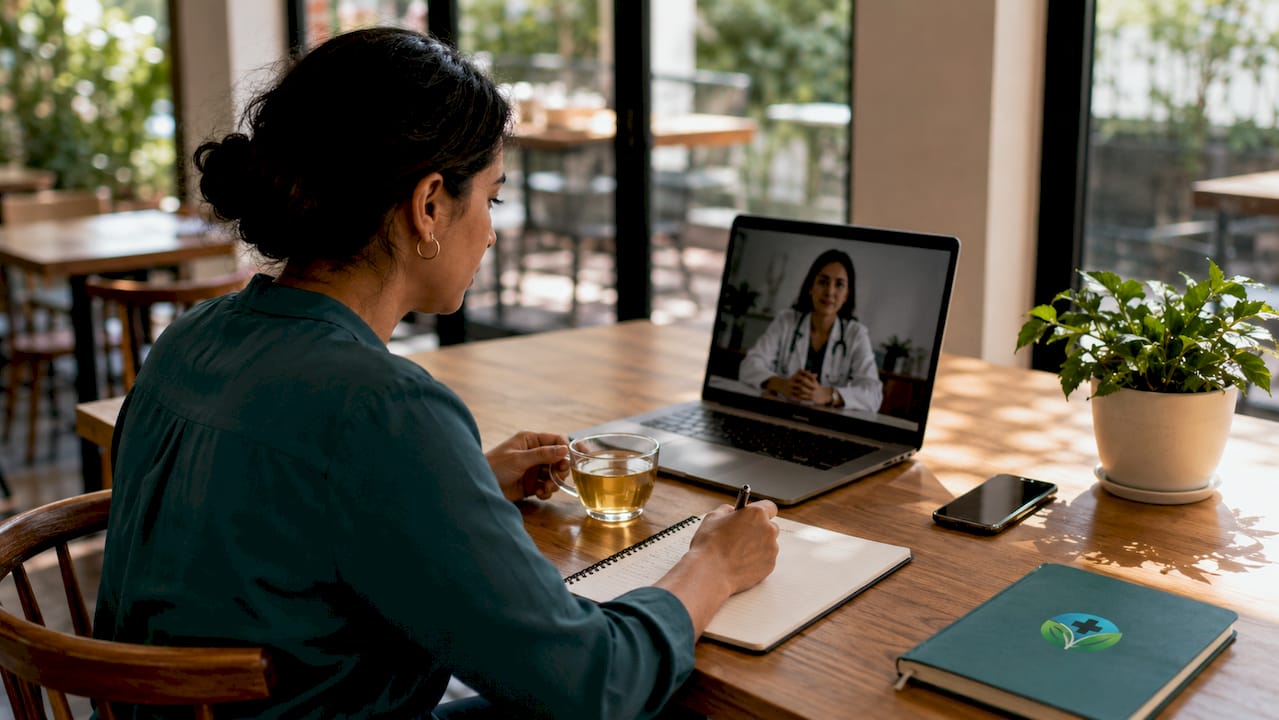
Access is the other major advantage. Remote care removes geographic, logistical, and financial barriers that prevent rural patients, people with disabilities, and those with caregiving responsibilities from attending in-person appointments. A parent caring for a young child or an elderly relative can complete a medical visit during a lunch break without arranging transportation or childcare. That flexibility changes who actually receives consistent care.
The clinical benefits extend beyond convenience:
- Reduced infection exposure. Waiting rooms concentrate patients with active illnesses. Remote visits eliminate that risk entirely.
- Lower no-show rates. Patients are more likely to attend appointments they can join from home.
- Cost savings. Patients avoid transportation costs, parking fees, and time away from work.
- Continuity of care. Follow-up visits become easier to schedule, which supports long-term treatment adherence.
- Broader specialist access. Patients in underserved areas can reach specialists who are not available locally.
Pro Tip: AI-powered scheduling systems improve telehealth booking accuracy from 78% to 94% and cut no-show rates from 25% to 14%. If your provider offers an automated booking tool, use it to select appointment types that match your clinical need.
Is remote consultation effective and safe for medical care?
Remote consultations are clinically non-inferior to face-to-face visits across a wide range of conditions. A large-scale review of over 200,000 specialty teleconsultations confirmed improved equity and faster diagnosis compared to traditional referral pathways. That finding matters because it shifts the conversation from "is telehealth good enough?" to "when is telehealth the right choice?"
Several clinical areas are well suited to remote care:
- Chronic disease management. Conditions like hypertension, type 2 diabetes, and obesity require regular monitoring and medication adjustments. These visits rarely need a physical exam.
- Mental health. Therapy and psychiatric medication reviews translate directly to video format. Research consistently shows patient satisfaction is high in this category.
- Dermatology. High-resolution photos and video allow clinicians to assess many skin conditions accurately.
- Weight management. Programs using GLP-1 receptor agonists such as Semaglutide and Tirzepatide are well managed remotely, with lab results reviewed digitally and medications delivered by mail.
- Post-operative follow-up. Wound checks and recovery assessments often require only a visual inspection.
Clinical guidelines recommend telemedicine as a triage tool to determine whether home care is appropriate or whether an immediate in-person assessment is necessary.
Remote consultations do have clinical limits. Physical palpation, auscultation with a stethoscope, and hands-on neurological assessments cannot be replicated through a screen. Acute abdominal pain, chest pain with physical symptoms, and complex orthopedic evaluations require in-person examination. Licensed clinicians in telemedicine are trained to recognize these situations and escalate care appropriately. The model works best when patients and providers treat it as a complement to in-person care, not a complete replacement.
What are the challenges and limitations of remote consultations?
The absence of a physical exam is the most significant clinical limitation of telehealth. Patients report that the lack of hands-on care is a key limitation of remote visits, and that perception affects trust in the diagnosis. Providers must compensate through more detailed verbal histories and structured digital intake forms.
Technical barriers create a separate category of challenges. Patients with limited internet access, older devices, or low digital literacy face real obstacles to participation. These barriers are not evenly distributed. Lower-income patients and older adults are disproportionately affected, which creates an equity problem that telehealth platforms must actively address through phone-based alternatives and simplified interfaces.
Other challenges worth understanding:
- Reduced relational depth. Building patient-provider rapport through a screen takes longer than in person. This matters most for mental health and complex chronic care.
- Workflow disruption. Clinics integrating telehealth alongside in-person visits must manage two scheduling systems, which increases administrative complexity.
- Privacy concerns. Patients using shared home environments may not have a private space for sensitive conversations.
- Medication management. Some prescriptions require physical verification or in-person dispensing, which adds steps to the remote care process.
Pro Tip: Test your device and internet connection at least 5 minutes before your appointment. This single step reduces technical interruptions significantly and keeps the session focused on your health.
How to prepare for and schedule remote consultations effectively
Preparation determines the quality of a remote consultation more than most patients realize. A well-prepared patient gets more clinical value from a 15-minute video visit than an unprepared patient gets from a 30-minute one. The steps below apply to most telehealth platforms.
- Complete digital intake forms before the appointment. Pre-visit forms shift session focus entirely to your health rather than data entry. Fill them out the day before so your clinician arrives at the call with your history already reviewed.
- Test your technology. Check your camera, microphone, and internet connection. Use a wired connection if your Wi-Fi is unreliable.
- Choose the right appointment type. Use telehealth for follow-ups, medication reviews, and chronic condition check-ins. Schedule in-person visits for new symptoms that require physical examination.
- Prepare a symptom summary. Write down your current symptoms, any medications you are taking, and specific questions you want answered. Clinicians can address focused questions more efficiently than open-ended ones.
- Find a private, well-lit space. Good lighting helps your clinician see your face clearly. Privacy allows you to speak openly about sensitive health topics.
- Have your pharmacy information ready. If a prescription is likely, knowing your preferred pharmacy or mail-order service saves time at the end of the call.
For patients managing weight-related conditions, resources like this telehealth preparation guide offer condition-specific checklists that make visits more productive. Caregivers supporting patients remotely can also benefit from structured preparation tools, such as a caregiver support checklist designed for remote healthcare settings.
Key Takeaways
Remote consultations are clinically effective, time-efficient, and most valuable when used for follow-up care, chronic disease management, and conditions that do not require physical examination.
| Point | Details |
|---|---|
| Time efficiency | Telehealth visits run 30–40% shorter than in-person appointments, saving patient and provider time. |
| Broader access | Remote care removes geographic and logistical barriers for rural, disabled, and caregiving patients. |
| Clinical effectiveness | Over 200,000 specialty teleconsultations confirmed non-inferiority to in-person visits in many contexts. |
| Preparation matters | Completing digital intake forms and testing technology before the call improves clinical outcomes. |
| Know the limits | Physical exams cannot be replicated remotely; escalation to in-person care is necessary for acute conditions. |
Remote consultations work best when you treat them as a tool, not a default
I have watched telehealth go from a niche workaround to a standard care option, and the patients who get the most out of it share one trait: they are selective about when they use it. The reflex to book a remote visit for every health concern misses the point. A skin rash, a medication refill, a weight management check-in? Remote is the right call. Chest pain, a new lump, or a complex neurological symptom? That needs hands on a body.
What I find genuinely underappreciated is how much the preparation gap affects outcomes. Two patients can book the same 20-minute slot with the same clinician and have completely different experiences based on whether they filled out their intake form and tested their camera. The technology is not the variable. The patient's readiness is.
The equity argument for telehealth is also stronger than most people acknowledge. For a patient in a rural county with one primary care physician and a two-hour drive to the nearest specialist, a telehealth access program is not a convenience. It is the difference between receiving care and going without. That context should inform how we talk about the limitations of remote consultations. The absence of a physical exam is a real trade-off. But for many patients, the alternative is no exam at all.
The future of telehealth is not fully remote or fully in-person. It is a structured hybrid where digital visits handle the high-frequency, low-complexity interactions and in-person visits are reserved for the cases that genuinely require them. That model is better for patients, better for clinicians, and better for healthcare systems managing capacity.
— Raymond
Renewmd's approach to remote medical care
Renewmd offers a fully digital care model built around medically supervised weight management. Licensed U.S. clinicians conduct virtual weight care consultations that include clinical intake, lab review, and GLP-1 medication prescribing through a single platform. Medications such as Semaglutide and Tirzepatide are delivered directly to patients, with no in-office visits required. The process is transparent, with no hidden fees and no complicated billing. For patients who want evidence-based weight management without the logistical barriers of traditional clinic visits, Renewmd's medical weight care program provides a structured, clinician-led path forward.
FAQ
What conditions are best suited for remote consultations?
Chronic disease management, mental health, dermatology, and medication follow-ups are the strongest use cases for telehealth. Conditions requiring physical examination, such as acute abdominal pain or orthopedic injuries, require in-person care.
How long does a typical remote consultation last?
A standard telehealth consultation lasts 15–20 minutes, with a short buffer built in for technical setup. This is 30–40% shorter than an equivalent in-person appointment.
Is remote consultation as effective as seeing a doctor in person?
Research confirms that teleconsultations are non-inferior to in-person visits across many clinical contexts. Effectiveness depends on the condition being treated and the quality of patient preparation.
How do I schedule a remote consultation?
Most telehealth platforms offer online booking through patient portals or apps. AI-powered scheduling tools now improve booking accuracy and reduce scheduling errors, making the process faster and more reliable.
What should I do if my remote consultation reveals I need in-person care?
Clinical guidelines recommend that telemedicine function as a triage tool. If your clinician determines that a physical exam is necessary, they will refer you to an appropriate in-person provider and document the clinical reasoning for escalation.