

Many adults with a BMI of 27 or higher leave telehealth appointments feeling uncertain about their next steps. The visit felt rushed, the provider moved quickly, and the most pressing questions never got answered. This guide addresses that frustration directly. With the right preparation, every virtual appointment becomes a focused, productive session where you leave with a clear plan, informed decisions about medications like GLP-1 receptor agonists (drugs that mimic natural gut hormones to reduce appetite and support weight loss), and a realistic path toward measurable progress.
Table of Contents
- Checklist: What to prepare before your telehealth visit
- Step-by-step guide: Making the most of your telehealth appointment
- Insurance, coverage, and medication eligibility: What you must confirm
- Troubleshooting and maximizing results: Common pitfalls and expert tips
- Our perspective: Why preparation makes all the difference in telehealth weight care
- Next steps: Explore dedicated telehealth weight care programs
- Frequently asked questions
Key Takeaways
| Point | Details |
|---|---|
| Clear checklist matters | Having a complete prep list leads to more productive telehealth visits and better outcomes. |
| Prepare data and goals | Bringing lifestyle logs and questions maximizes your time with the provider. |
| Check coverage early | Verifying insurance avoids unexpected costs and ensures seamless access to care. |
| Avoid common pitfalls | Testing technology and focusing on self-monitoring prevents disappointments and missed opportunities. |
| Preparation drives results | Thorough prep is proven to boost engagement and support lasting weight management success. |
Checklist: What to prepare before your telehealth visit
Now that we've set the stage, let's focus on what you actually need to prepare before your telehealth visit.
The single biggest difference between a productive telehealth session and a frustrating one comes down to what you bring to the appointment. Providers typically have a limited window, and walking in without organized information means relying on your memory under pressure. That rarely goes well.
Technology setup
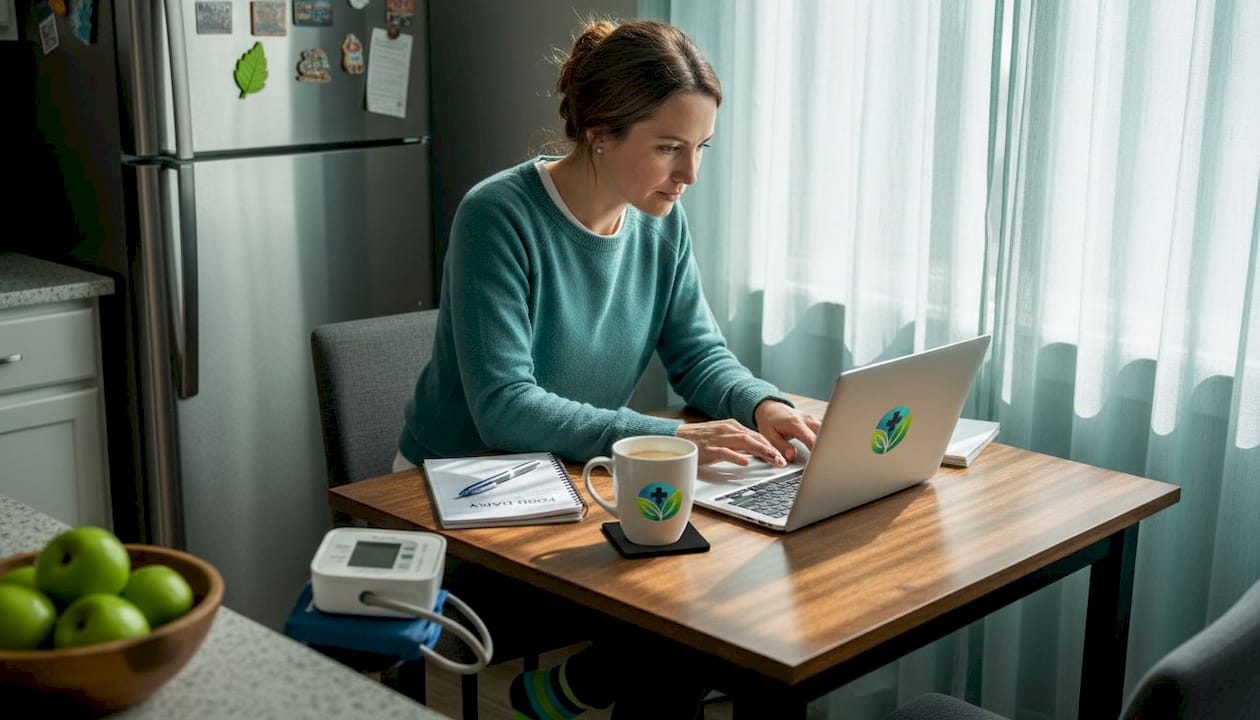
Before anything else, confirm that your setup is ready. Ensure a stable internet connection, a working camera, and a functioning microphone at least 24 hours before your visit. Log into the telehealth platform early to check for software updates, and find a quiet, private room where you won't be interrupted. A well-lit space where your face is clearly visible helps the provider assess you more accurately.
Lifestyle data and health tracking
Bringing raw data is far more useful than trying to summarize from memory. A 3 to 5 day food diary, a record of your physical activity, your typical sleep schedule, and notes on stress triggers give your provider specific, actionable information. Write down any emotional eating patterns, late-night snacking habits, or barriers to exercise you've noticed.
Here's a quick comparison of being prepared versus unprepared going into your visit:
| Preparation area | Prepared | Unprepared |
|---|---|---|
| Food tracking | 3-5 day diary ready | "I eat pretty well, I think" |
| Sleep log | Specific hours and quality noted | Estimated guess |
| Activity record | Steps, workouts, duration logged | Vague recall |
| Medication list | Written with dosages | Mentioned from memory |
| Questions | Written list, prioritized | Thought of on the spot |
| Insurance info | Card and coverage details ready | Unknown or missing |
The contrast is stark. Providers can only work with the information you give them, and precise data leads to precise recommendations.
What to bring, at a glance
- Your current medication list with dosages and any known allergies
- Notes on recent weight changes, including dates and context
- Your food diary and activity log for the past three to five days
- Sleep schedule and any sleep disturbances you've noticed
- Stress patterns or major life events affecting your weight
- Your insurance card, member ID, and any prior authorization details
- A written list of your questions, ranked by priority
If you're unsure whether your BMI qualifies you for GLP-1 therapy, review the GLP-1 BMI eligibility criteria before your appointment. Having that context going in helps you ask the right questions.
Pro Tip: Log into your telehealth platform the evening before your appointment and run a full audio/video test. If anything fails, you'll have time to troubleshoot without missing your visit window.
Step-by-step guide: Making the most of your telehealth appointment
With the essentials in hand, it's time to walk through the actual telehealth visit and ensure you get the answers and direction you need.
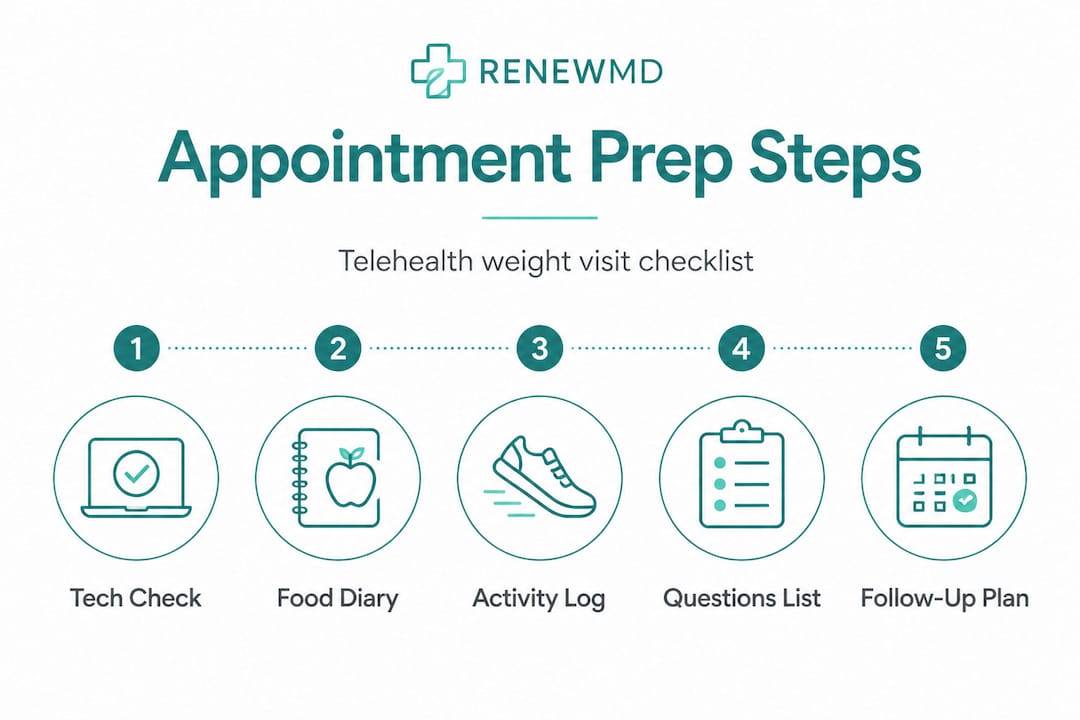
Knowing what to do during the visit is just as important as preparation beforehand. Telehealth appointments for weight management typically run 15 to 45 minutes, and that window closes fast. Here's how to use it well.
1. Start with your most important concern
Open the visit by stating your primary goal clearly. Something like: "I want to understand whether I'm eligible for GLP-1 medications, and I'd like to review my recent weight data." This signals to the provider what to prioritize from the start.
2. Share your tracked data right away
Don't wait to be asked. Offer your food diary, activity records, and sleep notes early in the conversation. Providers who have specific numbers can give specific feedback. Vague descriptions lead to vague advice.
3. Ask about GLP-1 eligibility if your BMI is 27 or higher
If you have a BMI of 27 or more alongside a weight-related condition such as hypertension, type 2 diabetes, or sleep apnea, ask directly about GLP-1 eligibility. GLP-1 receptor agonists like Semaglutide and Tirzepatide have demonstrated significant clinical weight loss results, and many patients don't realize they may qualify.
4. Write down your goals, questions, and any symptoms beforehand
Preparing a written list of goals, specific questions about GLP-1 eligibility, metabolism improvement, follow-up frequency, and current symptoms ensures nothing gets skipped. Your questions are your agenda. Stick to it.
5. Take notes during the appointment
You will not remember everything the provider says. Write it down as you go, or ask someone to help.
6. Confirm your follow-up plan before ending
Before the call ends, ask: "What are my next steps? When should I follow up? What changes should I make before then?" Leaving without a clear plan is one of the most common missed opportunities in telehealth weight care.
7. Request educational resources
Ask for written information about any medications or lifestyle changes discussed. Well-structured patient education for GLP-1 results significantly improves follow-through and outcomes over time.
"The best telehealth visit is one where the patient arrives knowing what they want to accomplish and leaves knowing exactly what to do next. That clarity rarely happens by accident."
Pro Tip: Invite a trusted family member or friend to sit with you during the visit. A second person can take notes, remember details you might miss, and help you stay focused on your most important questions. This is especially useful if you're discussing complex medication decisions.
If you're still evaluating which program fits your needs, our guide on choosing a telehealth weight loss program walks through the key factors to consider.
Insurance, coverage, and medication eligibility: What you must confirm
Once you've tackled the visit itself, understanding insurance and eligibility is a major step for seamless care.
Few things derail a weight management plan faster than unexpected billing surprises. Verifying your coverage before the appointment removes that risk and lets you focus entirely on your health during the visit.
What to confirm with your insurer before the appointment
- Whether telehealth visits for weight management are covered
- Whether your plan covers GLP-1 medications like Semaglutide or Tirzepatide
- What labs are covered and how frequently
- Whether prior authorization is required for weight loss medications
- What your out-of-pocket costs look like for each service
Adults with a BMI of 27 or higher who also have at least one weight-related health condition are eligible to discuss GLP-1 receptor agonist therapy with their provider. Knowing this going in means you can ask the right coverage questions proactively.
Key data point worth knowing
| Treatment approach | Outcome data |
|---|---|
| Nurse-led telehealth intervention | Average 2.6 kg weight loss |
| Combined medication and lifestyle support | Significantly improved BMI outcomes |
| Behavioral health screening integrated | Improved adherence and long-term retention |
| App-only programs | Engagement declines after 3 to 6 months |
Research on combined medication and lifestyle programs consistently shows that patients who integrate behavioral health screening into their care experience better long-term adherence. It's not just about the medication. It's about building a structure that supports you through the process.
Statistic callout: Nurse-led telehealth programs for weight care produce measurable clinical outcomes, averaging a 2.6 kg loss in structured interventions. That number may seem modest, but it reflects medically supervised care without in-person visits, which is a meaningful benchmark for telehealth credibility.
If you want to understand the regulatory landscape and compliance standards that govern telehealth weight care, the telehealth compliance for BMI 27+ overview is a helpful resource. You can also check whether your state's licensing rules affect access through the state telehealth access page.
Troubleshooting and maximizing results: Common pitfalls and expert tips
Now that insurance and eligibility are squared away, let's deal with common stumbling blocks and learn how to stay on track.
Even well-prepared patients hit roadblocks. The good news is that most common telehealth pitfalls are entirely avoidable with a few targeted habits.
The most frequent mistakes people make
- Joining the appointment late or with a technical issue that wastes the first five minutes
- Arriving without tracked data and trying to recall habits from memory
- Setting vague goals like "lose weight" instead of specific targets like "reduce BMI by 2 points in 90 days"
- Not asking follow-up questions when a recommendation is unclear
- Assuming the provider will remember details from the last visit without reviewing notes
The problem with app-only engagement
This is a subtle but important point. App-only telehealth programs fade in effectiveness after three to six months, based on findings from multiple meta-analyses. Engagement drops, check-ins become infrequent, and motivation stalls. Self-monitoring habits, combined with human-led provider contact, are what sustain progress past that threshold.
The fix is not to abandon digital tools. It's to use them as part of a broader system that includes regular provider contact, behavioral health check-ins, and ongoing lifestyle tracking. Digital apps work best as data capture tools, not as the entire program.
Staying accountable post-visit
- Set a calendar reminder to complete your food diary for the next three days
- Schedule your follow-up appointment before you close the app
- Review your notes from the visit within 24 hours and act on the first recommendation immediately
- Track your stress triggers weekly, not just when you notice them
Pro Tip: Review your app engagement every two weeks. If you're logging in less than three times per week, treat that as an early warning sign and reach out to your provider before motivation fully drops. Catching disengagement early is far easier than rebuilding it from scratch.
For a deeper look at the research supporting these approaches, the evidence-based telehealth weight care review covers the most current clinical findings. You can also explore how all-inclusive telehealth weight management programs are structured to prevent exactly these drop-off patterns.
Stress is also a frequently underestimated factor in weight management. Chronic stress elevates cortisol, which promotes fat storage and appetite dysregulation. Addressing it directly through your provider, rather than hoping it resolves on its own, can meaningfully influence your outcomes. Learn more about stress reduction in telehealth programs that incorporate this into treatment.
Our perspective: Why preparation makes all the difference in telehealth weight care
With the practical how-tos covered, here's our candid take on why preparation is your strongest tool.
Most people approach a telehealth visit the same way they approach a routine errand. They show up, answer questions when asked, and wait for the provider to lead. That works fine for a sinus infection. It does not work for medically supervised weight management.
Weight care is a collaborative clinical process. Providers can only personalize your plan to the degree that you show up with personalized information. A rushed session built on vague recollections produces generic advice. A well-prepared session built on three days of food data, a sleep log, and specific questions produces a targeted plan. The difference in outcomes over six months is not marginal. It is significant.
There's also a deeper issue. Many adults with BMI 27 or higher have seen multiple providers over the years, received similar advice each time, and walked away with the same low-grade frustration. The assumption is that the provider didn't do enough. But often, the visit simply didn't have the raw material to work with. Preparation is what transforms a generic appointment into something clinically useful.
The research trend supports this view. Self-monitoring combined with human provider contact sustains long-term engagement in ways that technology alone cannot. Apps capture data. Providers interpret it. Your preparation connects the two. Understanding the full picture of modern telehealth weight management makes clear why these elements work together rather than in isolation.
Preparation is not just logistics. It is a signal to your provider that you are engaged, ready to act on recommendations, and invested in the process. That changes the dynamic of the visit in ways that are hard to quantify but easy to feel.
Next steps: Explore dedicated telehealth weight care programs
If you're ready to take your preparation further and see measurable results, here's where to find advanced tools and expert support.
RenewMD.clinic offers structured resources and evidence-based programs designed specifically for adults seeking medically supervised weight care through telehealth. From tracking digital tools for weight care to fully integrated treatment plans covering provider consultations, lab testing, and medication delivery, the platform is built to support every step of your weight management journey. Whether you're exploring GLP-1 eligibility for the first time or looking for a more structured medical telehealth weight care program, RenewMD provides transparent, all-inclusive options without hidden fees. For patients with specific clinical profiles, including those managing GLP-1 for hypothalamic obesity, specialized guidance is available through licensed U.S. clinicians.
Frequently asked questions
What should I bring to my telehealth weight management appointment?
Bring your food diary, activity log, sleep schedule, list of medications, questions, and insurance information. Tracking these lifestyle habits in a 3 to 5 day window before your visit gives your provider the specific data needed for personalized recommendations.
How can I check if my insurance covers telehealth for weight care?
Contact your insurer directly and ask about telehealth visit coverage, weight loss medications, lab testing, and prior authorization requirements. Adults with BMI 27 or higher and at least one comorbidity may qualify for GLP-1 medication coverage, so ask specifically about that category.
What questions should I ask my telehealth provider about weight management?
Ask about GLP-1 eligibility, medication side effects, metabolic improvement strategies, behavioral health screening, and follow-up frequency. Writing these questions down before the visit ensures you cover every priority within your appointment window.
How do I avoid common mistakes with telehealth weight programs?
Prepare your tracked data, define specific goals, and schedule follow-ups before ending each visit. Self-monitoring with human provider contact sustains engagement well beyond the three to six month window where app-only programs typically lose effectiveness.