

Choosing a weight loss program feels overwhelming when the options range from fad diets to prescription medications, and you're not sure which approach is actually safe or effective for your body. If you have a BMI of 27 or higher and you've been searching for a solution that fits your schedule, your health history, and your need for real medical oversight, you're in the right place. This guide walks you through exactly what to look for in a telehealth-based, medically supervised weight loss program that uses GLP-1 receptor agonists, the class of medications that includes Semaglutide and Tirzepatide, so you can make a confident, informed decision.
Table of Contents
- Understanding medical weight loss and GLP-1 therapies
- Assessing your needs: Key criteria for choosing a program
- Step-by-step: How to select a telehealth GLP-1 weight loss program
- Verifying program quality and troubleshooting common mistakes
- Beyond selection: What most weight loss guides miss about medical programs
- Explore tailored GLP-1 telehealth options with RenewMD
- Frequently asked questions
Key Takeaways
| Point | Details |
|---|---|
| Importance of medical supervision | Medical oversight and lab work ensure weight loss programs are safe and effective. |
| GLP-1 therapies advantages | GLP-1 medications help regulate appetite and support measurable weight loss results. |
| Telehealth increases accessibility | Telehealth makes it easier for adults with a BMI of 27+ to access medically supervised weight care. |
| Verification is crucial | Check program credentials and quality testing to avoid common pitfalls. |
Understanding medical weight loss and GLP-1 therapies
Medical weight loss is not the same as following a commercial diet plan or downloading a calorie-counting app. It involves licensed clinicians who assess your health, prescribe medications when appropriate, order lab work, and monitor your progress over time. The goal is to treat excess weight as a medical condition, not a willpower problem, and to use evidence-based tools to produce meaningful, lasting results.
GLP-1 receptor agonists (glucagon-like peptide-1 receptor agonists) are a class of medications that mimic a hormone your gut naturally releases after eating. That hormone signals satiety to the brain, slows gastric emptying, and helps regulate blood sugar. When taken as a prescribed medication, GLP-1 therapies reduce appetite, lower caloric intake, and support fat loss in a way that lifestyle changes alone often cannot achieve for individuals with a higher BMI. GLP-1 therapies are medically proven to produce clinically significant weight loss, with trials showing average reductions of 10 to 22 percent of total body weight depending on the specific agent and dose.
Telehealth integrates seamlessly with these therapies because GLP-1 medications are self-administered injections or oral formulations that patients use at home. You don't need to visit a clinic every week to receive treatment. Instead, a licensed provider can conduct your intake, review your labs, and adjust your dosage entirely through a secure digital platform. This model removes geographic barriers, reduces time away from work, and makes consistent follow-up far more realistic for people with busy lives.
Here's how medical weight loss through telehealth compares to commercial alternatives:
| Feature | Medical telehealth program | Commercial diet program |
|---|---|---|
| Licensed provider oversight | Yes | Rarely |
| Prescription GLP-1 medications | Yes | No |
| Baseline and follow-up lab work | Yes | No |
| Personalized dosing adjustments | Yes | No |
| FDA-regulated pharmacy | Yes | Not applicable |
| Ongoing clinical monitoring | Yes | No |
The safety benefits of medical supervision are significant. A clinician can identify contraindications before prescribing, such as a personal or family history of medullary thyroid carcinoma, and can monitor for side effects like nausea, pancreatitis risk, or changes in kidney function. Commercial programs simply cannot provide this level of oversight.
Key advantages of medically supervised, telehealth-based GLP-1 programs include:
- Access to prescription-strength medications not available over the counter
- Lab-informed dosing decisions tailored to your metabolic profile
- Licensed provider accountability at every stage of treatment
- Medication delivered directly to your door from licensed U.S. pharmacies
- Structured follow-up to assess progress and manage side effects
Assessing your needs: Key criteria for choosing a program
Now that the basics are defined, it's time to consider how your unique needs shape program selection. Not every telehealth program is designed the same way, and the criteria that matter most will depend on your health history, your lifestyle, and your financial situation.
BMI and health history are the starting point. Most GLP-1 programs require a BMI of 27 or higher with at least one weight-related condition, such as hypertension or prediabetes, or a BMI of 30 or higher without additional conditions. Before any medication is prescribed, a reputable program will collect a thorough health history to screen for contraindications and identify any conditions that require special monitoring.

Lab work is non-negotiable. Baseline labs are essential for safe medical weight loss because they establish your metabolic starting point and rule out conditions that could make GLP-1 therapy unsafe or ineffective. Look for programs that include a comprehensive metabolic panel, thyroid function tests, lipid panel, and HbA1c as part of their standard intake process. Programs that skip labs to speed up enrollment are cutting corners that could affect your safety.
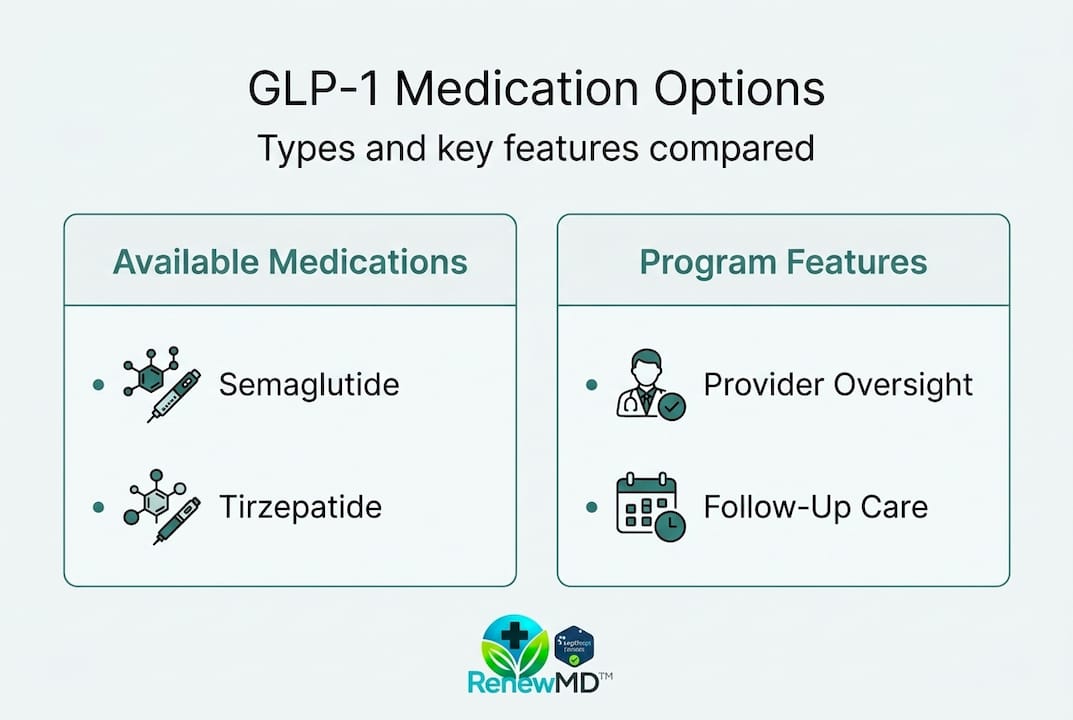
Medication options matter more than many people realize. Semaglutide and Tirzepatide have different pharmacological profiles and different tolerability patterns. Tirzepatide, for example, acts on both GLP-1 and GIP receptors, which may produce greater weight loss for some patients. A quality program will offer both options and allow your provider to guide the choice based on your individual response and history.
Insurance, FSA, and HSA coverage can significantly reduce out-of-pocket costs. Many patients are surprised to learn that FSA/HSA weight management expenses can be covered when the program involves licensed clinical oversight and a documented medical diagnosis. Ask any program you're considering whether they provide itemized receipts or documentation that supports FSA or HSA reimbursement.
Pro Tip: Before committing to any program, ask specifically whether the monthly fee includes provider consultations, lab work, and medication, or whether those are billed separately. All-inclusive pricing protects you from unexpected costs that can add up quickly.
Here's a quick checklist to evaluate any program you're considering:
- Does the program require a licensed U.S. provider to prescribe medication?
- Is baseline lab work included or clearly outlined in the intake process?
- Are both Semaglutide and Tirzepatide available as options?
- Does the program offer ongoing follow-up appointments, not just a one-time consultation?
- Is pricing transparent with no hidden fees?
- Does the program use a licensed U.S. pharmacy for medication fulfillment?
Step-by-step: How to select a telehealth GLP-1 weight loss program
Having assessed your requirements, here's a hands-on process to select and start a telehealth weight loss program. Following these steps in order will help you avoid the most common mistakes and ensure you're enrolling in a program that meets clinical and regulatory standards.
Step 1: Confirm your medical eligibility. Before you explore specific programs, gather your recent health records, including any existing diagnoses, current medications, and recent lab results if available. Knowing your BMI, blood pressure, and blood sugar status will help you answer intake questions accurately and speed up the clinical review process.
Step 2: Research state licensing and availability. State telehealth access rules vary, and not every telehealth provider is licensed to prescribe in every state. Some states have specific requirements for controlled substance prescribing via telehealth, and GLP-1 medications may be subject to additional oversight in certain jurisdictions. Confirm that the program you're considering has licensed providers in your state before completing an intake form.
Step 3: Ask the right questions about medication. Not all GLP-1 programs use brand-name medications. Some use compounded versions of Semaglutide or Tirzepatide, which can be appropriate when sourced from an FDA-registered 503B outsourcing facility. Ask whether the compounding pharmacy used by the program holds this designation, and ask whether medications are third-party tested for purity and potency.
Step 4: Review the follow-up structure. A single consultation followed by a medication shipment is not a medical program. It's a prescription service. A legitimate program includes scheduled follow-up appointments, dose adjustment protocols, and a clear process for reporting side effects or concerns. Ask how often you'll speak with a provider and what happens if you experience adverse effects.
Step 5: Prepare your documents before your first appointment. Most telehealth intake processes are digital, but having key documents ready will make the process faster. These typically include a government-issued ID, your insurance card if applicable, a list of current medications, and any recent lab results. Some programs will order labs as part of intake, so you may not need prior results.
Step 6: Evaluate pricing and transparency. Request a complete breakdown of all costs before enrolling. A trustworthy program will provide clear pricing that covers the full scope of care, including consultations, labs, and medication delivery, without surprise charges.
Important: According to recent telehealth industry data, patients who receive ongoing clinical follow-up during GLP-1 therapy are significantly more likely to maintain their weight loss results compared to those who receive medication without structured monitoring. Continuity of care is not a luxury. It's a clinical necessity.
Pro Tip: Search for the program's provider network on your state medical board's website to verify that the prescribing clinicians hold active, unrestricted licenses. This takes about five minutes and can save you from enrolling in a program that lacks proper oversight.
Verifying program quality and troubleshooting common mistakes
Once you've chosen a program, it's crucial to confirm its quality and anticipate common stumbling blocks before they become problems.
What defines a reputable program? The most reliable programs share several characteristics. They employ licensed U.S. clinicians who specialize in obesity medicine or metabolic health. They use pharmacies that comply with U.S. Pharmacopeia (USP) standards. They provide clear documentation of medication sourcing and testing. And they maintain consistent communication with patients throughout the treatment period.
Quality testing and third-party validation are critical for safe GLP-1 therapy, particularly when compounded medications are involved. Third-party testing by an independent laboratory confirms that a medication contains the stated active ingredient at the stated concentration, free from contaminants. Without this verification, patients have no way to confirm they're receiving what was prescribed.
Common mistakes to avoid:
- Enrolling in a program that does not include lab work, assuming it's optional
- Choosing a program based on price alone without verifying provider credentials
- Accepting a medication shipment without confirming the pharmacy's regulatory status
- Failing to disclose all current medications during intake, which can create dangerous drug interactions
- Stopping medication abruptly without consulting your provider if side effects occur
- Ignoring the importance of nutritional support alongside medication, since GLP-1 therapy works best when paired with dietary guidance
Medication supply issues are a real concern in the current market. Demand for GLP-1 medications has outpaced supply in some regions, leading to delays and substitutions. Ask any program you're evaluating how they handle supply disruptions and whether they have a consistent pharmacy relationship that prioritizes patient continuity.
Muscle loss is an underappreciated risk during rapid weight loss on GLP-1 therapy. Programs that include nutritional coaching and guidance on muscle loss prevention during treatment demonstrate a higher standard of clinical care. Preserving lean muscle mass during weight loss improves long-term metabolic outcomes and reduces the risk of regaining weight after treatment ends.
"A program that only focuses on the scale is missing the bigger picture. Body composition, metabolic health markers, and long-term sustainability are the real measures of success."
Pro Tip: Request copies of your lab results at every stage of treatment. Tracking your metabolic markers over time gives you concrete evidence of progress beyond weight alone and helps your provider make better dosing decisions.
Beyond selection: What most weight loss guides miss about medical programs
Most guides focus on how to find a program and what it costs. Few address the deeper question: why do so many people start medically supervised programs and still struggle to sustain results? The answer usually comes down to one overlooked factor, which is the quality of ongoing clinical monitoring, not just the medication itself.
GLP-1 therapies are powerful, but they are tools, not solutions. The patients who achieve lasting outcomes are those whose providers actively adjust treatment based on how their body responds over months, not just weeks. One-size-fits-all plans fail because they treat a 45-year-old with insulin resistance the same way they treat a 30-year-old with no metabolic complications. That's not medicine. That's a subscription service wearing a medical label.
Telehealth genuinely changes the game here, but only when it's done right. The convenience of remote care removes the friction that causes people to skip follow-up appointments, which is one of the biggest predictors of poor long-term adherence. When your provider is accessible through a secure app and your medication arrives at your door, the barriers to consistency are dramatically lower. This is the future of telemedicine weight care, and it's already here for patients who know what to look for.
The practical advice most guides skip: treat your first three months as a calibration period, not a race. Your provider should be adjusting your dose, reviewing your labs, and checking in on side effects regularly. If they're not, that's a signal the program needs to change.
Explore tailored GLP-1 telehealth options with RenewMD
Ready to take action? RenewMD.clinic offers fully integrated, medically supervised weight loss programs built around GLP-1 therapies like Semaglutide and Tirzepatide, delivered entirely through telehealth by licensed U.S. clinicians.

Every RenewMD program includes provider consultations, baseline labs for weight care, and medication delivery with no hidden fees. You can review GLP-1 efficacy comparison data to understand which therapy may be right for you, and explore whether your expenses qualify for FSA/HSA coverage to reduce your out-of-pocket costs. RenewMD is designed to make medically supervised weight loss accessible, transparent, and clinically sound from your first intake to your long-term results.
Frequently asked questions
What is GLP-1 and why is it used in medical weight loss programs?
GLP-1 is a naturally occurring gut hormone that regulates appetite and blood sugar, and when used as a prescription medication, it supports meaningful weight reduction. GLP-1 therapies are medically proven to produce significant weight loss in clinical trials, making them a cornerstone of modern medical weight management.
How can I tell if a weight loss program is medically supervised?
A truly medically supervised program involves a licensed provider who reviews your health history, prescribes medication, and monitors your progress through regular follow-up appointments. Baseline labs are essential components of any legitimate program, as they establish your metabolic baseline and screen for contraindications before treatment begins.
Can I use my FSA or HSA to cover medically supervised weight loss?
Many medically supervised weight loss programs qualify for FSA or HSA reimbursement when they involve licensed clinical oversight and a documented medical diagnosis. Reviewing FSA and HSA coverage guidelines before enrolling can help you plan your costs and maximize your benefits.
Are telehealth GLP-1 programs available in every state?
Telehealth GLP-1 programs are widely available but not uniformly so, because state telehealth access rules and provider licensing requirements differ across jurisdictions. Always confirm that the program you're considering has licensed providers authorized to prescribe in your specific state before completing your intake.