
GLP-1 receptor agonists (medications like Semaglutide and Tirzepatide that mimic a gut hormone to reduce appetite and regulate blood sugar) have reshaped what's possible for adults struggling with excess weight. But for many people with a BMI of 27 or higher, starting a GLP-1 medication through a telehealth platform and expecting the medication to do all the work is a costly misunderstanding. The difference between patients who achieve lasting results and those who quit within months often comes down to one factor: structured patient education delivered throughout the entire treatment journey, not just at the start.
Table of Contents
- What is patient education in telehealth for GLP-1 weight loss?
- Key methods and tools in telehealth patient education
- Why patient education matters: Evidence of better outcomes and fewer dropouts
- What effective education covers: Realistic expectations, side effects, nutrition, and more
- What most telehealth patients and clinics miss about education
- Take the next steps with guided telehealth weight care
- Frequently asked questions
Key Takeaways
| Point | Details |
|---|---|
| Education drives adherence | Telehealth patient education dramatically increases adherence and long-term weight loss with GLP-1 therapies. |
| Comprehensive coverage is vital | Programs should educate on medication use, nutrition, exercise, side effect management, and realistic expectations. |
| Behavioral support reduces dropouts | Adding behavioral coaching and regular follow-ups keeps more patients on track and helps prevent common pitfalls. |
| Ongoing guidance outperforms scripts | Education that continues beyond the first consult boosts safety, results, and patient satisfaction. |
What is patient education in telehealth for GLP-1 weight loss?
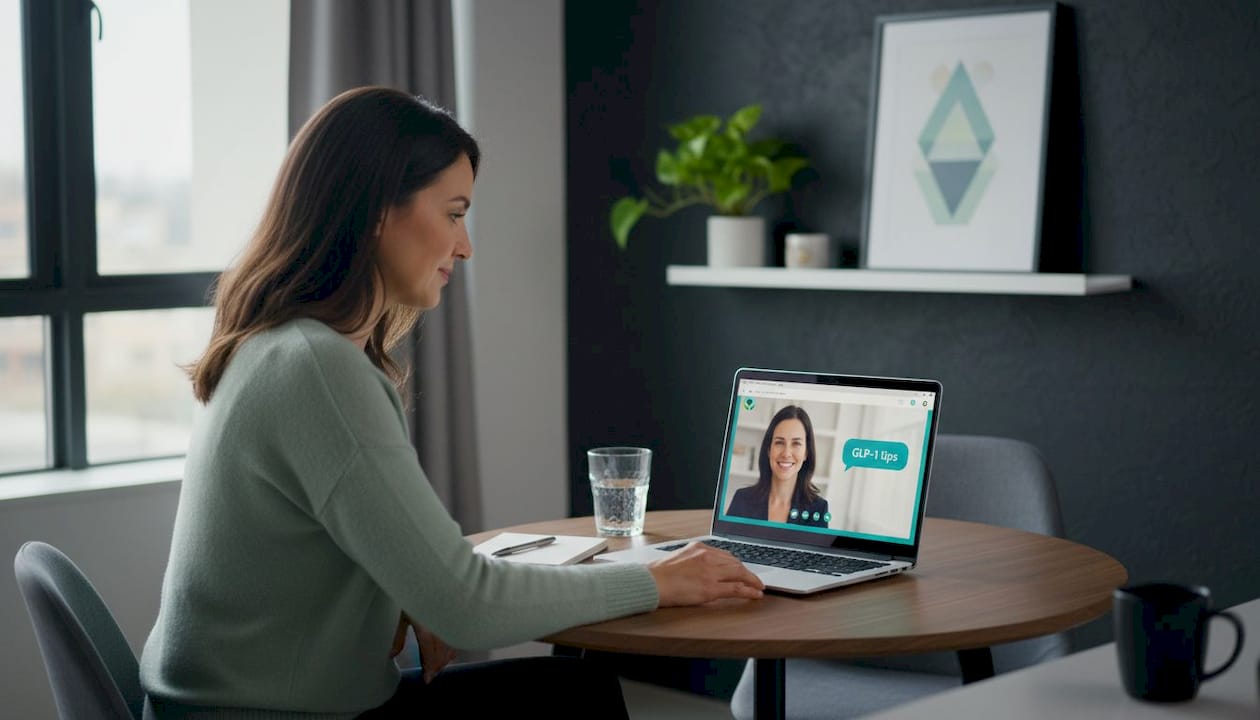
Patient education in telehealth is far more than a pamphlet sent after your first prescription. In the context of GLP-1 therapy for weight loss, it means a structured, ongoing exchange of information between you and your care team, delivered entirely through virtual channels. According to virtual care strategies, patient education in telehealth involves virtual delivery of information on treatment, side effects, administration, lifestyle changes, and expectations through video consultations, messaging, coaching, and remote monitoring to enhance adherence and outcomes for overweight adults using GLP-1 therapies.
This means your education might arrive through a video call with a licensed clinician, a secure in-app message about managing nausea, a digital coaching session on meal planning, or even real-time data sharing from a connected scale or glucose monitor. The goal is to make sure you understand what the medication is doing in your body, what to expect week by week, and how your daily behaviors shape your results.
For adults exploring medical weight loss telemedicine, this kind of education is what separates programs that produce real, lasting change from those that simply generate a prescription and disappear.
Here's a snapshot of what patient education typically covers in a telehealth GLP-1 program:
| Education topic | How it's addressed virtually |
|---|---|
| Medication administration | Video demonstration, written guides, follow-up Q&A |
| Side effect management | Secure messaging, nurse check-ins, titration guidance |
| Realistic weight loss timelines | Onboarding session, milestone tracking in app |
| Nutrition and dietary adjustments | Coaching calls, meal plan resources, digital tools |
| Exercise and muscle preservation | Behavioral therapy sessions, goal-setting modules |
| Emotional and mindset support | App-based coaching, scheduled video check-ins |
| Remote monitoring (weight, BP, glucose) | Connected devices, EHR data integration |
"Effective patient education is not a one-time event. It is a continuous process that adapts to where you are in your treatment, addressing new questions and challenges as they arise throughout your GLP-1 journey."
When you're discussing GLP-1 with a provider for the first time, asking specifically about the education and support structure of the program is just as important as asking about the medication itself.
Key methods and tools in telehealth patient education
With a clear definition in place, let's see how these educational services are actually delivered and what gives telehealth a real advantage for many adults managing their weight remotely.
Telehealth patient education for GLP-1 therapy typically unfolds in a logical sequence:
- Clinical intake and eligibility screening: Your provider reviews your health history, current medications, and weight loss goals to determine whether a GLP-1 medication is appropriate for you.
- Onboarding education session: A licensed clinician walks you through how the medication works, what to expect in the first few weeks, and how to administer your dose correctly.
- Titration guidance: As your dose increases gradually (a process called titration, where the medication amount is raised over time to improve tolerability), you receive specific instructions on timing, what side effects are normal, and when to contact your care team.
- Remote patient monitoring (RPM): RPM refers to the use of connected devices to track health data like weight, blood pressure, or blood glucose between appointments. Your care team reviews this data and adjusts your plan accordingly.
- Intensive behavioral therapy (IBT): IBT is a structured program of goal setting, dietary counseling, and exercise coaching that runs alongside your medication. Research on methodologies for GLP-1 telehealth confirms that teach-back methods, text-message coaching, RPM for weight and blood pressure, and IBT with goal setting are the core strategies that drive outcomes.
- Ongoing engagement and check-ins: Regular touchpoints via video, app, or secure message keep you accountable and allow your care team to catch problems early.
| Feature | In-person care | Telehealth education |
|---|---|---|
| Appointment frequency | Monthly or quarterly | Weekly or biweekly (virtual) |
| Access to support | Office hours only | Asynchronous messaging, 24/7 app |
| Behavioral coaching | Referral required | Integrated into program |
| Monitoring | In-office measurements | Remote connected devices |
| Convenience | Travel required | From home |
| Cost and access | Higher, geography-dependent | Lower, broader access |
The technology behind effective telehealth education includes secure patient portals, HIPAA-compliant messaging platforms, app-based goal tracking, and EHR (electronic health record) integration that allows your full clinical picture to inform every interaction. Programs built around telehealth virtual weight management use these tools to create a care experience that rivals or exceeds what many patients receive in traditional clinical settings.
Pro Tip: When evaluating a telehealth weight loss program, ask specifically whether they use teach-back techniques, where your care team asks you to explain what you've learned in your own words. This method is one of the strongest predictors of patient understanding and long-term adherence.
Why patient education matters: Evidence of better outcomes and fewer dropouts
With those tools and methods in mind, does patient education truly make a difference in your success? Here's what the research shows.
The numbers are striking. Telehealth GLP-1 programs with behavioral support achieve an average of 12.3% body weight loss at 24 weeks and 14.1% at 6 months. For patients who remain adherent over 18 months, real-world data shows an average loss of 18.53% of body weight. Perhaps most telling: 89% of patients in structured programs achieve at least 5% weight loss at 24 weeks, a threshold considered clinically meaningful for reducing cardiovascular and metabolic risk.
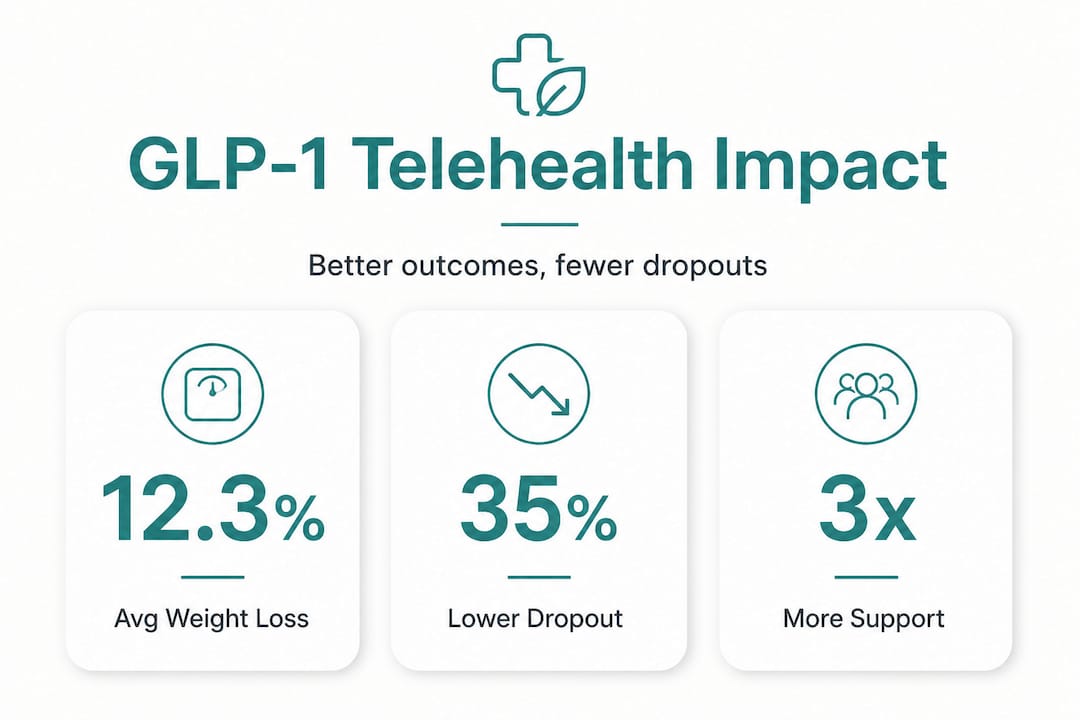
Up to 67% of people discontinue GLP-1 therapy within 12 months when they lack structured education and support.
That statistic deserves a moment of attention. Two out of three adults who start these medications without proper support quit before reaching their goals. The reasons are predictable and preventable:
- Unexpected nausea, vomiting, or gastrointestinal discomfort in the first weeks
- Unrealistic expectations about how quickly weight loss occurs
- Confusion about dose titration and when side effects are normal versus concerning
- Feeling unsupported or disconnected from their care team
- Costs or insurance complications without guidance on navigating them
Research published in JAMA confirms that 30 to 58% of patients quit GLP-1 therapy early due to unmet expectations or unmanaged side effects, both of which are directly addressable through education.
"Pairing GLP-1 medications with structured behavioral coaching is not optional for best outcomes. The medication creates the biological conditions for weight loss; education and behavioral support create the conditions for patients to use that window effectively and sustain their results long term."
For anyone choosing a GLP-1 telehealth program, the presence or absence of ongoing behavioral support and education should be a primary selection criterion. A program that offers only a prescription without structured follow-up is not a complete weight management solution. Understanding what modern telehealth weight management looks like in practice helps you ask the right questions before you commit.
What effective education covers: Realistic expectations, side effects, nutrition, and more
You understand why education matters, so what exactly should you make sure is covered in your telehealth program?
Research on GLP-1 therapy initiation shows that patient education significantly reduces the high real-world discontinuation rate (up to 67% at 12 months) by addressing gastrointestinal side effects through titration education, setting realistic weight loss timelines of 10 to 20% body weight, and emphasizing that long-term lifestyle changes are essential for sustained results.
Here are the core educational elements every telehealth GLP-1 program should provide:
- How the medication works: A plain-language explanation of how GLP-1 receptor agonists slow gastric emptying, reduce appetite, and signal satiety to the brain, so you understand what your body is experiencing.
- Titration schedule and rationale: Clear guidance on why doses start low and increase gradually, and what to do if side effects occur at a given dose.
- Side effect management: Specific strategies for managing nausea, constipation, or fatigue, including dietary adjustments, hydration, and when to contact your provider.
- Realistic weight loss timelines: Most patients lose 10 to 20% of body weight over 6 to 18 months. Understanding this prevents early discouragement.
- Nutrition priorities: Research on telehealth GLP-1 nutrition outcomes00240-0/pdf) confirms that structured programs must include nutritional guidance to prevent deficiencies, since reduced appetite can lead to inadequate protein, vitamins, and minerals.
- Exercise and muscle preservation: Resistance training and adequate protein intake are critical to preserving lean muscle mass during weight loss, especially on GLP-1 therapy.
- Lab monitoring: Regular bloodwork helps catch any metabolic changes early and confirms that your body is responding safely to treatment.
Additional tips to get the most from your telehealth education:
- Come to every check-in with specific questions written down in advance
- Track your food, weight, and symptoms between appointments using your program's app
- Be honest with your care team about side effects, even if they seem minor
- Ask your provider to explain any term or concept you don't fully understand
- Request written summaries or educational resources after each session
Pro Tip: Look for telehealth programs that monitor your weight, muscle mass, and lab values throughout treatment, not just at the start. A single prescription without ongoing monitoring misses the full picture of how your body is responding and leaves critical warning signs undetected.
What most telehealth patients and clinics miss about education
Bringing all these concepts together, it's important to address what typically goes wrong in telehealth weight loss and how to avoid those pitfalls.
Here's the uncomfortable reality: a large portion of telehealth platforms operating in the GLP-1 space today are designed around speed and volume, not outcomes. They streamline the intake process, issue a prescription quickly, and move on. For patients, this feels efficient at first. But when nausea hits in week three, or the scale stops moving in week eight, there's no one to call, no framework to understand what's happening, and no behavioral support to keep you on track.
This is not a medication failure. It's an education failure.
The most effective programs treat education as an ongoing clinical service, not a checkbox completed at onboarding. They revisit your goals at every check-in, adjust your titration based on real data, and provide behavioral coaching that evolves as your challenges evolve. Programs built around evidence-based telehealth strategies understand that the medication creates a biological opportunity, but education, monitoring, and behavioral support determine whether you actually use that opportunity.
Skipping nutrition guidance is one of the most common and consequential gaps. Adults on GLP-1 therapy often eat significantly less, which is the goal, but without guidance, they may not consume enough protein or key micronutrients. The result can be muscle loss, fatigue, and nutrient deficiencies that undermine both health and long-term weight maintenance.
The best telehealth programs are not the fastest or the cheapest. They're the ones that stay with you through the entire arc of treatment, from the first dose to sustainable maintenance.
Take the next steps with guided telehealth weight care
If you're ready to take the next step, it's easier than ever to work with a telehealth team focused on your ongoing education and outcomes.
RenewMD.clinic is built around the principle that medication alone is never enough. Every patient receives structured education, nutrition guidance, provider check-ins, and lab monitoring as part of a fully integrated program. From your first consultation to ongoing care, the focus is on equipping you with the knowledge and support to succeed long term. Explore the medical weight loss telemedicine guide to understand what a complete program looks like, or learn more about virtual weight management options available to you. If you're newer to GLP-1 therapy, reviewing what GLP-1s are and how they work is a strong starting point before your first consultation.
Frequently asked questions
How does patient education improve GLP-1 weight loss results in telehealth?
Patient education boosts adherence, reduces dropouts, and delivers better weight loss by teaching you how to manage expectations, side effects, and lifestyle changes alongside your medication. Programs with behavioral support achieve 12.3% weight loss at 24 weeks, with 89% of adherent patients reaching at least 5% loss.
What topics should ideal telehealth patient education cover for weight loss?
Effective education should cover medication use, titration, managing side effects, nutrition, exercise, and realistic timelines for weight loss. Research confirms that addressing GI sides through titration education and setting 10 to 20% loss expectations significantly reduces early discontinuation.
Is telehealth patient education as effective as in-person care for GLP-1 therapy?
Yes, structured telehealth education programs are non-inferior to in-person care when they include comprehensive support and regular check-ins. Studies show that structured programs rival00240-0/pdf) in-person care when nutritional priorities, exercise guidance, and monitoring are fully integrated.
What are the most common reasons people stop GLP-1 medication in telehealth?
The top reasons are unexpected side effects, costs, or unmet weight loss expectations, mostly due to lack of ongoing patient education. Research confirms that 30 to 58% quit early due to expectations or side effects that could have been managed with proper support.
How can I get started with a telehealth weight loss program focused on education?
Look for programs that offer ongoing video or app-based coaching, remote check-ins, and resources for nutrition and lifestyle. Prioritize programs with IBT, lab monitoring, and provider integration, since education via virtual coaching and RPM consistently outperforms quick-script approaches in real-world outcomes.