
Coaching support in telemedicine is the delivery of personalized health guidance, goal-setting, and behavioral motivation through remote communication technologies, coordinated with clinical care to help individuals achieve meaningful health outcomes. Unlike a clinical appointment focused on diagnosis or prescription, telemedicine coaching centers on what you want to change, why it matters to you, and how to build habits that last. Programs like the VA Whole Health coaching model and CancerAid's Cancer Coach program demonstrate that this support can be structured, evidence-based, and genuinely effective. Understanding what coaching support in telemedicine actually involves helps you choose the right program and get the most from it.
What is coaching support in telemedicine, exactly?
Coaching support in telemedicine is formally defined as non-clinical, personalized goal-setting and plan-building aligned with a patient's values, delivered remotely and coordinated with their healthcare providers. The industry term for this practice is "health and wellness coaching," and it sits at the intersection of behavioral science, patient education, and remote care delivery. It does not involve diagnosing conditions or prescribing treatments. Those functions remain with licensed clinicians.
The core of coaching is behavior change. A 2025 scoping review defines health coaching as interactions that facilitate behavioral change and well-being via telephone or internet, explicitly outside the scope of clinical diagnosis or treatment. This distinction matters because it shapes what you can realistically expect from a coaching program. You will work on SMART goals, motivation, and daily habits, not receive medical management of a condition.
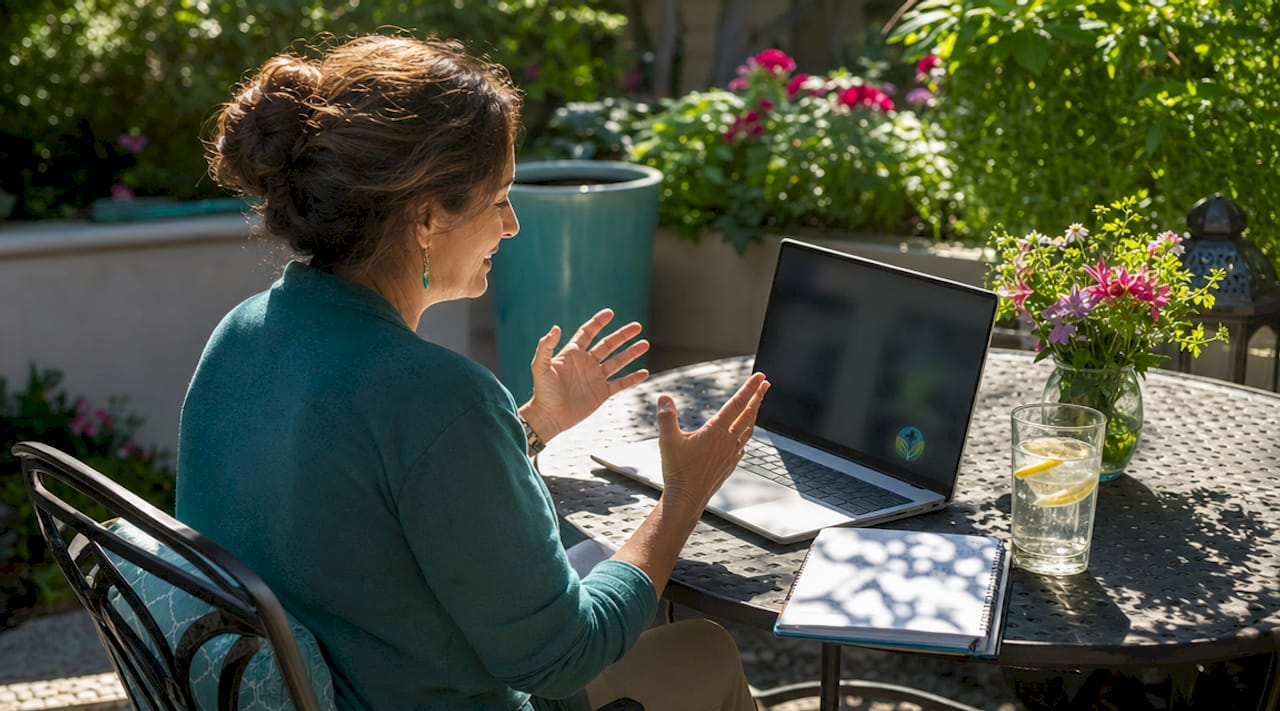
Coaching also functions as a connector between clinical recommendations and real life. The VA Whole Health model describes coaches as professionals who help patients link clinical plans with what actually matters in their daily lives, supporting both functional and treatment-based goals. That role is more practical and more personal than a standard provider visit allows.
How coaching support is delivered in telemedicine
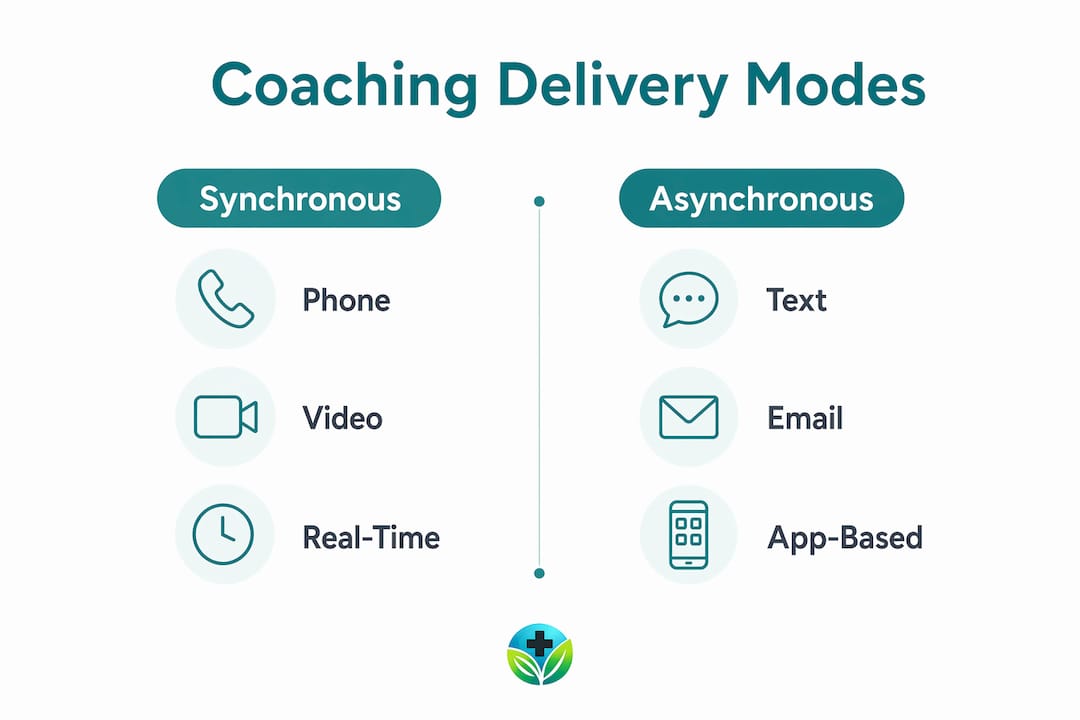
Telemedicine coaching reaches patients through two broad delivery formats: synchronous and asynchronous. Synchronous coaching means live, real-time interaction, typically a phone or video call with a coach. Asynchronous support includes app-based messaging, digital tracking, and automated or coach-reviewed feedback that does not require both parties to be present at the same time. Most effective programs use both.
A 2026 JMIR pilot study of CancerAid's Cancer Coach program illustrates how hybrid coaching programs work in practice. Participants completed a 6 to 12 week program involving approximately three synchronous coaching calls combined with ongoing app-based support. The program produced significant improvements in PROMIS Global Health scores, a validated measure of physical and mental health. The live calls appeared to drive mental health gains, while the app component supported physical health improvements, suggesting the two formats are genuinely complementary.
The table below compares the three main delivery modes:
| Delivery mode | Advantages | Limitations |
|---|---|---|
| Synchronous (phone/video) | Real-time feedback, stronger rapport, flexible problem-solving | Requires scheduling, time-zone coordination |
| Asynchronous (app/messaging) | Available anytime, supports daily habit tracking, scalable | Less personal, relies on user self-motivation |
| Hybrid (live + app) | Combines accountability with continuous support | Requires engagement across multiple platforms |
Coach qualifications also vary significantly across programs. Health coaching providers include licensed nurses, allied health professionals, and trained lay coaches. Each brings a different scope of practice, and clinical decisions always remain outside a coach's role regardless of their background. Knowing who your coach is and what credentials they hold is not optional. It is a baseline requirement for choosing a trustworthy program.
Pro Tip: Before enrolling in any telemedicine coaching program, ask directly: "What is my coach's professional background, and what is their scope of practice?" A credible program will answer this without hesitation.
What does the evidence say about telemedicine coaching effectiveness?
The research on telemedicine coaching is encouraging, particularly for behavior change and patient satisfaction, though results on physiological outcomes are more mixed. A 2025 scoping review of remote diabetes management found that 73% of studies showed improvement in diabetes-related parameters when coaching was included, and 91% of studies reported higher patient satisfaction. Those numbers indicate that coaching reliably improves how patients feel about their care and how well they manage their condition day to day.
The evidence is less consistent for physiological markers like blood pressure and lipid levels. Coaching produces strong gains in self-management and self-efficacy, which are the skills and confidence to manage your own health. It produces less predictable changes in lab values or vital signs. This is not a failure of coaching. It reflects the reality that behavior change precedes physiological change, and that coaching addresses the behavioral layer directly.
The table below summarizes key outcome data from published research:
| Outcome area | Evidence strength | Key finding |
|---|---|---|
| Diabetes self-management | Strong | 73% of studies showed improvement |
| Patient satisfaction | Very strong | 91% of studies reported higher satisfaction |
| Blood pressure and lipids | Mixed | Less consistent benefit across studies |
| Mental and physical health (cancer patients) | Promising | Significant PROMIS score improvements in JMIR pilot |
One practical implication of this evidence is program length. Most coaching studies last less than one year, which limits understanding of long-term impact. Experts recommend selecting programs that include maintenance phases or ongoing check-ins after the initial coaching period ends. Behavior change that is not reinforced tends to erode.
Pro Tip: When evaluating a telemedicine coaching program, ask whether it includes a maintenance or follow-up phase after the core program ends. Programs that stop abruptly often see participants revert to previous habits within months.
You can also explore how telehealth consultation works alongside coaching for weight management to understand how clinical and coaching touchpoints interact in a real program structure.
How coaching differs from clinical care and therapy
Coaching in telemedicine is not therapy, and it is not a clinical treatment. This distinction is not semantic. It has real consequences for what a coach can and cannot do for you. Health coaching focuses on motivation, habit formation, and small steps toward personal goals. Clinical mental health treatment involves diagnosis and therapeutic intervention for recognized disorders. These are different services with different purposes.
The following boundaries define what telemedicine coaching includes and excludes:
- Coaching includes: Goal-setting, accountability check-ins, lifestyle education, motivation support, and coordination with your clinical care plan
- Coaching excludes: Diagnosing medical or mental health conditions, prescribing or adjusting medications, providing psychotherapy, or replacing the role of a licensed physician or therapist
- Coaching complements: Clinical care by addressing the behavioral and motivational gaps that provider visits alone cannot fill
A 2025 Frontiers systematic review reinforces this framing by defining effective digital health coaching as interactive and personalized, delivered through genuine coach-coachee partnerships rather than automated reminders or passive messaging. The interactive element is what separates coaching from a wellness app. Receiving a push notification is not coaching. A live or responsive exchange with a trained coach who knows your goals and history is.
Choosing a telemedicine service that conflates coaching with clinical care, or that substitutes one for the other, creates risk. Coaching is a supplement to clinical care, not a replacement. Programs that are transparent about this boundary are the ones worth trusting.
How to choose and get the most from telemedicine coaching
Selecting the right telemedicine coaching program requires more than reading a landing page. Here is a practical framework for evaluating your options and maximizing your results:
- Verify coach credentials. Ask whether your coach is a licensed health professional, a certified health coach, or a trained lay coach. Each has a different scope. Credential variability is documented across programs, and coach qualifications directly affect the quality and safety of the support you receive.
- Understand program structure. Ask how many sessions are included, how often you will meet, and whether the program includes asynchronous support between calls. Programs like CancerAid's used multiple coaching touchpoints and app-based tracking to sustain engagement between live sessions.
- Ask about integration with your clinical team. Effective coaching coordinates with your existing providers. The VA Whole Health model explicitly aligns coaching goals with clinical treatment plans. If a program operates in isolation from your medical care, that is a gap worth addressing.
- Prepare for each session. Before a coaching call, write down one specific challenge you faced since your last session and one goal you want to focus on next. This habit makes sessions more productive and helps your coach give you targeted support.
- Use digital tools between sessions. Apps, wearables, and symptom trackers extend the coaching relationship beyond scheduled calls. Programs that review this data during sessions can tailor their guidance more precisely to your actual patterns.
Pro Tip: Treat your first coaching session as a calibration conversation. Share your full health context, including what you have already tried and why it did not work. Coaches who understand your history can set more realistic and motivating goals from the start.
For individuals managing weight, understanding how provider consultations shape the telehealth weight loss process adds important context to how coaching fits within a broader care plan.
Key takeaways
Coaching support in telemedicine works best when it combines interactive, personalized goal-setting with clinical coordination and sustained engagement over time.
| Point | Details |
|---|---|
| Coaching is non-clinical | It supports behavior change and goal-setting, not diagnosis or treatment. |
| Hybrid delivery is most effective | Combining live sessions with app-based support improves both physical and mental health outcomes. |
| Satisfaction is consistently high | 91% of studies in a 2025 scoping review reported higher patient satisfaction with coaching. |
| Coach credentials vary | Always verify your coach's professional background and scope of practice before enrolling. |
| Long-term engagement matters | Programs with maintenance phases sustain behavior change better than short-term interventions. |
Why interactive coaching matters more than most people realize
Raymond here. After years of observing how people actually use telemedicine services, one pattern stands out clearly: the difference between a program that changes behavior and one that does not almost always comes down to whether there is a real human in the loop.
Automated wellness apps have their place. They track steps, log meals, and send reminders. But they do not notice when your tone shifts, when you are avoiding a topic, or when your stated goal no longer matches what you actually need. A trained coach does. That responsiveness is what makes coaching a distinct clinical support tool, not just a premium feature.
The evidence from the CancerAid JMIR study reinforces this. The live coaching component drove mental health improvements specifically, not the app. The human interaction carried weight that technology alone could not replicate. That finding should inform how you evaluate any telemedicine program that claims to offer coaching support.
My caution is this: not every program that uses the word "coaching" delivers genuine interactive support. Some use the term to describe automated messaging sequences or chatbot check-ins. Before committing to a program, ask for a sample session or a detailed description of what a typical coaching interaction looks like. If the answer is vague, that tells you something important.
The future of coaching in telemedicine is genuinely promising, particularly for populations in rural areas or those with demanding schedules who cannot access in-person behavioral support. But that promise is only realized through programs that invest in qualified coaches and structured, interactive delivery. Choose accordingly.
— Raymond
How Renewmd integrates coaching into telemedicine weight care
Renewmd builds coaching support directly into its telemedicine weight management programs, pairing licensed U.S. clinician oversight with personalized guidance at every stage of care. If you are managing weight with GLP-1 receptor agonists like Semaglutide or Tirzepatide, coaching support helps you build the behavioral habits that medication alone cannot create. Renewmd's approach covers provider consultations, lab testing, medication delivery, and coaching within a single, transparent program. Explore the medical weight care guide to understand how coaching fits into a fully integrated telehealth weight management plan, or visit the telehealth weight care page to take the next step toward medically supervised, coaching-enhanced care.
FAQ
What is telemedicine coaching support?
Telemedicine coaching support is personalized, non-clinical health guidance delivered remotely via phone, video, or app to help individuals set goals and change health behaviors. It is coordinated with clinical care but does not involve diagnosis or treatment.
How does telemedicine coaching differ from therapy?
Coaching focuses on motivation, habit change, and goal achievement, while therapy involves diagnosing and treating mental health disorders. Headspace's clinical guidance describes these as distinct services with different scopes and purposes.
What health conditions benefit most from telemedicine coaching?
Diabetes self-management shows the strongest evidence, with 73% of studies in a 2025 scoping review reporting improved outcomes. Coaching also shows measurable benefits for cancer patients and individuals managing weight or chronic lifestyle conditions.
How do I know if a telemedicine coaching program is credible?
Verify that coaches have documented credentials, that the program includes live interactive sessions rather than only automated messaging, and that it coordinates with your existing clinical providers. Programs that cannot clearly answer these questions warrant caution.
How long should a telemedicine coaching program last?
Most research programs run under one year, but experts recommend choosing programs that include a maintenance or follow-up phase. Short programs without ongoing support often see behavior change reverse within months of completion.