

Telehealth is often mistaken for an informal video chat, but understanding how does telehealth consultation work reveals something far more structured. A real medical visit delivered remotely through telecommunications, telehealth connects you with a licensed clinician in a regulated, documented encounter, not a casual conversation. For adults managing weight at a BMI of 27 or higher, this distinction matters. Medically supervised weight management through telehealth gives you access to clinical expertise, prescription medications like GLP-1 receptor agonists (drugs that regulate appetite and blood sugar), and ongoing monitoring, without rearranging your schedule around an office visit.
Table of Contents
- What is a telehealth consultation and how does it work?
- How telehealth supports medically supervised weight management
- Navigating telehealth workflows: consent, identity, documentation, and billing
- Limitations and considerations when using telehealth for weight management
- Preparing for your telehealth weight management consultation
- Why telehealth is a game changer for accessible weight management — and what most people miss
- Explore RenewMD's telehealth weight management solutions
- Frequently asked questions
Key Takeaways
| Point | Details |
|---|---|
| Telehealth basics | Telehealth lets you have medical visits remotely using video, phone, or apps with licensed clinicians. |
| Weight management benefits | Telehealth enables ongoing support, specialist access, and behavioral health integration for weight care. |
| Workflow essentials | Secure identity verification, consent, and documentation ensure telehealth visits are safe and compliant. |
| Understand limits | Telehealth can’t fully replace in-person exams and has Medicare geographic rules after 2027. |
| Preparation matters | Testing technology and preparing paperwork improves your telehealth weight management visit quality. |
What is a telehealth consultation and how does it work?
Telehealth is a broad term, not a single technology. Four distinct modalities exist under that umbrella: synchronous live video visits, asynchronous store-and-forward (where data is collected and reviewed separately), remote patient monitoring, and mobile health tools. Most people only think of live video, but the full telehealth process is more layered than that.
For weight management specifically, live video visits are the most common entry point. They replicate many aspects of an in-person appointment: visual assessment, medical history review, symptom discussion, and treatment planning. The difference is the medium, not the medical rigor.
Here is how a typical synchronous telehealth visit is structured:
- Scheduling — You book through the platform's online portal, selecting a licensed provider and an available time.
- Identity verification — Before the visit, the platform confirms who you are using government ID or secure login credentials.
- Consent — You review and sign telehealth-specific consent forms acknowledging the remote nature of care.
- Video connection — You join a secure, HIPAA-compliant video session from your device.
- Clinical history and assessment — The provider reviews your intake forms, asks questions, and conducts a visual assessment appropriate for remote care.
- Documentation — The visit is recorded in your electronic health record using telehealth-specific billing codes.
- Follow-up — Prescriptions, referrals, or lab orders are sent digitally.
This structured operational sequence is what separates a telehealth visit from a phone call with a friend who happens to be a nurse.
What technology powers this process:
- Secure video platforms that meet HIPAA privacy requirements
- Electronic health records integrated with the telehealth interface
- Digital intake forms completed before the visit
- E-prescribing systems connected to licensed pharmacies
- Lab order portals for bloodwork requisitions
For a deeper look at how this applies to weight care specifically, the medical weight care telemedicine guide at RenewMD walks through the clinical side in practical terms.
How telehealth supports medically supervised weight management
Weight management is not a one-time intervention. It requires consistent monitoring, dosage adjustments, behavioral support, and specialist guidance, often over months or years. This is exactly where telehealth services offer a structural advantage over sporadic in-person visits.
Telehealth supports chronic-condition management through virtual specialist visits, care coordination, behavioral health integration, and remote monitoring. For weight management programs, that translates into several practical capabilities:
- Regular provider check-ins without requiring you to take time off work or travel
- Behavioral health counseling delivered via video to address emotional eating, motivation, and habit formation
- Remote monitoring devices that track blood pressure, glucose, or weight trends and feed data directly to your care team
- Care coordination between your primary care provider, weight management clinician, and any specialists involved
- Asynchronous messaging for quick questions between scheduled visits, reducing the friction of follow-through
For someone managing obesity-related conditions alongside weight loss, like type 2 diabetes or hypertension, telehealth keeps all of these moving parts connected. You are not starting from scratch at every appointment.
Explore how telehealth and virtual weight care programs are designed to support this level of continuity.
Navigating telehealth workflows: consent, identity, documentation, and billing
Most patients never see the operational infrastructure behind a telehealth visit. But understanding it helps you know what to expect and why certain steps exist.
Providers must confirm your identity, obtain telehealth-specific consent, document privacy discussions, and use special billing codes to comply with state and federal regulations. These are not bureaucratic formalities. They protect you legally and clinically.
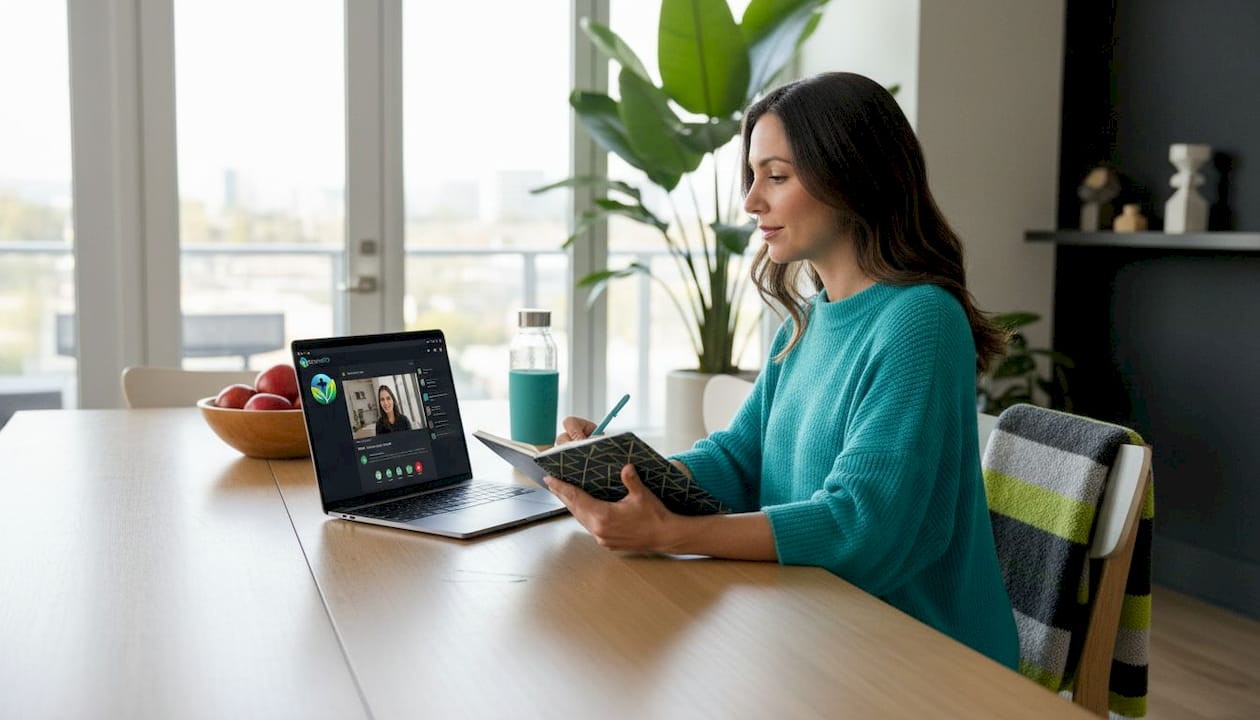
Here is what happens behind the scenes before and during your virtual health consultation:
- Identity confirmation using government-issued ID or multi-factor authentication
- Consent documentation that specifies telehealth's limitations compared to in-person care
- Privacy discussion confirming your location and who else may be present
- Visit documentation in your electronic health record using telehealth-specific procedure modifiers
- Billing compliance using modifier codes that identify the visit as remote for payer reimbursement
Programs record telehealth encounters with modifiers in medical records to preserve consent and privacy communications for regulatory compliance. This documentation trail also protects you if there is ever a question about your care history.
Getting prepared for telehealth weight management visits ahead of time makes the check-in process faster for everyone involved.
Pro Tip: Have your insurance card, government-issued photo ID, and current medication list accessible before the visit begins. These are routinely required at check-in, and having them ready reduces delays.
Limitations and considerations when using telehealth for weight management
Telehealth is effective, but it has real boundaries worth understanding before you start a program.
Physical examinations requiring touch cannot be replicated remotely. Auscultation (listening to heart or lung sounds), palpation of the abdomen, and certain vital sign measurements need to be done in person. For weight management programs, this typically means periodic in-person lab work or vital checks, even within an otherwise remote program.
Matching the right modality to your clinical need is what determines telehealth's effectiveness. Real-time video works best when visual assessment matters. Store-and-forward or remote monitoring is better suited for data review between visits.
There is also a policy consideration worth knowing:
| Situation | Current rule (through Dec. 31, 2027) | After Dec. 31, 2027 |
|---|---|---|
| Medicare telehealth location | Anywhere in the U.S. | Mostly rural medical facilities |
| Behavioral health telehealth | Anywhere in the U.S. | Continues anywhere |
| Private insurance telehealth | Varies by plan | Varies by plan |
Medicare's originating site rules allow beneficiaries to receive telehealth services from any location through December 31, 2027. After that, most services will require rural-based medical facility access, with behavioral health remaining an exception. If you are on Medicare, this timeline is worth factoring into your long-term weight management planning.
For evidence-based strategies that account for these considerations, the RenewMD resource on evidence-based telehealth weight management covers what the research says about optimizing remote care.
Pro Tip: Ask your provider at your first visit whether any in-person labs or vital checks are required during your program. Knowing this upfront prevents surprises later.
Preparing for your telehealth weight management consultation
Preparation directly affects the quality of your visit. A few steps taken in advance can mean the difference between a productive clinical conversation and time lost troubleshooting technical issues.
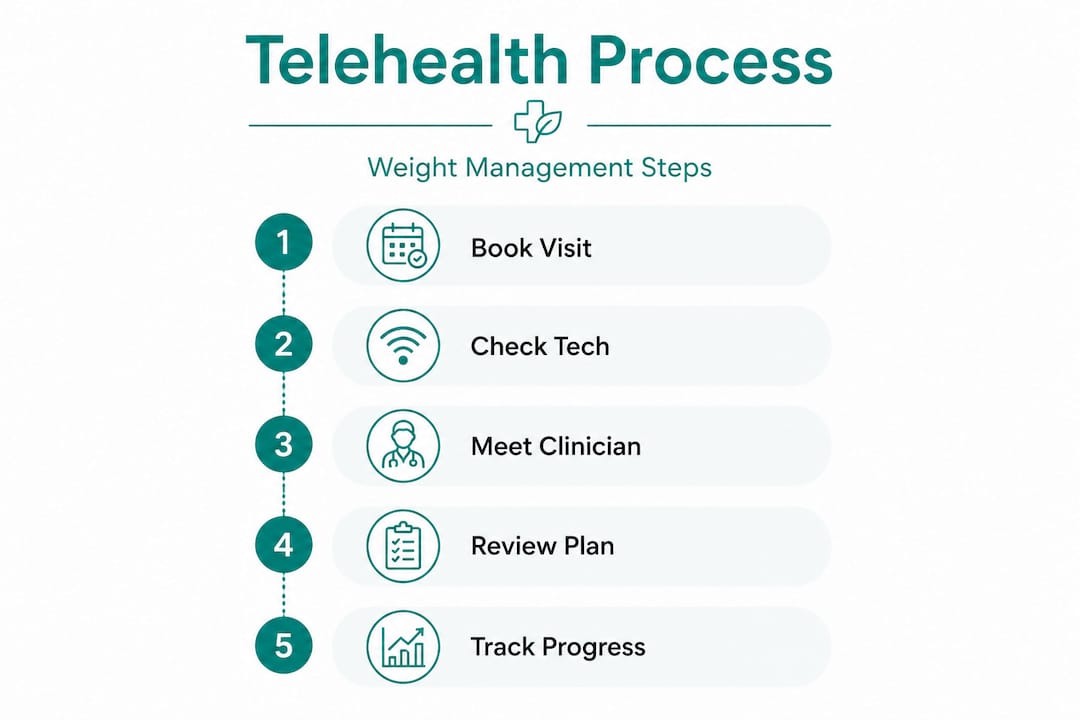
Step-by-step preparation:
- Test your technology — Check your camera, microphone, and internet connection at least 30 minutes before the visit.
- Complete intake forms — Fill out any health history, medication, or symptom questionnaires the platform sends in advance.
- Choose your location — Select a private, quiet space where you can speak openly without interruption.
- Gather your materials — Have your current medications, supplement list, recent lab results, and any monitoring device readings accessible.
- Prepare your questions — Write them down. Visits are time-limited, and a prepared list helps you cover what matters most.
Additional preparation best practices:
- Download or log in to the telehealth platform before your appointment, not during it
- Ensure your device is fully charged or plugged in
- Use headphones if possible for better audio clarity
- Confirm the time zone if your provider is in a different state
Preparation steps including appointment reminders, technology checks, form completion, and privacy setup consistently improve the quality of telehealth visits for both patients and providers.
Pro Tip: Many telehealth platforms offer a tutorial or test-call feature. Use it at least a day before your appointment so you are not learning the interface in real time.
More detail on what to bring and expect is available in the guide to preparing for telehealth weight management visits.
Why telehealth is a game changer for accessible weight management — and what most people miss
Here is something patients rarely consider: the real power of telehealth in weight management is not the video call. It is the data continuity between visits.
A single video visit gives a clinician a snapshot. But a program that integrates remote monitoring, lab trends, and asynchronous check-ins gives your provider a film. Weight fluctuations, glucose trends, blood pressure patterns over weeks — these data points change how treatment decisions get made. A provider who only sees you once a month in an office may miss a trend that a remote monitoring dashboard catches in real time.
Telehealth also removes two of the biggest barriers to consistent weight care: geography and scheduling. Someone in a rural area with no bariatric specialist nearby can now access GLP-1 prescribing clinicians without a 200-mile drive. Someone who works irregular hours can book a 7 a.m. visit instead of waiting weeks for an in-office opening.
That said, not everything belongs in a remote setting. Clinical triage to balance remote care with necessary in-person services is a smart practice built into well-designed programs. When a clinician says you need an in-person lab draw or a physical exam, that is good medicine, not a failure of the telehealth model.
"That decision [between remote and in-person care] is part of triage, not a sign your remote visit failed."
The patients who get the most from telehealth weight programs are the ones who stay engaged, communicate honestly about how they are feeling, and treat the virtual visit with the same seriousness they would give an in-person appointment. The platform changes. The medicine does not.
How provider consultations shape your telehealth weight loss outcomes is worth reading before your first visit.
Explore RenewMD's telehealth weight management solutions
Now that you understand how telehealth consultation works and what separates a well-designed program from a basic video call, the next step is finding the right clinical team. RenewMD.clinic offers medically supervised weight management programs built around GLP-1 receptor agonists like Semaglutide and Tirzepatide, delivered entirely through licensed U.S. clinicians and pharmacies. The program includes provider consultations, medication delivery, lab testing, and ongoing support, all in one transparent, all-inclusive plan. No hidden fees. No complicated billing. If you are ready to explore what a structured telehealth weight program looks like, start with the medical weight care telemedicine guide or review the full telehealth and virtual weight care program overview to see if it fits your needs.
Frequently asked questions
What technology do I need for a telehealth weight management consultation?
You need a device with a camera and microphone, such as a smartphone or computer, plus a stable internet connection to support video calls reliably. Telehealth connects you with providers through video, phone, or secure messaging on your phone, tablet, or computer.
Can Medicare cover telehealth visits for weight management?
Medicare covers telehealth visits from any location through December 31, 2027, but after that date, geographic origin requirements will mostly require rural medical facility-based visits, with behavioral health remaining an exception.
How do clinicians perform weight assessments without physical exams in telehealth?
Clinicians use visual cues via video, review remote monitoring data collected over time, and determine whether in-person visits for labs or vitals are needed. Clinical triage guides this decision, and redirecting to in-person care when necessary is standard practice, not a limitation.
Is telehealth just a video call or more?
Telehealth is significantly more than a video call. Four modalities cover the full scope: live video, store-and-forward data review, remote patient monitoring, and mobile health tools, each serving different clinical purposes.
How should I prepare for my telehealth consultation?
Test your technology, complete intake forms in advance, choose a private space, have your medication list ready, and prepare your questions ahead of time. Structured preparation steps including technology checks and form completion consistently improve the quality of telehealth visits.