
Patient support in remote care is the structured system of clinical guidance, technical assistance, and emotional reassurance that converts telehealth access into real health outcomes. Without it, digital platforms remain tools patients cannot fully use. The role of patient support in remote care extends well beyond answering phone calls. It covers device onboarding, medication adherence coaching, caregiver coordination, and clinical escalation. Research shows 87% of telehealth patients report satisfaction with their experience, and 75% intend to reuse telehealth services. Those numbers reflect programs where support systems are working. Where support is absent, dropout rates climb and outcomes suffer.
What is the role of patient support in remote care?
Patient support in telehealth is best understood through the industry term "patient support services," which encompasses every non-physician touchpoint that keeps a patient engaged and safe between clinical visits. These services sit between technology and medicine. They translate what a clinician prescribes into what a patient can actually follow at home.
The core functions of patient support services include:
- Onboarding and device training: Teaching patients to use telemonitoring devices, video platforms, and digital intake forms before their first visit
- Multi-channel communication: Providing access through phone, secure chat, and email so patients can reach support in the format that works for them
- Resource navigation: Connecting patients to pharmacy services, lab testing, and insurance assistance
- Caregiver coordination: Briefing family members or designated caregivers on monitoring protocols and escalation steps
- Clinical escalation: Routing urgent clinical concerns to licensed clinicians when non-clinical staff identify warning signs
The skills required for this work are specific. Technical troubleshooting, empathy, clear verbal communication, and emotional de-escalation are all necessary. A support specialist who cannot explain a blood glucose monitor in plain language is as problematic as one who cannot calm a patient frightened by an unexpected device alert.
Pro Tip: Assign a dedicated patient advocate to each new telehealth patient for the first 30 days. Early relationship-building reduces disengagement during the onboarding phase, which is when dropout risk is highest.

Role separation matters here. Non-clinical support staff handling onboarding and technical training allow clinicians to focus on medical decision-making. Mixing these roles creates bottlenecks and reduces care quality for everyone.
How does patient support improve clinical outcomes and reduce costs?
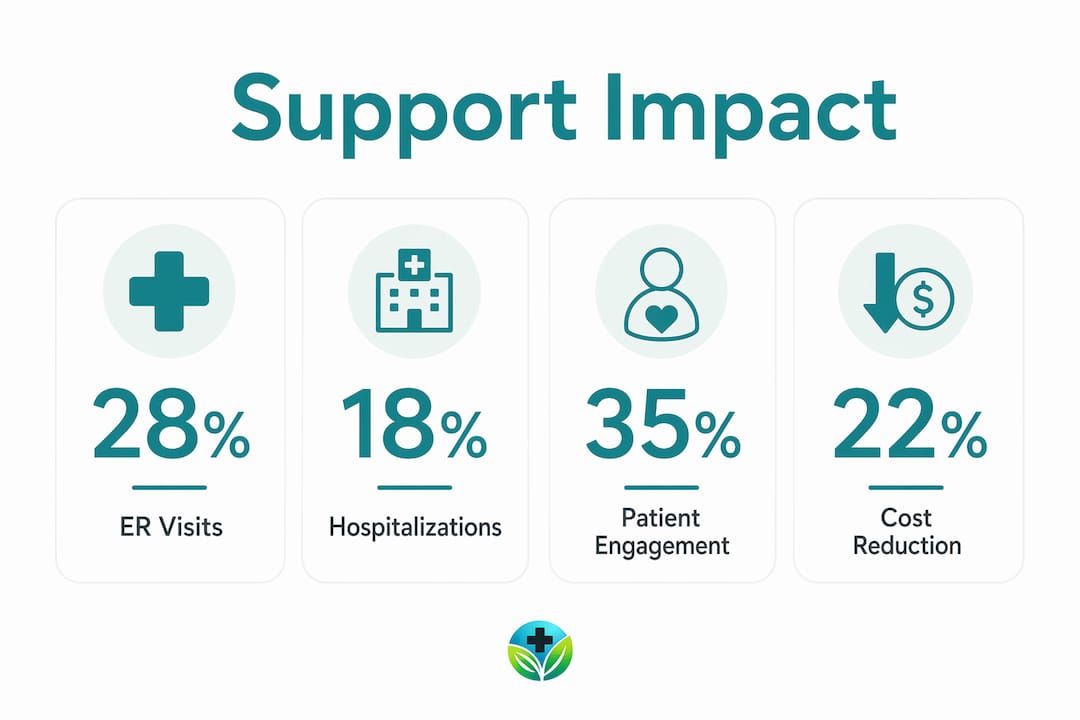
The clinical evidence for structured patient support is direct and measurable. Patients who access telehealth within seven days of symptom onset have 28% fewer emergency department visits. That reduction reflects what happens when patients have a clear path to care and someone guiding them through it.
"Patient support is the 'human scaffolding' necessary to convert digital access into real health outcomes." — Avalere Health
The cost implications are significant. Fewer emergency visits mean fewer hospitalizations, lower transportation costs, and reduced strain on clinical staff. For patients managing chronic conditions remotely, consistent support also improves medication adherence. Adherent patients require fewer corrective interventions over time.
| Outcome area | Impact of structured patient support |
|---|---|
| Emergency department visits | 28% reduction when telehealth is accessed promptly |
| Patient satisfaction | 87% report satisfaction with telehealth services |
| Service reuse | 75% of patients intend to reuse telehealth |
| Clinical efficiency | Non-clinical staff handle onboarding, freeing clinicians |
| Medication adherence | Consistent support reduces dropout and missed doses |
The impact of support on patient outcomes also shows up in engagement data. Patients who receive proactive follow-up after appointments are more likely to complete lab work, refill prescriptions, and attend follow-up visits. Virtual care assistance that includes scheduled check-ins, not just reactive helplines, produces measurably better adherence. You can read more about why remote care works and the evidence behind it.
What are common challenges in remote patient support?
Remote patient support fails in predictable ways. Recognizing these failure points is the first step toward preventing them.
-
Patient anxiety from device alerts. Device alerts often cause anxiety that must be addressed emotionally before technical instructions become effective. A patient who receives an unexpected blood pressure alert at 11 p.m. is not ready to hear a calibration tutorial. Support teams must prioritize emotional de-escalation first, then move to technical resolution.
-
Technical literacy barriers. Not every patient is comfortable with video software or Bluetooth-enabled monitors. Instructions written for tech-savvy users create confusion and disengagement for patients who are older or less familiar with digital tools. Plain-language guides and live walkthroughs close this gap.
-
Disengagement during gray zones. Patients disengage during scheduling delays, onboarding lags, and the period between prescription and first delivery. These "gray zones" feel like abandonment to patients who are already anxious about a new care model. Automated nudges, confirmation messages, and proactive check-in calls prevent dropout during these windows.
-
Caregiver exclusion. When support programs focus only on the patient, they miss the role of caregivers in telemedicine. Family members and designated caregivers often manage device use, medication schedules, and appointment logistics. Excluding them from onboarding creates a weak link in the support chain.
-
Fragmented support channels. Patients who cannot reach support through their preferred channel, whether phone, chat, or email, simply stop trying. Multi-channel access is not a convenience feature. It is a retention tool.
Pro Tip: Build a 48-hour post-onboarding check-in into every new patient workflow. This single touchpoint catches the majority of early technical issues and signals to patients that the program is actively monitoring their experience.
Hybrid care models that combine telehealth with community health resources close care gaps that technology alone cannot address. Telehealth is a mitigating tool, not a complete clinical solution. Programs that integrate local pharmacy support, community health workers, and social services alongside digital platforms produce better outcomes than those relying on technology alone.
How can providers implement effective patient support systems?
Building a functional patient support program requires deliberate staffing, clear protocols, and the right technology mix. The comparison below shows how a minimal support model differs from a fully integrated one.
| Support element | Minimal model | Integrated model |
|---|---|---|
| Staffing | Clinicians handle all patient questions | Dedicated patient advocates plus clinical team |
| Onboarding | Self-guided digital intake | Live walkthrough with support specialist |
| Communication channels | Phone only | Phone, chat, and email |
| Escalation protocol | Ad hoc | Defined clinical escalation pathway |
| Caregiver involvement | Not included | Structured caregiver onboarding |
| Follow-up | Reactive only | Automated nudges plus scheduled check-ins |
The integrated model consistently outperforms the minimal one on adherence, satisfaction, and clinical efficiency. Separating non-clinical and clinical roles is the structural decision that makes everything else work. When patient advocates handle device training and scheduling, clinicians spend their time on medicine.
Technology integration should follow the same logic. Automated messaging handles routine reminders. Human support handles emotional and complex technical issues. Knowing which tasks belong to automation and which require a person prevents both over-reliance on technology and unnecessary burden on staff.
Patient and caregiver education is not a one-time event. Effective programs treat it as an ongoing process, with refresher materials sent at key milestones: first device reading, first medication refill, first follow-up visit. A practical caregiver support checklist can help both families and clinical teams stay aligned throughout the care cycle.
Investing in patient-centered support models builds trust and improves the overall telehealth experience. Trust, once established, is the most reliable predictor of long-term patient engagement.
Key Takeaways
Structured patient support is the operational foundation that determines whether telehealth access translates into measurable health outcomes for patients and providers alike.
| Point | Details |
|---|---|
| Support defines telehealth success | Patient support services convert digital access into real clinical outcomes. |
| Role separation improves efficiency | Non-clinical staff handling onboarding frees clinicians for medical care. |
| Early access reduces emergencies | Telehealth use within seven days of symptoms cuts emergency visits by 28%. |
| Gray zones drive dropout | Proactive nudges and check-ins prevent disengagement during onboarding gaps. |
| Hybrid models close care gaps | Combining telehealth with community resources addresses what technology alone cannot. |
What I've learned about patient support that most programs still get wrong
Working at the intersection of telehealth and patient care reveals a consistent pattern. Programs invest heavily in technology and almost nothing in the human layer around it. The result is a platform that works technically and fails clinically.
The most underestimated factor is emotional timing. A patient who receives a device alert at home is not in a learning state. They are in a fear state. Any support team that leads with technical instructions before addressing that fear will lose the patient's trust, and often their participation. Emotional de-escalation is not a soft skill. It is a clinical prerequisite.
Role clarity is the second gap I see repeatedly. When clinicians are expected to handle device troubleshooting, scheduling questions, and insurance navigation alongside medical care, quality drops across all of it. Defining who handles what, and training each role accordingly, produces better outcomes than hiring more clinicians.
The future of remote care is not more technology. It is better human infrastructure around the technology that already exists. Programs that build that infrastructure now, with clear escalation pathways, multi-channel access, and trained patient advocates, will outperform those that treat support as an afterthought. The importance of telehealth support is not theoretical. It shows up in retention rates, adherence data, and patient satisfaction scores every time.
— Raymond
Renewmd's approach to virtual care support
Renewmd builds patient support directly into its telehealth weight management programs. Every treatment plan includes provider consultations, medication delivery, lab testing, and coaching, all coordinated through licensed U.S. clinicians and pharmacies. Patients receive structured onboarding, clear communication channels, and follow-up built into the program rather than added as an option. For patients managing weight with GLP-1 receptor agonists like Semaglutide or Tirzepatide, that support layer is what keeps clinical progress on track between visits. Explore Renewmd's digital tools for weight care to see how structured virtual care assistance works in practice.
FAQ
What is patient support in remote care?
Patient support in remote care is the system of non-physician services, including onboarding, device training, multi-channel communication, and clinical escalation, that helps patients navigate telehealth safely and effectively.
How does patient support affect health outcomes?
Patients who access telehealth with proper support have 28% fewer emergency visits and report higher satisfaction and adherence compared to those without structured support.
What is the role of caregivers in telemedicine?
Caregivers manage device use, medication schedules, and appointment logistics for patients who need assistance. Including caregivers in onboarding and training strengthens the entire support system.
Why do patients disengage from telehealth programs?
Patients most often disengage during scheduling delays and onboarding gaps, periods where automated nudges and proactive check-in calls are most effective at preventing dropout.
How can providers improve virtual care assistance?
Providers improve virtual care assistance by separating non-clinical and clinical roles, offering multi-channel support access, and building automated follow-up into patient workflows from the start.