
Most people assume taking a prescribed medication is straightforward. You pick up the bottle, follow the label, and expect results. The reality is far more complicated. Medication management is needed precisely because that assumption breaks down millions of times each year, leading to preventable harm, hospitalizations, and treatment failure. For adults living with chronic conditions or managing multiple prescriptions, the risks multiply with every new drug added to the regimen. This article explains what proper medication management involves, why it matters deeply, and how structured support changes outcomes for the better.
Table of Contents
- Key takeaways
- Why is medication management needed
- Risks that proper management directly addresses
- How medication therapy management improves outcomes
- Medication management during care transitions
- Practical steps to engage with your medication care
- My perspective on what patients and providers often miss
- Managing your medications with Renewmd's support
- FAQ
Key takeaways
| Point | Details |
|---|---|
| Medication management is ongoing | It involves continuous monitoring, counseling, and coordination, not just filling a prescription. |
| Polypharmacy raises serious risks | Taking five or more medications significantly increases the chance of harmful drug interactions and side effects. |
| Pharmacist involvement saves lives | Clinical trials show pharmacist-led interventions reduce severe side effects and prevent unnecessary hospitalizations. |
| Care transitions are high-risk moments | Patients discharged from hospitals face the greatest danger without structured medication review and follow-up. |
| Adherence takes months to build | Sustained improvement in medication-taking behavior requires consistent education and support over time, not a single conversation. |
Why is medication management needed
Medication management is defined as the ongoing process of ensuring medicines work correctly by maximizing therapeutic benefits while reducing unwanted effects. It goes well beyond simply picking up a prescription at the pharmacy counter. It includes reviewing your full medication list, monitoring for side effects, checking for drug interactions, and providing ongoing education so you understand what you are taking and why.
Many patients think their job is done once a prescription is written. The clinical reality is different. Medications only produce the intended benefit when taken at the right dose, at the right time, in the right way, and with full awareness of what else is in your system. Missing any one of those factors can make a drug ineffective or actively harmful.
The process involves several coordinated roles:
- Prescribers assess your clinical picture and choose the appropriate therapy
- Pharmacists verify dosing, screen for interactions, and counsel on safe use
- Patients follow instructions, report side effects, and communicate changes in their condition
- Care teams monitor lab values and adjust regimens as your health evolves
This coordination is what separates medication management from simple prescription filling. Healthcare system complexity creates real risks that no single person can manage alone, which is exactly why structured oversight matters.
Pro Tip: Every time a new medication is added to your regimen, ask your pharmacist to run a full interaction check with everything else you take, including vitamins and supplements. This single step catches many preventable problems early.
Risks that proper management directly addresses
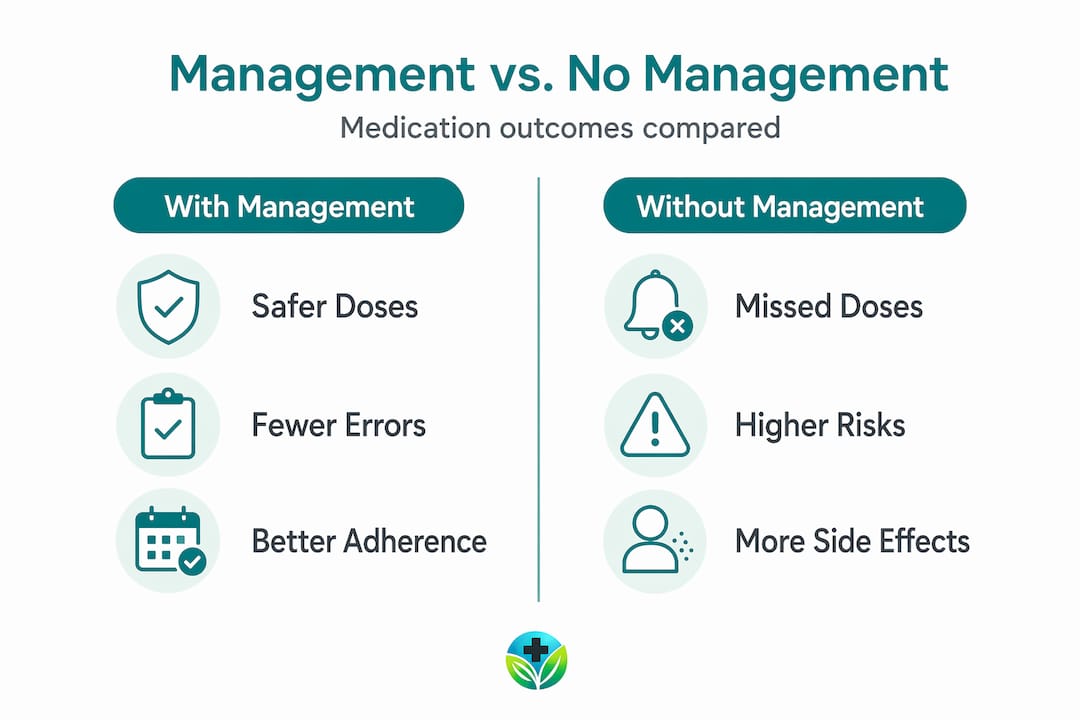
The stakes become clearest when you look at what happens without adequate oversight. Polypharmacy, defined as taking five or more medications, dramatically increases the likelihood of drug interactions, adverse effects, and non-adherence. The numbers behind this are sobering.
Medication-related injuries affect over 1.3 million people annually in the United States, with polypharmacy identified as a primary driver of preventable adverse drug events. (npj Health Systems, 2025)
Chronic conditions add another layer of complexity. A patient managing type 2 diabetes, hypertension, and high cholesterol may take six or more daily medications, each with its own timing, food interactions, and monitoring requirements. Blood-pressure medications, for example, can cause dizziness that increases fall risk, particularly in older adults. Without someone reviewing the full regimen, that risk goes unrecognized until a fall happens.
The following table illustrates how medication complexity scales with chronic disease burden:
| Number of chronic conditions | Typical medications prescribed | Relative risk of adverse drug event |
|---|---|---|
| 1 | 1 to 2 | Low |
| 2 to 3 | 3 to 5 | Moderate |
| 4 or more | 6 or more | Significantly elevated |
Medication errors during care transitions represent another concentrated danger. When a patient moves from a hospital to home or to a rehabilitation facility, medication lists often change rapidly. Doses are modified, drugs are added or discontinued, and instructions may not transfer clearly. Without a formal reconciliation process, patients can end up taking duplicate therapies or missing critical medications entirely.
How medication therapy management improves outcomes
Medication therapy management, commonly called MTM, is a formal service model in which pharmacists conduct structured medication reviews and provide personalized counseling. The evidence supporting MTM has grown substantially in recent years, and the findings are consistent: structured intervention works.
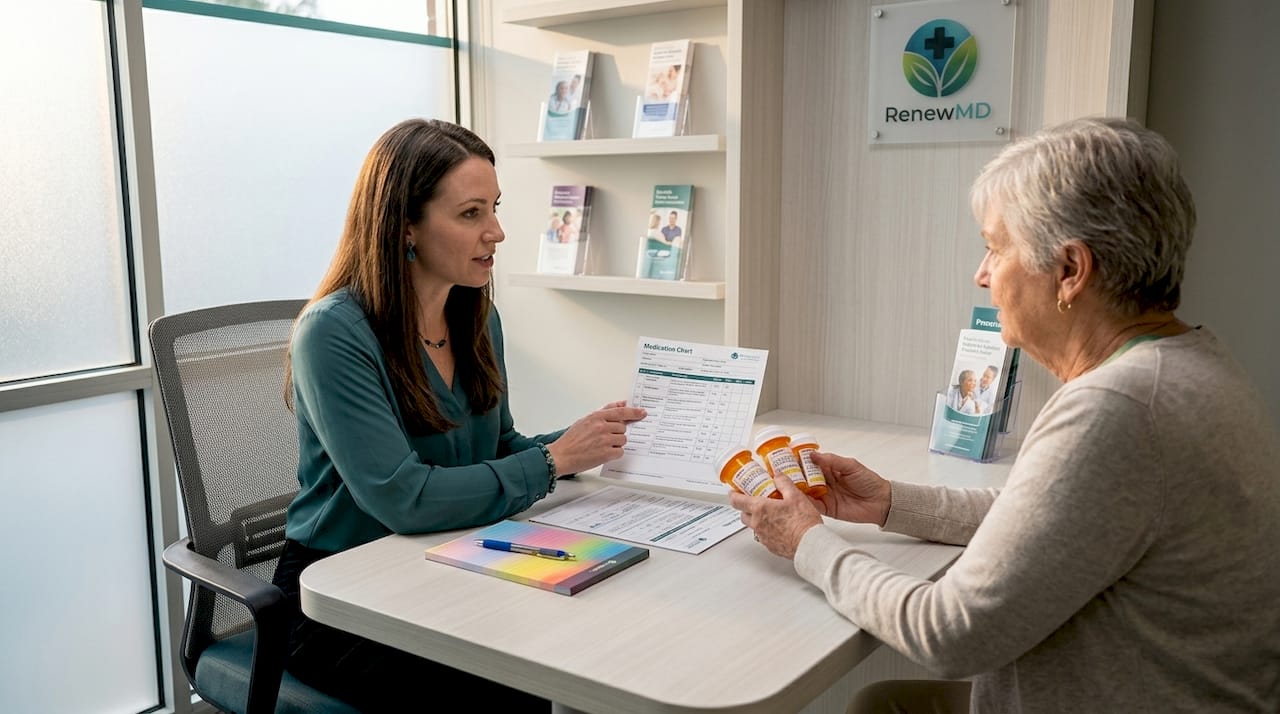
A 2025 cluster randomized trial demonstrated that MTM counseling improves adherence in patients managing both diabetes and hypertension over a six-month period. The intervention group showed significantly better medication-taking behavior compared to patients receiving standard care alone. Importantly, this improvement was not immediate. Adherence gains emerged at around six months, confirming that behavior change is gradual and requires sustained, personalized support rather than a single educational session.
Pharmacist-led proactive outreach extends these benefits into safety outcomes as well. A 2026 randomized clinical trial published in JAMA Network Open found that pharmacist intervention reduced severe hypoglycemia, specifically emergency visits related to dangerously low blood sugar, in high-risk patients with type 2 diabetes, without compromising overall glucose control. That is a meaningful result. It means patients were kept safer without losing the therapeutic benefit of their regimen.
The mechanisms behind these improvements follow a clear sequence:
- Comprehensive medication review identifies dosing errors, unnecessary duplications, and interaction risks before they cause harm
- Personalized counseling helps patients understand why each drug matters and what to watch for
- Scheduled follow-up catches side effects early and adjusts therapy before problems escalate
- Coordination with prescribers closes the gap between what was intended and what is actually happening in the patient's daily life
- Patient education builds the health literacy needed for long-term self-management
For older adults managing multiple medications, this kind of integrated clinical pharmacy support is not optional. It is the safety infrastructure their regimen requires.
Pro Tip: If you are managing a chronic condition like diabetes or hypertension, ask your provider about accessing a formal medication therapy management review. Many insurance plans, including Medicare Part D, cover this service at no additional cost.
Medication management during care transitions
The period immediately following hospital discharge is one of the highest-risk windows in a patient's medication journey. Regimens change, instructions can be unclear, and the patient is often managing new diagnoses while already stressed and fatigued.
Research published in 2026 found that pharmacist-led discharge interventions reduced same-hospital unplanned 30-day utilization by 10.4 percentage points in older adults with low medication adherence. That effect was concentrated in the patients most likely to struggle after leaving the hospital, those with limited health literacy, complex regimens, and poor baseline adherence.
Several barriers make this transition period particularly difficult:
- Low health literacy makes it hard to interpret discharge instructions accurately
- Complex regimens with multiple new medications overwhelm patients without clear explanations
- Fragmented communication between hospital and outpatient providers leaves gaps in the medication record
- Limited follow-up scheduling means problems go undetected for weeks after discharge
The solution is not simply handing patients a printed medication list. Effective medication reconciliation requires high-quality data, coordinated workflows between care settings, and proactive outreach from pharmacy teams to confirm the patient understands their regimen and has the medications in hand. For patients with chronic weight-related conditions, this is especially relevant, given that conditions like type 2 diabetes and cardiovascular disease often drive the complexity of post-discharge regimens. Learning about chronic weight management strategies can help frame the broader context of why these medications matter over the long term.
Practical steps to engage with your medication care
Understanding why medication management matters is one thing. Knowing how to actively participate in it is what changes your daily experience with your prescriptions. Patients who take a proactive role in their medication care tend to have better outcomes and fewer preventable problems.
Here are concrete steps you can take:
- Keep an updated medication list that includes the drug name, dose, how often you take it, and what condition it treats. Bring this to every appointment, including urgent care visits and specialist consultations.
- Ask about every new prescription before you leave the office. Specifically ask: what is this for, how do I take it, and what side effects should I watch for?
- Never stop or change a medication without consulting your provider. Stopping some drugs abruptly can cause withdrawal effects or allow a controlled condition to deteriorate rapidly.
- Request a full medication review whenever you change providers, receive a new diagnosis, or add a prescription. This is especially important after a hospitalization.
- Store medications correctly. Temperature, humidity, and light exposure can degrade drug effectiveness. Medications that require refrigeration or specific storage conditions need consistent handling. Reviewing dosing and storage guidance is worthwhile if you travel frequently or live in a variable climate.
- Use digital tools or reminder apps to support daily adherence. Technology does not replace clinical oversight, but it reduces the cognitive burden of managing complex schedules.
The relationship between patient and care team is most effective when it flows both ways. Bring your questions, report what you notice, and do not wait for your next scheduled appointment if something feels wrong.
My perspective on what patients and providers often miss
I have reviewed the research on medication management extensively, and one pattern stands out clearly: the gap between what patients assume and what the evidence actually shows is wide. Most people believe that following a prescription label is sufficient. The clinical trials reviewed here tell a different story.
What I find most striking is how often the patients at highest risk, those with polypharmacy, low health literacy, or limited follow-up access, are precisely the ones who receive the least structured support. The 2026 discharge trial result of a 10.4 percentage point reduction in re-hospitalization was not achieved through technology or complex protocols. It was achieved through pharmacist outreach, clear communication, and consistent follow-up.
The importance of medication management is not only about preventing adverse events. It is about treating medication therapy as a dynamic, evolving process rather than a static prescription. When a patient's condition changes, their regimen should be reviewed. When a new drug is added, the full picture should be reassessed. The assumption that things are fine unless proven otherwise is how preventable harm happens quietly.
My view is that patients benefit most when they stop seeing their pharmacist as someone who counts pills and start seeing them as a clinical resource. The trials cited here confirm that pharmacist involvement reduces serious outcomes, including hypoglycemia emergencies and unnecessary hospital returns. That kind of impact deserves more recognition at the patient level, not just in academic journals.
— Raymond
Managing your medications with Renewmd's support
For patients managing chronic conditions, the connection between medication safety and long-term health is direct. Renewmd was built around exactly this principle. As a telehealth platform staffed by licensed U.S. clinicians and pharmacies, Renewmd offers medically supervised care that includes provider consultations, medication delivery, and ongoing clinical support in a single, coordinated program.
Renewmd's specialty in GLP-1 receptor agonist therapy reflects a commitment to evidence-based medication management for weight and metabolic health. GLP-1 therapies like Semaglutide and Tirzepatide require careful dosing, monitoring, and patient education because their clinical benefits depend on proper use over time. Renewmd's clinical team guides patients through each step, from understanding how the medication works to managing side effects and tracking progress.
If you are exploring medication options for chronic weight management and want a care model where clinical oversight is built in, not bolted on, learning how Renewmd's process works is a practical starting point.
FAQ
What is medication management exactly?
Medication management is the ongoing process of reviewing, monitoring, and supporting a patient's use of prescribed drugs to maximize benefit and minimize risk. It involves coordination between patients, prescribers, and pharmacists.
Why is polypharmacy a concern for medication safety?
Taking five or more medications significantly increases the risk of drug interactions, side effects, and non-adherence. Research links polypharmacy to over 1.3 million medication-related injuries annually in the United States.
How do pharmacists improve medication outcomes?
Pharmacists conduct medication reviews, screen for interactions, counsel patients on safe use, and provide follow-up support. Clinical trials show these interventions reduce severe side effects and lower rates of hospital re-utilization.
When is medication management most critical?
The highest-risk periods include hospital discharge, the start of a new chronic condition diagnosis, and any time five or more medications are being taken simultaneously. Structured support during these windows prevents the most common and serious medication errors.
Does medication adherence improve quickly with support?
Not immediately. Research shows that meaningful adherence improvements typically take around six months of consistent counseling and follow-up to develop. One-time education sessions alone are not sufficient for lasting behavior change.