
Most people who lose weight through dieting gain it back within one to five years. That is not a personal failure. It reflects a fundamental mismatch between how most weight loss programs are designed and how obesity actually works. Obesity is now recognized as a chronic, complex disease influenced by genetics, neurobiology, environment, and behavior. This article explains what chronic weight management really means, how GLP-1 receptor agonists fit into long-term care, and what evidence-based strategies actually help people maintain meaningful health gains over time.
Table of Contents
- What does chronic weight management mean?
- Core strategies: Lifestyle, monitoring, and support
- GLP-1 medications: Their role in long-term weight care
- Why maintenance matters: Risks, relapse, and long-term health
- A new mindset: Chronic weight care as ongoing health, not a finish line
- How RenewMD supports your chronic weight management journey
- Frequently asked questions
Key Takeaways
| Point | Details |
|---|---|
| Obesity is chronic | Lasting weight success means treating obesity like a long-term health condition rather than a temporary challenge. |
| Ongoing care is essential | Maintenance requires regular monitoring, lifestyle changes, and continued medical support. |
| Medications need continuity | GLP-1s and other anti-obesity medications often require long-term use for sustained results. |
| Relapse is normal | Weight regain is common and expected—planning for ongoing management builds long-term success. |
| Focus on health gains | The true goal is improved health and reduced risk, not just a lower number on the scale. |
What does chronic weight management mean?
Now that you understand why weight loss so often fails long-term, let's clarify what chronic weight management actually means and why it requires a completely different mindset.
Think about how medicine handles other long-term conditions. A person with hypertension does not take blood pressure medication for three months, hit a target number, and stop. A person managing type 2 diabetes does not follow a glucose plan for a season and then assume the problem is permanently resolved. Obesity works the same way. Obesity is a chronic, relapsing disease caused by an interaction of complex genetics, biology, behavior, and environment. Treating it with a 12-week diet is like treating high blood pressure with a weekend retreat.
Chronic weight management means applying continuous, structured medical and behavioral care over time. It is not about willpower or motivation. It is about recognizing that your body's biology actively resists weight loss after significant fat reduction, largely through hormonal and neurobiological adaptations that increase hunger and slow metabolism. Understanding this changes what success looks like.
Here is what chronic weight management typically includes:
- Ongoing medical supervision by a licensed clinician, not a one-time consultation
- Regular monitoring of weight, body composition, and relevant lab markers
- Behavioral support for nutrition, physical activity, and stress management
- Medication management when pharmacotherapy is indicated
- Relapse planning that treats weight gain recurrence as a manageable part of care
"Chronic weight management reframes obesity as a lifelong condition requiring the same continuous attention as other complex diseases, not a temporary problem to be solved and forgotten." This perspective shifts the focus from short-term results to long-term health outcomes.
Learning about effective weight management from a clinical standpoint helps clarify why the ongoing care model outperforms repeated cycles of dieting and regain. The goal is not simply to reach a lower number on a scale. It is to reduce the health risks associated with excess weight, including cardiovascular disease, type 2 diabetes, sleep apnea, and joint problems, and to sustain those gains over years, not weeks.
Core strategies: Lifestyle, monitoring, and support
Having defined chronic weight management, let's examine how it works in real life, the daily habits, tools, and professional supports that help make results last.

The science is consistent on one point: structured, ongoing intervention outperforms self-managed dieting. Effective weight maintenance uses structured interventions with monthly contact, regular self-monitoring, and consistent physical activity. The frequency of contact with a care team is not incidental. It is part of the treatment itself.
Here are the four core pillars of a chronic weight management program:
- Self-monitoring. Tracking body weight, food intake, and physical activity consistently is one of the strongest predictors of long-term maintenance. People who monitor regularly tend to catch early weight regain before it accelerates.
- Regular care team contact. Monthly check-ins at minimum, with more frequent contact during periods of higher risk such as medication changes, life stressors, or early treatment phases.
- Sustainable lifestyle changes. The emphasis is on achievable and maintainable behaviors, not extreme restriction. This typically means moderate caloric reduction, gradual increases in physical activity, and consistent sleep hygiene.
- Relapse management. Weight gain recurrence is planned for, not ignored. Adjustments to medications, behavioral strategies, or support intensity are part of the care protocol, not a sign of failure.
Pro Tip: Daily weigh-ins are more effective than weekly ones for catching early weight gain trends. Research shows people who weigh themselves every day are significantly better at maintaining weight loss than those who check in less frequently. The goal is awareness, not anxiety.
| Strategy | Frequency | Purpose |
|---|---|---|
| Body weight check | Daily or weekly | Early detection of regain |
| Care team check-in | Monthly or more | Medication review, behavioral coaching |
| Physical activity | 150+ minutes per week | Metabolic health, mood, maintenance |
| Food tracking | Ongoing | Pattern recognition, accountability |
| Lab monitoring | Every 3 to 6 months | Metabolic markers, medication safety |
Accessing medically supervised strategies means your care plan is built around your specific health data, not a generic program designed for an average person. That individualization matters enormously when you are managing a condition as complex as obesity over the long term.
GLP-1 medications: Their role in long-term weight care
Beyond lifestyle, many adults use medical therapies like GLP-1 receptor agonists. Let's see how these fit into the chronic care equation, and what happens if you stop.
GLP-1 receptor agonists, including Semaglutide and Tirzepatide, work by mimicking the glucagon-like peptide-1 hormone that your gut naturally produces after eating. This class of medications signals satiety (fullness) to the brain, slows gastric emptying (how quickly food leaves the stomach), and reduces appetite. The result is meaningful weight reduction that, in clinical trials, often exceeds what is achievable through lifestyle changes alone.
But here is the critical point that most people do not fully understand before starting: GLP-1 medications must often be continued to maintain benefits, because stopping leads to weight regain and a return of elevated health risks. In large clinical trials, participants who discontinued Semaglutide after weight loss regained approximately two-thirds of their lost weight within one year. This is not a drug failure. It reflects the underlying biology of obesity, which does not resolve when you reach a certain weight.
This is why GLP-1 use is part of ongoing care managed over time, since obesity is chronic. Understanding the GLP-1 efficacy comparison between different medications can help you and your clinician identify the most appropriate option for your health profile and goals.
Here is a comparison of the two most widely used GLP-1 based medications in weight management:
| Feature | Semaglutide | Tirzepatide |
|---|---|---|
| Mechanism | GLP-1 receptor agonist | GLP-1 and GIP dual agonist |
| Average weight loss | 15 to 17% of body weight | 20 to 22% of body weight |
| Approved indication | Chronic weight management | Chronic weight management |
| Dosing | Weekly injection or daily oral | Weekly injection |
| Ongoing use | Yes, chronic therapy | Yes, chronic therapy |
Pro Tip: Before starting any GLP-1 medication, review the GLP-1 journey timeline so you have realistic expectations about when results typically begin, when they plateau, and what ongoing care looks like at each phase.
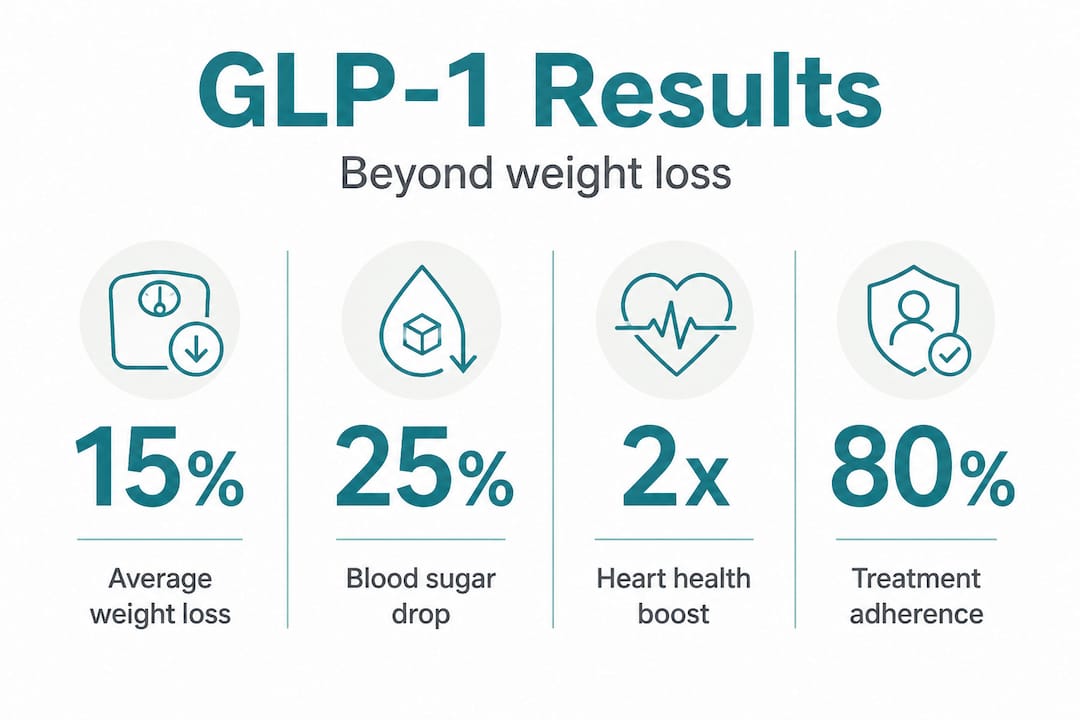
The key benefits of GLP-1 therapies extend well beyond weight numbers. These medications improve blood sugar regulation, reduce cardiovascular risk markers, and in some studies, show protective effects on kidney function. But all of these benefits depend on continued treatment. Reviewing the available GLP-1 safety research helps clarify what the evidence currently supports and where monitoring is important. If you are planning to use these medications as part of a long-term plan, understanding long-term GLP-1 maintenance is essential before you start.
GLP-1 medications should always be combined with lifestyle interventions. Medication without behavioral support tends to produce smaller and less sustained results. The combination approach is what the clinical evidence consistently supports.
Key considerations when using GLP-1 medications as part of chronic weight care:
- These are chronic therapies, not courses of treatment with a defined endpoint
- Regular lab monitoring is needed to track metabolic markers and ensure safety
- Dose adjustments over time are common and should be managed by a licensed clinician
- Stopping the medication without a transition plan significantly increases regain risk
- Side effects are most common in the early weeks and often improve with gradual dose escalation
Why maintenance matters: Risks, relapse, and long-term health
With a better understanding of medications like GLP-1s, let's explore why ongoing maintenance, not just reaching a weight goal, really matters for your long-term health.
Weight gain recurrence is one of the most common and least discussed aspects of obesity treatment. Studies consistently show that weight regain is common, and that maintaining reduction requires ongoing support or active therapy. The body responds to weight loss with a series of biological adaptations: leptin levels drop (reducing satiety signals), ghrelin rises (increasing hunger), and resting metabolic rate decreases. These are not psychological responses. They are physiological adaptations that work against weight maintenance.
"The body after significant weight loss is not the same as the body before it. Hormonal and metabolic changes create a biological drive toward weight regain that persists for years, which is exactly why chronic management frameworks treat relapse as an expected part of the disease course rather than a personal failure."
Chronic management focused on health improvement and complication and risk reduction over time is more likely to produce durable results than programs focused solely on achieving a target weight. This distinction matters practically. When the goal is reducing cardiovascular risk or improving blood sugar control, even partial weight loss and maintenance can produce clinically significant health gains. People do not need to reach a "normal" BMI to see meaningful improvements in longevity and quality of life.
Ongoing maintenance also protects key health markers that are directly affected by excess weight:
- Blood sugar regulation. Even a 5 to 10% reduction in body weight can meaningfully improve insulin sensitivity. Learn more about GLP-1 and blood sugar regulation in the context of long-term treatment.
- Cardiovascular risk. Sustained weight loss lowers blood pressure, reduces LDL cholesterol, and decreases systemic inflammation.
- Mental and emotional health. Research increasingly links weight management with GLP-1 and mental health outcomes, including reduced symptoms of depression and improved quality of life.
- Sleep quality. Reducing excess weight often improves obstructive sleep apnea severity, which has downstream effects on energy, cognitive function, and metabolic health.
- Joint and mobility health. Reduced mechanical load on joints from sustained weight reduction often translates to less pain and improved function over time.
Relapse is not a reason to stop treatment. It is a signal that the current plan needs adjustment, whether that means increasing care team contact, modifying medication, or addressing behavioral factors driving regain. The chronic care model anticipates this and builds it into treatment planning from the start.
A new mindset: Chronic weight care as ongoing health, not a finish line
All of these details point to one crucial shift: rethinking what success actually means in weight management.
The cultural narrative around weight loss is almost entirely focused on reaching a goal. The before-and-after photo. The target number on a scale. The dramatic transformation. That framing is not only inaccurate when it comes to the science of obesity. It is actively harmful. It sets people up to feel like failures when the biology of their own bodies pushes back after weight loss.
Here is the uncomfortable truth: there is no finish line in chronic weight management. There is ongoing health. There is continuous monitoring. There are good periods and harder periods. There are medication adjustments, behavioral resets, and check-ins that never fully stop. That is not a bleak picture. It is an accurate one, and accepting it is the first step toward actually succeeding over time.
We see patients who have lost significant weight and maintained it for years. What they have in common is not exceptional willpower. It is a consistent relationship with a care team, a plan that accounts for relapse, and goals built around how they feel and what their lab markers show, not just what a scale says. Framing success as "health gain" rather than "weight loss" reduces the shame cycle that often derails long-term adherence. Reviewing the evidence on long-term strategies reinforces that this mindset shift is not just philosophical. It is clinically supported.
Obesity requires the same ongoing management as diabetes or hypertension. That means regular check-ins, adjustments when something is not working, and the understanding that needing continued support is not weakness. It is medical reality.
How RenewMD supports your chronic weight management journey
If you are ready to put these chronic weight care principles into action, here is how RenewMD can help you every step of the way.
RenewMD.clinic is built around exactly the kind of chronic care model this article describes. The platform connects you with licensed U.S. clinicians who specialize in medically supervised weight management using GLP-1 receptor agonists including Semaglutide and Tirzepatide. Everything from your clinical intake and lab testing to medication delivery and ongoing coaching is handled through one fully integrated, telehealth-based program, with no hidden fees and no complicated billing. Regular check-ins are built into every plan, so your care team can monitor your progress, adjust your treatment, and support you through the phases where relapse risk is highest. If you are looking for a medically grounded, ongoing approach to weight care, start your consultation with RenewMD today.
Frequently asked questions
Is chronic weight management just another diet plan?
No, chronic weight management treats obesity as a lifelong health challenge requiring ongoing medical and lifestyle support, not a short-term diet with a defined end date.
What happens if I stop GLP-1 medication after losing weight?
Most people regain a significant portion of lost weight and see a return of elevated health risks, because stopping GLP-1s leads to weight regain and increased metabolic risk factors without other sustained support in place.
How often should I check in with a care team for chronic weight management?
Maintenance programs recommend monthly contact at minimum, along with frequent self-monitoring, to support effective long-term weight maintenance and early detection of regain.
Why do some people regain weight after initial success?
Biological adaptations after weight loss including hormonal changes and metabolic slowdown actively drive the body toward regaining weight, which is why long-term management and ongoing clinical support are essential components of sustained success.