

A virtual weight loss clinic is a licensed medical service that delivers supervised weight management care entirely online, combining physician consultations, prescription medications, lab testing, and behavioral coaching through digital platforms. The term "telehealth weight management" is the standard clinical phrase, though "virtual weight loss clinic" is widely used and accurately describes the same model. Platforms like Nava Health, Rush, and Novant Health have built programs around this approach, offering patients access to dietitians, psychologists, and prescribing physicians without requiring a single in-person visit. For patients in rural or underserved areas, this model removes the geographic barrier that has historically limited access to specialized obesity medicine.
What is a virtual weight loss clinic and how does it work?
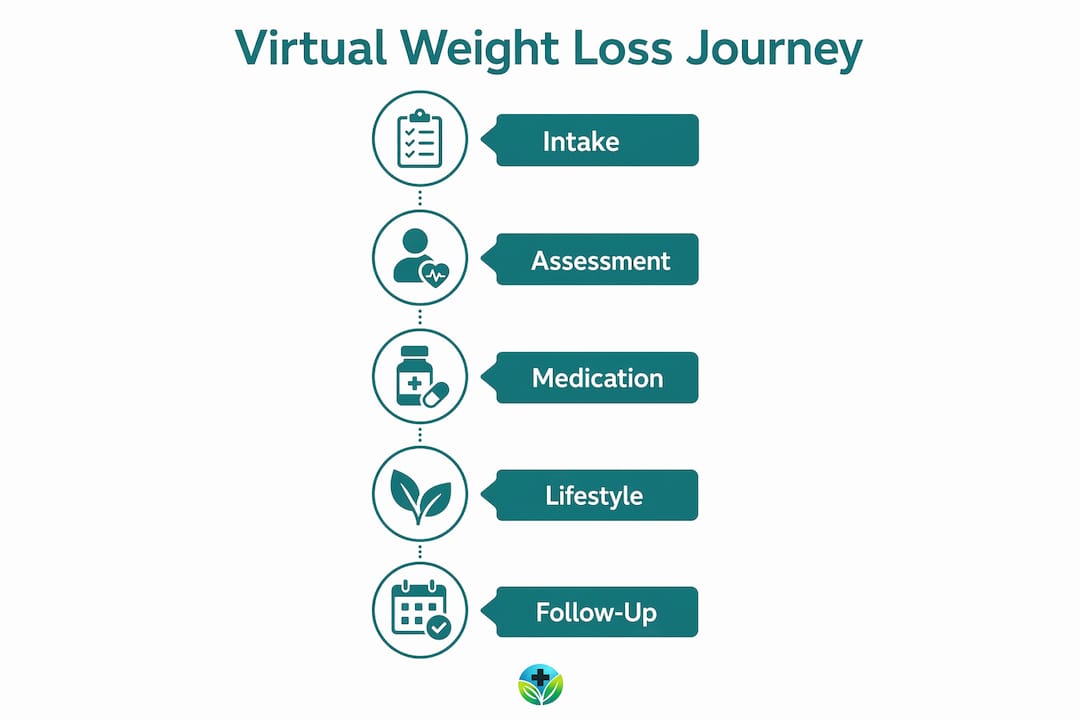
A virtual weight loss clinic operates through a fully digital care pathway, from intake to treatment to follow-up. Patients complete a clinical intake form, undergo a video or asynchronous consultation with a licensed provider, receive a personalized treatment plan, and access ongoing support through an app or patient portal. The entire process, including lab work ordered through partner labs and medication shipped to the patient's door, happens without a waiting room.
Virtual weight loss services generally fall into three market segments. GLP-1 focused programs are medication-first, centering treatment on FDA-approved drugs like semaglutide or tirzepatide. Behavior-change platforms focus on nutrition coaching, exercise planning, and psychological support without prescribing medication. Hybrid programs combine both, pairing GLP-1 medications with lab monitoring, dietitian support, and mental health resources. The hybrid model produces the most durable outcomes because it addresses the behavioral and metabolic roots of weight gain, not just caloric intake.
The clinical team in a full-service virtual clinic typically includes a prescribing physician or nurse practitioner, a registered dietitian, and in some programs, a licensed psychologist. Sessions happen via video visit, secure messaging, or app-based check-ins depending on the platform. Lab results are reviewed remotely, and medication adjustments are made through the same digital channel.

What services do online weight loss clinics typically offer?
The service menu at an online weight loss clinic varies by program type, but most established platforms offer a core set of clinical and behavioral services.
Common services include:
- Medical consultations: Video or asynchronous visits with a licensed prescriber for evaluation, diagnosis, and medication management
- GLP-1 prescriptions: Semaglutide and tirzepatide prescribed and shipped directly to the patient after clinical review
- Lab testing: Metabolic panels, thyroid function, and hormonal assessments ordered through partner labs
- Nutritional counseling: One-on-one or group sessions with a registered dietitian
- Exercise planning: Personalized activity recommendations based on fitness level and medical history
- Psychological support: Behavioral coaching or therapy to address emotional eating and body image
- Ongoing monitoring: Regular follow-ups to track progress, adjust dosing, and manage side effects
Rush and Nava Health emphasize comprehensive care beyond medication-only solutions, integrating psychologists and dietitians into their programs. That multi-specialist structure matters because weight gain often has metabolic, hormonal, and psychological drivers that a prescription alone cannot address. A program that skips lab work may miss an undiagnosed thyroid condition or insulin resistance that is actively working against weight loss.
Pro Tip: Ask any virtual clinic whether lab testing is included or billed separately. Some platforms advertise low monthly fees but charge additional costs for the bloodwork that makes the program medically sound.
What are the benefits of a virtual weight loss clinic vs. in-person care?
Virtual clinics remove the structural barriers that prevent many patients from accessing obesity medicine. The advantages are concrete and measurable.
- No travel required. Patients attend consultations from home, eliminating commute time, parking costs, and time away from work.
- Access to specialists in any location. Virtual programs eliminate traditional barriers such as travel and scheduling conflicts, connecting patients in rural or underserved areas to top-tier obesity medicine specialists.
- Flexible scheduling. Evening and weekend appointments are common, accommodating patients who cannot take time off during standard clinic hours.
- Privacy and discretion. Medication ships directly to the patient's home in discreet packaging. HIPAA-compliant telehealth platforms secure health data and communications, giving patients confidence that their records remain private.
- Lower overhead costs. Without physical clinic space, some virtual providers pass savings to patients through lower consultation fees or bundled pricing.
The privacy factor deserves specific attention. Weight management carries social stigma for many patients. The ability to consult a physician, receive a diagnosis, and pick up medication without sitting in a waiting room reduces the psychological friction that keeps people from seeking care. That friction is not trivial. It is one of the primary reasons patients delay treatment for years.
The most effective virtual programs combine medication management with lifestyle coaching, lab testing, and mental health support to address root causes of obesity. A program that offers only a prescription misses the behavioral component that determines whether weight loss is maintained after medication ends.
How do GLP-1 medications fit into virtual weight loss programs?
GLP-1 receptor agonists are the pharmacological backbone of most medically supervised virtual weight loss programs. These drugs, including semaglutide (the active ingredient in Wegovy and Ozempic) and tirzepatide (the active ingredient in Zepbound and Mounjaro), work by mimicking gut hormones that signal satiety to the brain, slowing gastric emptying, and reducing appetite. Both are FDA-approved for weight management and commonly prescribed via virtual clinics with medical oversight and follow-up visits.
GLP-1 programs report initial weight loss of 5–15 pounds per month, which typically slows over time as patients reach maintenance. That trajectory is normal and expected. The first months produce the most rapid change; the later months require dose adjustments and behavioral reinforcement to sustain results.
| Feature | Medication-only program | Hybrid program |
|---|---|---|
| GLP-1 prescription | Yes | Yes |
| Lab monitoring | Rarely | Yes |
| Dietitian support | No | Yes |
| Psychological coaching | No | Often included |
| Maintenance planning | Rare | Structured protocol |
| Long-term outcome | Higher regain risk | More durable results |
GLP-1 medications require ongoing renal and hepatic function monitoring, which virtual clinics handle through integrated lab partnerships and periodic testing. Skipping that monitoring is not a minor oversight. Kidney and liver function directly affect how the body processes these medications, and changes in either can require dose adjustments or discontinuation.
Sustained weight loss often depends on whether the clinic offers a plan for tapering medication and managing the lifestyle transition, not just the initial drug supply. A structured maintenance protocol, sometimes called an "off-ramp," helps prevent the weight regain that occurs when patients stop medication without behavioral support in place. Understanding the GLP-1 weight loss timeline helps patients set realistic expectations before they start.
Pro Tip: Before enrolling in any GLP-1 program, ask specifically: "What is your maintenance protocol after I stop or taper medication?" If the answer is vague, that is a meaningful red flag.
How to choose the right virtual weight loss program
Choosing a virtual weight loss clinic requires evaluating several factors beyond price and convenience. The right program depends on your medical history, goals, and how much clinical support you need.
- Clarify your goal first. Patients who need to lose a significant amount of weight with underlying metabolic issues need a hybrid program with lab monitoring. Patients seeking behavioral support and accountability may do well with a coaching-only platform.
- Verify provider credentials. Confirm that prescribing providers are licensed in your state and that the clinic operates through a U.S.-licensed pharmacy. State medical board websites allow credential verification at no cost.
- Ask about the full cost. GLP-1 telehealth programs typically cost $200–$400 per month depending on services included. Understand whether medication, labs, and consultations are bundled or billed separately.
- Evaluate the technology. The platform should offer a patient portal for secure messaging, lab result review, and appointment scheduling. A poor digital experience creates friction that reduces adherence.
- Confirm follow-up frequency. Effective programs schedule regular check-ins, not just an initial consultation. Monthly or biweekly follow-ups allow for dose adjustments and early identification of side effects.
- Ask about insurance and coverage. Most GLP-1 telehealth programs operate on a direct-pay model. Some insurance plans cover GLP-1 medications but not the telehealth consultation fee. Clarify both before enrolling.
A detailed guide on evaluating GLP-1 telehealth programs can help you compare platforms against these criteria systematically. The process of getting GLP-1 prescribed online is straightforward when you know what to look for in a provider.
Key Takeaways
A virtual weight loss clinic delivers the most durable results when it combines GLP-1 medication management with lab monitoring, dietitian support, and a structured maintenance plan, not medication alone.
| Point | Details |
|---|---|
| Three program types exist | GLP-1 focused, behavior-change coaching, and hybrid programs each serve different patient needs. |
| Lab monitoring is non-negotiable | Renal and hepatic function testing is required for safe GLP-1 use and must be included or clearly arranged. |
| Maintenance planning matters | Programs without a taper or off-ramp protocol carry a higher risk of weight regain after medication ends. |
| Cost ranges widely | Monthly fees typically run $200–$400 for GLP-1 programs; always confirm what is bundled vs. billed separately. |
| Privacy is a real clinical benefit | HIPAA-compliant platforms and discreet medication delivery reduce the stigma barrier that delays treatment. |
The part most patients overlook when choosing a virtual clinic
The conversation around virtual weight loss clinics tends to focus on convenience and medication access. Those matter. But after reviewing how these programs actually perform over 12 to 24 months, the factor that separates good outcomes from poor ones is almost always the maintenance phase.
Most patients lose weight on GLP-1 medications. The biology is well established. What is far less discussed is what happens when the medication stops or is tapered. Without a structured behavioral plan in place, weight regain is common. The programs that produce lasting results treat the medication phase as a window of opportunity to build habits, not as the solution itself. Clinics that skip the dietitian, skip the behavioral coaching, and skip the lab monitoring are selling a shortcut that often leads back to the starting point.
I have also seen patients choose programs based on price alone, selecting the lowest monthly fee without realizing that labs, follow-ups, and maintenance consultations are all billed separately. The total cost ends up higher than a more transparent all-inclusive program would have been.
My honest recommendation: treat your virtual clinic selection the same way you would treat choosing a specialist. Check credentials, ask hard questions about what happens after the first three months, and prioritize programs that include positive body image support alongside the clinical work. Weight management is not only a metabolic problem. It is a behavioral and psychological one too.
— Raymond
Renewmd's approach to virtual weight loss care
Renewmd offers a fully integrated telehealth weight management program built around GLP-1 medications like semaglutide and tirzepatide, delivered by licensed U.S. clinicians through a transparent, all-inclusive model. The program covers provider consultations, lab testing, medication delivery, and ongoing coaching with no hidden fees. Patients receive medically supervised care from intake through maintenance, with HIPAA-compliant digital tools securing every step. For patients who want evidence-based treatment without the complexity of fragmented billing, Renewmd's GLP-1 weight loss program provides a clear, clinically grounded path forward. Learn more about how the program works before you enroll.
FAQ
What is the difference between a virtual and in-person weight loss clinic?
A virtual weight loss clinic delivers all care remotely through video consultations, digital lab orders, and direct medication shipping, while an in-person clinic requires physical visits. Both can offer the same clinical services; the virtual model removes geographic and scheduling barriers.
Are GLP-1 medications safe to receive through a telehealth clinic?
GLP-1 medications like semaglutide and tirzepatide are FDA-approved and can be safely prescribed through virtual clinics when the program includes proper medical evaluation, lab monitoring, and regular follow-up visits.
How much does a virtual weight loss program cost per month?
GLP-1-focused telehealth programs typically cost $200–$400 per month, depending on whether medication, labs, and consultations are bundled or billed separately. Behavior-change coaching programs generally cost less.
Do virtual weight loss clinics accept insurance?
Most virtual weight loss clinics operate on a direct-pay model. Some insurance plans cover GLP-1 medications but not the telehealth consultation fee. Patients should confirm coverage with both their insurer and the clinic before enrolling.
What should I look for in a virtual weight loss clinic?
Look for licensed U.S. providers, included lab monitoring, a clear maintenance protocol after medication ends, and transparent all-inclusive pricing. Multi-disciplinary teams that include dietitians and psychologists produce more durable long-term results than medication-only programs.