

Medical weight loss has long been associated with waiting rooms, repeated office visits, and scheduling conflicts that make consistent care difficult for many people. That assumption is changing. Telehealth clinics now deliver fully supervised weight loss programs remotely, including GLP-1 receptor agonist prescriptions like Semaglutide and Tirzepatide, without requiring patients to leave home. This article explains exactly what a telehealth clinic is, how it operates for weight management, what its limitations are, and why it may be the most practical path forward for adults seeking medically guided obesity treatment in 2026.
Table of Contents
- What defines a telehealth clinic?
- How telehealth clinics operate for weight loss
- Key limitations and regulatory requirements in telehealth clinics
- Benefits of telehealth clinics for weight loss patients
- A fresh perspective: What most patients miss about telehealth clinics
- Next steps: Starting your weight loss journey with telehealth
- Frequently asked questions
Key Takeaways
| Point | Details |
|---|---|
| Telehealth clinic basics | Telehealth clinics deliver medical care remotely, often without requiring in-person visits. |
| Weight loss workflows | GLP-1 weight loss programs leverage virtual consults, remote monitoring, and medication management. |
| Regulatory constraints | Telehealth clinics must comply with licensing, reimbursement, and state regulatory rules. |
| Main advantages | Telehealth clinics offer convenience, privacy, and broader access, especially for rural or underserved patients. |
| Importance of follow-up | Long-term success in telehealth care depends on consistent communication and effective support. |
What defines a telehealth clinic?
Having set the context, let's define exactly what a telehealth clinic is and how it functions compared to traditional medical settings.
Telehealth care is delivered remotely, with patients connecting to a licensed provider through phone or video from home or any convenient location. This is more than just a video call. A telehealth clinic is a structured healthcare organization built around virtual delivery, not a backup option for traditional care.
Telehealth clinics deliver clinical services primarily via virtual appointments, secure messaging, remote monitoring, and coordinated care, rather than requiring physical presence for most encounters. In practice, this means a patient can complete an intake assessment, receive a prescription, get lab work ordered, and follow up with a provider all without driving to a single office.
"Remote care is not a reduced version of clinical care. When designed properly, a telehealth clinic delivers the same clinical rigor as an in-person practice, with the added benefit that patients can engage with care where they actually live their lives."
The operational structure of a telehealth clinic differs from a traditional clinic in meaningful ways. Understanding those differences helps set realistic expectations.
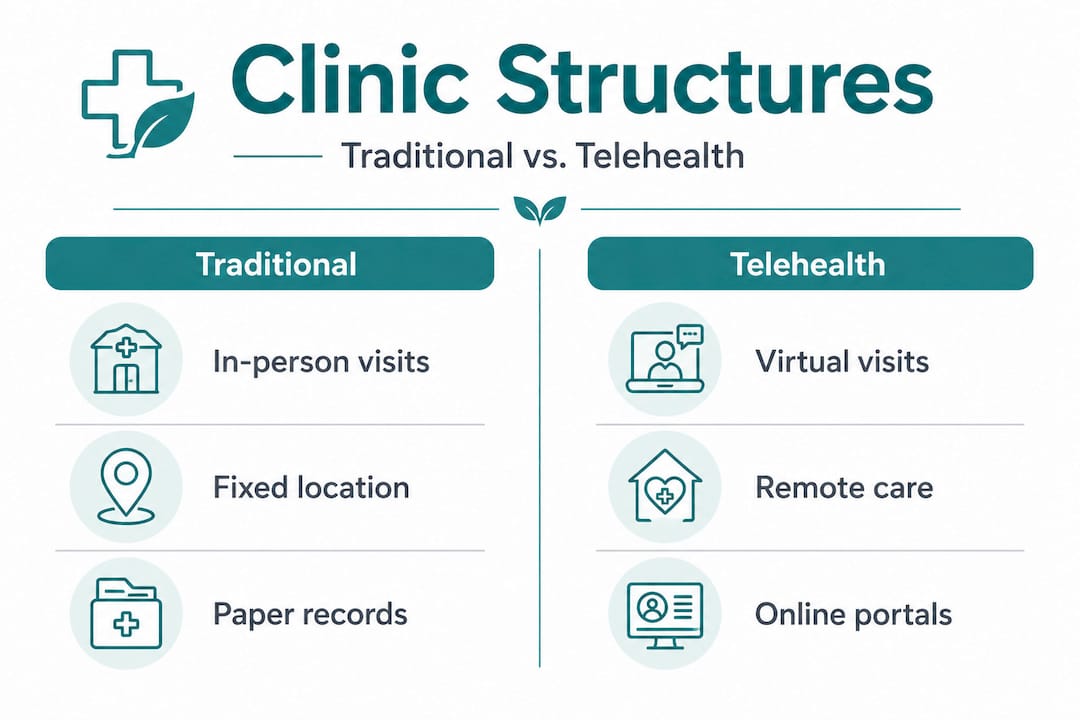
| Feature | Traditional clinic | Telehealth clinic |
|---|---|---|
| Patient location | On-site required | Remote (home, work, etc.) |
| Visit format | In-person only | Video, phone, or messaging |
| Scheduling | Fixed office hours | Flexible, often asynchronous |
| Lab work | In-office or local lab | At-home kits or local draw sites |
| Medication access | In-person pharmacy | Direct mail delivery |
| Provider availability | Single region | Multi-state, licensed remotely |
Key operational elements that define a telehealth clinic include:
- Synchronous visits: Real-time video or phone consultations between patient and provider
- Asynchronous messaging: Secure written communication outside of scheduled visits
- Remote monitoring: Patients share data such as weight, blood pressure, or glucose readings through apps or devices
- Care coordination: Providers, pharmacies, and lab services working together through integrated platforms
- Digital intake: Clinical history collected through structured online forms before any visit
For weight loss patients, rural telehealth access is one of the most important outcomes of this model. People in areas with few bariatric specialists or obesity medicine physicians can now access the same level of care as those in major metropolitan areas. Additionally, state licensing for telehealth governs which providers can treat patients in which states, meaning legitimate telehealth clinics must maintain multi-state licensing compliance to operate legally.
How telehealth clinics operate for weight loss
Now that you know what telehealth clinics are, let's explore how these clinics specifically handle weight loss care, including GLP-1 prescriptions and monitoring.
Telehealth weight loss programs with GLP-1s rely on provider-led medication management combined with remote monitoring and support. Real-world effectiveness is strongly shaped by patient adherence and retention, not simply the technology used to deliver care. A well-run telehealth clinic addresses this by building structured touchpoints into every stage of the program.
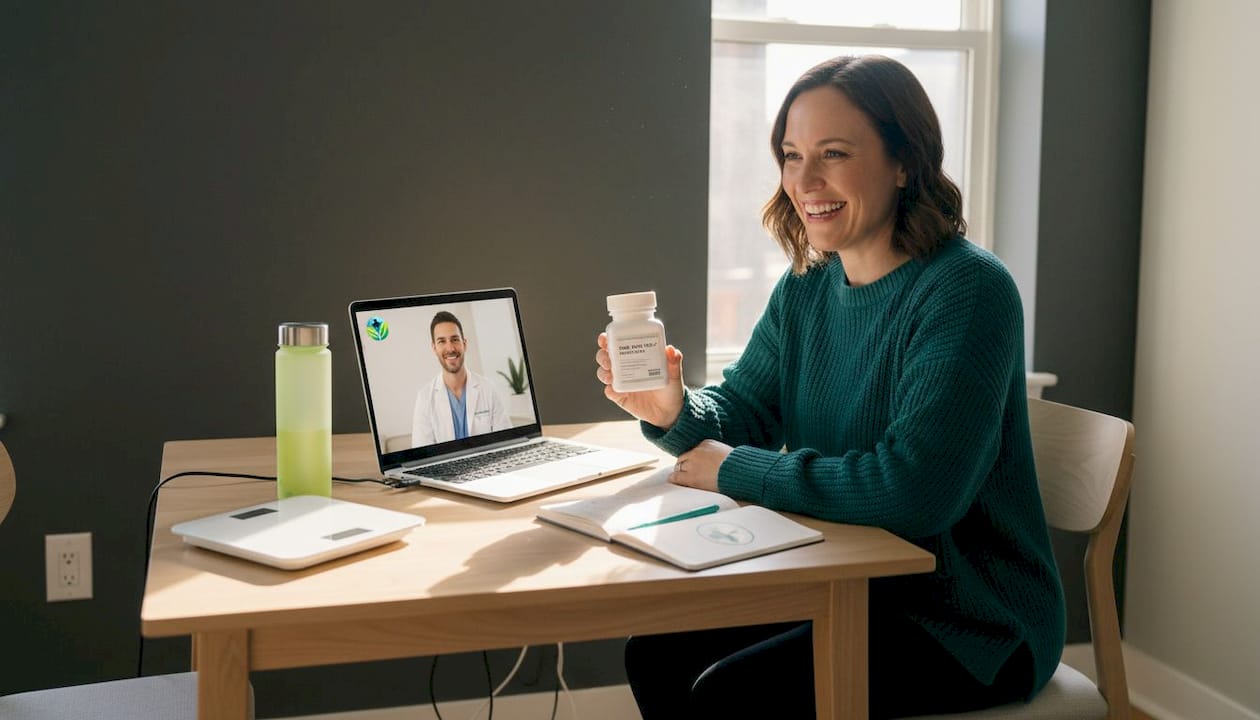
Virtual visits can be conducted on computers, tablets, or smartphones and include phone or video calls, secure messaging, and the ability to share tracked data such as blood pressure readings. This flexibility makes consistent participation far more realistic for adults with busy schedules or mobility limitations.
Here is how a typical GLP-1 weight loss program unfolds through a telehealth clinic:
| Program stage | What happens | How it's delivered |
|---|---|---|
| Clinical intake | Health history, BMI assessment, goals | Online intake form |
| Provider consultation | Review of candidacy for GLP-1 therapy | Video or phone visit |
| Lab work | Metabolic panel, blood glucose, thyroid | At-home kit or lab order |
| Prescription | Medication ordered and reviewed | Provider portal |
| Medication delivery | GLP-1 shipped to patient's address | Licensed pharmacy |
| Follow-up visits | Dose titration, side effect review | Scheduled video check-ins |
| Ongoing monitoring | Weight tracking, vitals, adherence | Secure messaging and apps |
| Coaching and support | Behavioral and nutritional guidance | Asynchronous or scheduled |
- Initial consultation: A licensed provider reviews your health history, current medications, and weight loss goals. This determines whether GLP-1 medications like Semaglutide or Tirzepatide are clinically appropriate.
- Lab screening: Baseline bloodwork is ordered to assess kidney function, blood glucose, lipids, and other metabolic markers before treatment begins.
- Prescription and dispensing: Once cleared, the provider issues a prescription through a licensed pharmacy, and medication is shipped directly to your home.
- Titration and check-ins: Doses are gradually increased over weeks, with provider check-ins to evaluate tolerability and effectiveness.
- Progress monitoring: You share weight and other tracked data regularly, allowing providers to adjust the treatment plan based on real results.
- Ongoing support: Nutritional coaching, behavioral guidance, and responsive messaging keep you engaged between visits.
Pro Tip: Logging your weight, food patterns, and any side effects in a simple notes app between check-ins gives your provider concrete data to work with. Patients who actively share progress between visits tend to see better dose optimization and stronger outcomes over time.
Effective GLP-1 medication management in a telehealth setting depends on this kind of structured engagement. Patients who treat their telehealth program like a passive prescription service miss a significant part of what drives results. Those who engage consistently, share their data, and ask questions between visits get the most out of the model. For patients thinking ahead about costs, understanding FSA/HSA coverage for GLP-1 programs can make treatment significantly more affordable.
Key limitations and regulatory requirements in telehealth clinics
With an understanding of how clinics operate, it's essential to recognize important limits and regulatory requirements that impact telehealth for weight loss care.
Telehealth is not appropriate for every condition. Some clinical situations require in-person evaluation or additional testing, and the quality of care depends on thorough screening, appropriate follow-up, and a clear path to escalation when remote assessment is not enough. For most weight loss patients with BMIs in the overweight or obese range and no acute medical emergencies, telehealth is well suited. But the model has real boundaries that should be understood clearly.
Telehealth operations in the U.S. are shaped by reimbursement rules, parity laws, and regulatory constraints including allowable service types and provider and patient location requirements. These rules affect what a telehealth clinic can legally prescribe, bill for, and provide across state lines.
What telehealth clinics can do for weight loss patients:
- Screen for GLP-1 eligibility using health history and lab results
- Prescribe FDA-approved and compounded GLP-1 medications remotely
- Order lab work and interpret results asynchronously
- Provide behavioral coaching and nutritional support
- Monitor progress through patient-reported data and remote tools
- Coordinate medication delivery through licensed pharmacies
What telehealth clinics cannot do:
- Perform physical examinations or diagnostic imaging
- Manage acute medical emergencies or complications requiring immediate care
- Replace in-person care for patients with complex, unstable conditions
- Guarantee coverage under all insurance plans in all states
- Operate without valid state licensure for both provider and patient location
Regulatory requirements also shape who can prescribe and in which states. A provider licensed in Texas cannot legally treat a patient in New York unless they also hold a New York license or operate under a specific interstate agreement. Reputable telehealth clinics maintain multi-state licensing structures to stay compliant. Patients should always verify that any clinic they use employs licensed U.S. providers with appropriate credentials for their state.
Insurance and payment rules add another layer of complexity. Coverage for GLP-1 therapies varies widely by plan and state. Some states have parity laws requiring equal coverage for telehealth and in-person services, while others do not. Patients should confirm their specific benefits before beginning a program, as out-of-pocket costs for GLP-1 medications can be significant without coverage.
Benefits of telehealth clinics for weight loss patients
Beyond overcoming limitations, telehealth clinics deliver unique advantages that make weight loss treatment more accessible and personalized for many U.S. adults.
Convenience is the most immediate benefit. No commuting, no sitting in waiting rooms, no taking half a day off work for a fifteen-minute appointment. You schedule visits that fit your calendar, and you complete them from wherever you are. For adults managing demanding jobs, childcare, or limited transportation, this is not a small thing. It is the difference between consistent care and dropping out.
Privacy matters more than many people acknowledge. Discussing body weight, eating patterns, and medication options in a clinical setting can feel uncomfortable. Remote visits allow patients to have those conversations from their own space, on their own terms. Telehealth platforms use secure messaging and encrypted video to protect sensitive health information, which many patients find reassuring.
Access to GLP-1 therapies in regions with limited specialists is arguably the most impactful benefit. Many rural and underserved communities lack obesity medicine specialists. A telehealth clinic connected to licensed providers across multiple states brings evidence-based GLP-1 treatment to patients who previously had no realistic path to it.
Practical advantages for weight loss patients include:
- Flexible scheduling that accommodates work, family, and lifestyle demands
- Direct medication delivery eliminating pharmacy pickup and supply gaps
- Continuous communication through secure messaging between formal visits
- Multi-disciplinary support combining medical, nutritional, and behavioral guidance in one platform
Research presented at the American Diabetes Association 2025 conference found that telemedicine combined with GLP-1 therapy and behavioral support showed significant declines in weight and blood pressure, reinforcing the clinical credibility of this care model when delivered with proper structure.
Pro Tip: Use secure messaging between visits to share small wins, ask dosing questions, or flag new symptoms early. Staying connected with your care team outside of formal appointments is one of the simplest ways to maintain momentum and catch potential issues before they become setbacks.
Telehealth also opens pathways for addressing the psychological side of weight management. Patients dealing with emotional eating, stress-related weight gain, or mental health factors that influence their eating patterns can be referred to additional support within the same platform. Some patients also explore complementary approaches such as hypnotherapy for weight loss alongside their medical treatment.
A fresh perspective: What most patients miss about telehealth clinics
Now that we've looked at benefits, it's time to dig deeper and challenge some assumptions about the true impact of telehealth clinics.
Most people evaluating telehealth clinics focus on the technology: Is the app easy to use? How fast is shipping? Can I do a video call from my phone? These are reasonable questions, but they measure the wrong things. Technology is the delivery mechanism. It is not the treatment.
What actually determines results in a telehealth weight loss program is the quality of clinical follow-through and patient engagement. A GLP-1 prescription sent through a polished app delivers exactly the same pharmacological profile as one prescribed in a traditional office. The medication itself does not know how it was ordered. What changes outcomes is whether providers are proactively monitoring, whether dose adjustments are made based on real data, and whether patients stay engaged long enough for the medication to work as intended.
"The real-world effect of any weight loss program, telehealth or otherwise, is shaped by how consistently both the patient and the care team show up for each other. Access without engagement is just access."
Many patients have experienced telehealth platforms that prescribe quickly and then effectively disappear. No follow-up. No check-ins. No escalation when side effects appear or progress stalls. That model is not clinical care. It is closer to an online pharmacy with a checkbox consultation attached.
The clinics that produce meaningful, sustained outcomes are those with structured follow-up protocols, clear escalation pathways when remote care is insufficient, and genuine personalization beyond a standard dosing schedule. Before choosing a telehealth clinic, ask specific questions: How often will I hear from a provider? What happens if I have a side effect? How does this clinic handle situations that require in-person care? Understanding the future of telemedicine for weight management means recognizing that the field is maturing toward these higher standards.
The technology is enabling. The clinical relationship is what heals.
Next steps: Starting your weight loss journey with telehealth
If you're ready to apply what you've learned and explore telehealth weight loss options, here's how RenewMD can help you move forward.
RenewMD.clinic provides medically supervised weight loss through a fully integrated telehealth platform designed specifically for adults seeking evidence-based GLP-1 therapy. Every program includes licensed provider consultations, lab testing, medication delivery, and ongoing coaching, all without hidden fees or confusing billing. The clinical team manages GLP-1 care and patient support from intake through treatment, with clear escalation pathways and consistent provider follow-through built into every plan. As the future of weight management continues to shift toward personalized, remote-first care, RenewMD is built to meet patients where they are, with the clinical structure needed to actually deliver results. If you have a BMI of 27 or higher and are ready to explore supervised GLP-1 treatment, the next step is a simple online intake.
Frequently asked questions
Can telehealth clinics prescribe GLP-1 medications for weight loss?
Yes, telehealth clinics led by licensed providers can prescribe GLP-1 medications remotely, following proper screening and ongoing monitoring. Real-world effectiveness depends significantly on adherence and patient retention throughout the program.
Do telehealth clinics accept insurance or HSA/FSA for weight loss care?
Some telehealth clinics accept insurance and HSA/FSA payments, but coverage varies by state and individual plan. Regulatory and reimbursement rules shape what each clinic can bill for and under which conditions.
How do telehealth clinics monitor progress during a weight loss program?
Telehealth clinics use virtual check-ins, secure messaging, and remote tracking tools such as uploading data from scales or blood pressure monitors to follow patient progress. These platforms support video, phone, and asynchronous data sharing to keep monitoring consistent between formal appointments.
Are there limits to what telehealth clinics can provide for weight loss?
Yes, some situations require in-person evaluation or procedures, and not all medical needs can be met remotely. Some clinical situations require in-person evaluation, and care quality depends on proper screening, appropriate follow-up, and escalation when remote assessment falls short.