

Most people have tried at least one approach to weight loss that promised fast results and delivered short-term progress followed by frustration. The cycle is familiar: cut calories, lose some weight, regain it, and start over. What that pattern reveals is not a lack of willpower but a lack of the right structure. True weight management is not a single intervention. It is a coordinated, medically informed process that addresses the biology, behavior, and daily habits that together determine long-term health outcomes. This guide breaks down what that process actually looks like and why it matters for your health far beyond any number on a scale.
Table of Contents
- What is comprehensive weight management?
- How GLP-1 receptor agonists fit into the bigger picture
- Behavioral and lifestyle pillars: The often-missed link
- Telehealth: Making comprehensive care accessible
- What does effective, long-term weight management look like?
- The uncomfortable truth about weight management most programs miss
- Take the next step toward personalized, comprehensive care
- Frequently asked questions
Key Takeaways
| Point | Details |
|---|---|
| Comprehensive matters | Sustained weight management requires more than medications—it’s a multi-pillar strategy including nutrition, activity, behavioral, and medical support. |
| GLP-1s boost results | GLP-1 medications can help you lose 10-20% of body weight when paired with structured support. |
| Behavior is still key | Building long-term habits through evidence-based behavioral approaches remains central for lasting change. |
| Telehealth bridges gaps | Modern telehealth programs make comprehensive, multidisciplinary care accessible no matter where you live. |
| Long-term focus wins | Success means maintaining progress—not just losing weight quickly—and requires ongoing support and realistic goals. |
What is comprehensive weight management?
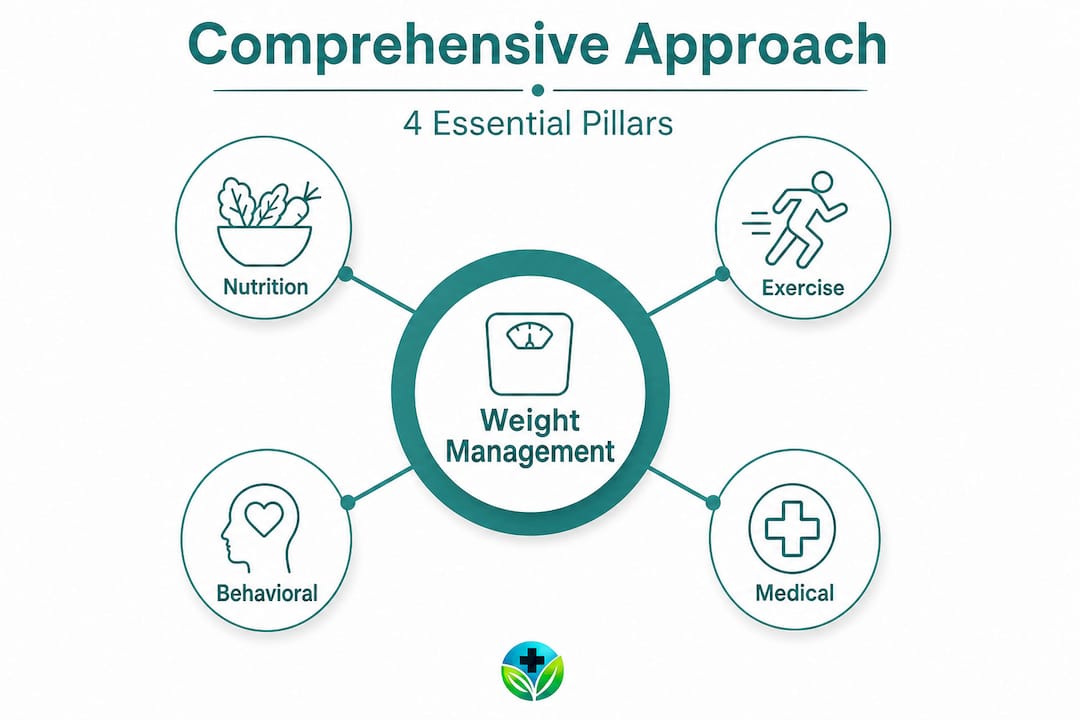
The term "weight management" gets used loosely, but in a clinical context it carries a specific meaning. Comprehensive weight management is a structured, multidimensional approach that addresses not just body weight but the full range of health factors connected to excess adiposity (body fat). It integrates four core pillars: nutrition, physical activity, behavioral support, and medical or pharmacological interventions.
This approach represents a significant shift in how the medical community thinks about obesity and elevated BMI. Rather than narrowly targeting weight loss as the primary goal, modern clinical guidelines emphasize complication-centric risk reduction over weight loss alone. That means the real objectives include lowering blood pressure, reducing the risk of type 2 diabetes, improving cardiovascular health, and enhancing quality of life. Weight loss becomes a tool to achieve those outcomes, not the end goal itself.
The four pillars work together and reinforce each other:
- Nutrition: Structured, sustainable dietary patterns rather than crash diets or extreme restriction
- Physical activity: Gradual, consistent movement tailored to a person's current fitness level and medical status
- Behavioral strategies: Evidence-based techniques to address habits, emotional eating, and psychological barriers to change
- Medical support: When appropriate, pharmacological treatments including GLP-1 receptor agonists, alongside regular clinical oversight
"Short-term weight loss without a structured plan for maintenance is one of the strongest predictors of weight regain. A multidimensional program changes that equation by creating durable habits alongside measurable clinical outcomes."
Why does this outperform quick-fix methods? Because quick-fix approaches typically address only one variable, usually calories. They ignore the hormonal, psychological, and behavioral factors that regulate appetite, metabolism, and motivation. Without those elements in place, the body often works against sustained weight loss. For more on how modern telehealth programs apply this model, see this telehealth weight management overview.
How GLP-1 receptor agonists fit into the bigger picture
GLP-1 receptor agonists are a class of medications that mimic glucagon-like peptide-1, a hormone your gut naturally releases after eating. These medications signal satiety to the brain, slow gastric emptying (meaning food moves through your stomach more slowly), and help regulate blood sugar. The result is reduced appetite and, over time, meaningful weight loss. The two most prominent agents in this class for weight management are semaglutide and tirzepatide.
The clinical evidence behind these medications is substantial. GLP-1s yield 10-20% body weight loss at one year, with semaglutide producing approximately 15% and tirzepatide reaching up to 20% in clinical trials. Those are clinically significant reductions that translate directly into improved cardiometabolic markers. For a detailed side-by-side look at these two options, the tirzepatide vs semaglutide comparison covers the key differences in mechanism, dosing, and outcomes.
| Medication | Weight loss at 1 year | Primary mechanism | Administration |
|---|---|---|---|
| Semaglutide | ~15% body weight | GLP-1 receptor agonism | Weekly injection or daily oral |
| Tirzepatide | Up to 20% body weight | Dual GLP-1 and GIP receptor agonism | Weekly injection |
The critical point is that GLP-1 medications function as an amplifier, not a replacement, for lifestyle change. When combined with structured behavioral programs and telehealth support, telehealth GLP-1 programs achieve ~12% weight loss at six months alongside measurable blood pressure reductions. That is a meaningful result in a relatively short timeframe, and it reflects the power of integration.
Here is what bundled programs typically include alongside the medication:
- Regular provider check-ins to monitor side effects and titrate dosing
- Nutritional guidance aligned with how GLP-1s affect appetite
- Behavioral coaching to reinforce habit formation
- Lab monitoring to track metabolic markers over time
Pro Tip: If you are considering a GLP-1 medication, ask your provider specifically how they plan to support you beyond the prescription itself. A medication without a surrounding program is a missed opportunity. You can also learn more about semaglutide for metabolic health and explore how to get semaglutide online through a licensed telehealth provider.
Behavioral and lifestyle pillars: The often-missed link
Here is what most weight management programs underinvest in: the behavioral layer. Medications can suppress appetite and nutrition plans can guide food choices, but neither addresses the underlying patterns that drive overeating, sedentary behavior, or inconsistent adherence. That is where behavioral science comes in.

Two of the most evidence-backed approaches are Motivational Interviewing (MI) and Cognitive Behavioral Therapy (CBT). MI is a collaborative conversation technique that helps people resolve ambivalence and strengthen their internal motivation to change. CBT helps identify and restructure the thoughts, beliefs, and situations that trigger unhelpful behaviors. Both are well-studied in the context of weight management, and behavioral modifications like MI and CBT enhance adherence while pharmacotherapy amplifies but does not replace lifestyle change.
A useful framework for understanding where someone is in their journey is the transtheoretical model, commonly called the stages of change. It describes five phases:
- Precontemplation: Not yet aware that change is needed or not ready to consider it
- Contemplation: Acknowledging the need for change but not yet taking steps
- Preparation: Actively planning and getting ready to change
- Action: Implementing new behaviors consistently
- Maintenance: Sustaining those changes over time, typically defined as six months or longer
Knowing where you are in this model helps providers tailor their approach. Someone in the contemplation stage needs different support than someone six months into active behavioral change. This is one reason why cookie-cutter programs fail so frequently. They apply the same protocol regardless of where a person actually is.
"Long-term weight management success is less about any single diet or drug and more about the durability of the behavioral and environmental changes that support it over time."
It is also worth noting that behavioral strategies deliver benefits independent of the number on the scale. Reduced blood pressure, better sleep, lower fasting glucose, and improved mood are all outcomes that can emerge from consistent behavioral work even before significant weight loss occurs. For a broader look at how these tools come together, the effective weight management strategies resource covers practical approaches in depth.
Pro Tip: Do not wait until you feel "ready" to begin. Research consistently shows that starting with small, concrete behavioral changes while building readiness is more effective than waiting for the perfect moment of motivation.
Telehealth: Making comprehensive care accessible
One of the most significant shifts in weight management over the past several years is the rise of telehealth as a delivery model for comprehensive care. For many Americans, especially those in rural areas, geographic access to obesity medicine specialists, registered dietitians, and behavioral health providers has historically been limited. Telehealth fundamentally changes that equation.
A well-structured telehealth weight management program brings together multiple elements through a single digital platform:
- Provider consultations conducted via secure video or messaging
- Lab testing ordered remotely and completed at local facilities or via at-home kits
- Medication delivery shipped directly to the patient from licensed pharmacies
- Ongoing coaching from trained health professionals to support adherence and habit formation
- Digital tracking tools that monitor weight, nutrition, activity, and symptoms between appointments
The data supporting this model is encouraging. Telehealth GLP-1 plus behavioral programs achieve approximately 12% weight loss at six months with blood pressure reductions, demonstrating that remote delivery does not compromise clinical outcomes.
| Care component | Traditional in-person | Telehealth model |
|---|---|---|
| Provider access | Limited by geography and scheduling | Available remotely, often within days |
| Medication fulfillment | Local pharmacy pickup | Delivered to your door |
| Behavioral support | Separate referrals required | Integrated into the platform |
| Lab monitoring | In-person lab visits | Remote ordering, local draw |
| Ongoing check-ins | Scheduled office visits | Flexible, digital-first contact |
Telehealth also reduces common barriers like cost, transportation, time away from work, and the discomfort some patients feel in clinical settings. For people managing busy schedules or caring for family members, the convenience of remote care often translates directly into better adherence. The modern telehealth weight care model integrates each of these components so nothing falls through the gaps.
What does effective, long-term weight management look like?
Setting realistic expectations is one of the most important things a clinician can do for a patient. Unrealistic goals do not just lead to disappointment; they actively undermine adherence and motivation. Here is what a realistic, evidence-based trajectory looks like.
A reduction of 5-15% in body weight is considered the target range for meaningful cardiometabolic benefits, including reductions in blood pressure, fasting glucose, triglycerides, and systemic inflammation. You do not need to reach an "ideal" BMI to experience significant health improvements. That is a clinically important and often underappreciated fact.
A practical timeline for a medically supervised program might look like this:
- Months 1-3: Initial consultation, baseline labs, medication start and titration, foundational behavioral coaching. Early weight loss often visible but variable.
- Months 3-6: Medication at or near target dose, behavioral habits consolidating, weight loss accelerating. Many patients reach 8-12% loss by this point.
- Months 6-12: Continued loss or plateau management, lifestyle reinforcement, monitoring for side effects or metabolic changes. Target 12-20% depending on medication and adherence.
- Year 1 and beyond: Transition to maintenance phase. Medication may continue long-term. Support continues through ongoing check-ins and coaching.
Plateaus are normal and expected. They reflect the body's adaptive metabolic responses and are not a sign of failure. The key is having a clinical team who can identify when a plateau is occurring and adjust the approach accordingly.
Pro Tip: Weight management is genuinely a long-term medical endeavor, similar in structure to managing blood pressure or cholesterol. Thinking of it as a sprint leads to burnout; thinking of it as ongoing care leads to sustained outcomes. Explore GLP-1 maintenance strategies and review a weight loss journey timeline to understand what sustained treatment looks like. For more on chronic weight management results, the evidence behind long-term approaches is clear.
The uncomfortable truth about weight management most programs miss
Here is something the weight loss industry rarely says clearly: most programs are designed to produce short-term results, not long-term success. That is not an accident. Short-term results are measurable, marketable, and easy to attribute to a specific product or plan. Long-term success requires sustained engagement, ongoing medical oversight, and behavioral commitment that does not make for an appealing headline.
The uncomfortable reality is that managing weight at a clinically meaningful level is genuinely hard. It requires coordinated effort across biology, behavior, and lifestyle. The people who achieve lasting success are not those who found the "right" diet or the "best" medication. They are the ones who committed to a structured, multi-pillar program and stayed engaged even when progress slowed.
Programs that skip behavioral support and clinical oversight are not just incomplete. They are often actively counterproductive, because they condition people to expect fast results without building the infrastructure to sustain them. When the quick fix stops working, the resulting discouragement can make it harder to commit to a genuine approach the next time.
Telehealth has created real opportunities by removing barriers to care. But telehealth is not a magic solution either. A digital platform that delivers medication without behavioral coaching or ongoing clinical oversight is just a faster version of the same short-term approach. The medium matters less than the methodology. What actually works is a program that treats weight management as a medical condition requiring coordinated, continuous care, which is precisely what effective weight strategies in a properly structured program deliver.
Take the next step toward personalized, comprehensive care
If this framework resonates with you, the next step is connecting with a program that actually delivers it. RenewMD.clinic offers medically supervised weight management through a fully integrated telehealth model that includes provider consultations, GLP-1 medications like semaglutide and tirzepatide, lab testing, and behavioral coaching. Everything is handled through licensed U.S. clinicians and pharmacies, with no hidden fees or complicated billing. You can learn about GLP-1s and explore digital weight management tools to understand what a complete program involves. When you are ready, start your GLP-1 care with a clinical team that treats weight management as the ongoing medical priority it truly is.
Frequently asked questions
Can you achieve lasting weight loss using telehealth with GLP-1 medications?
Yes, telehealth GLP-1 plus behavioral programs achieve approximately 12% weight loss at six months, often with additional health benefits such as blood pressure reductions, making them a clinically validated option for lasting results.
What are the main pillars of comprehensive weight management?
Comprehensive approaches prioritize four pillars: nutrition, exercise, behavioral strategies, and medical treatment, each reinforcing the others for better sustained outcomes than any single approach alone.
Is medication alone enough for long-term weight control?
No, the evidence is clear that pharmacotherapy amplifies but does not replace lifestyle and behavioral changes, meaning medication works best as one component of a structured program rather than a standalone solution.
What is a realistic weight loss goal for health improvement?
A 5-15% reduction in body weight is considered clinically significant for improving cardiometabolic risk factors such as blood pressure, blood sugar, and triglycerides, making it a practical and meaningful target for most people.