

Monitoring weight loss side effects is defined as the systematic tracking of physical symptoms and physiological changes during weight loss treatment to distinguish normal reactions from adverse events requiring medical attention. If you are using GLP-1 receptor agonists like Semaglutide or Tirzepatide, or medications such as bupropion-naltrexone or orlistat, understanding why you need to monitor weight loss side effects is not optional. It is the mechanism that keeps your treatment safe, your dosing accurate, and your progress sustainable. Mild side effects are common with prescription weight-loss drugs, but rare serious events require regular monitoring to distinguish them from expected reactions. The difference between a tolerable symptom and a medical emergency often comes down to how carefully you are paying attention.
Why monitor weight loss side effects during treatment?
Side effect monitoring in weight loss treatment serves one primary function: early detection. When your body responds to a GLP-1 receptor agonist like Semaglutide, it will almost certainly produce some gastrointestinal (GI) discomfort in the first weeks. That is expected. What is not expected, and what requires urgent attention, is severe abdominal pain radiating to your back, which can signal acute pancreatitis, a rare but potentially fatal complication of GLP-1 therapy.
The challenge is that pancreatitis symptoms can closely resemble the ordinary GI effects of GLP-1 medications. Nausea, abdominal discomfort, and reduced appetite are all common early on. Without systematic tracking, a patient may dismiss worsening pain as a normal adjustment phase. Symptom monitoring reduces the risk of delayed diagnosis by training you to recognize escalation patterns, not just isolated symptoms.
Beyond pancreatitis, monitoring captures a broader picture of how your body is adapting. Rapid weight loss can trigger gallstone formation, nutrient deficiencies, and dehydration. Each of these conditions has early warning signs that are detectable through consistent tracking. The importance of tracking weight loss goes well beyond the number on the scale.

What side effects should you watch during weight loss treatments?
The weight loss side effects to watch vary by medication, but several categories apply broadly across GLP-1 receptor agonists, orlistat, and combination drugs like bupropion-naltrexone.
Common GI symptoms to track:
- Nausea and vomiting, particularly in the first four to eight weeks of GLP-1 therapy
- Constipation, which is worsened by low fiber intake and reduced food volume
- Diarrhea, more common with orlistat due to its fat-blocking mechanism
- Bloating and delayed gastric emptying, a known effect of GLP-1 drugs that can progress to gastroparesis symptoms in some patients
Serious side effects requiring urgent evaluation:
- Severe, persistent abdominal pain, especially if it radiates to the back (pancreatitis warning)
- Yellowing of the skin or eyes, which may indicate gallbladder disease
- Dizziness, lightheadedness, or muscle cramps, which are dehydration-related symptoms that can accompany rapid early weight loss
- Elevated blood pressure, a specific concern with bupropion-naltrexone that requires medication-specific monitoring
- Mood changes or depressive symptoms, which some weight loss medications can influence
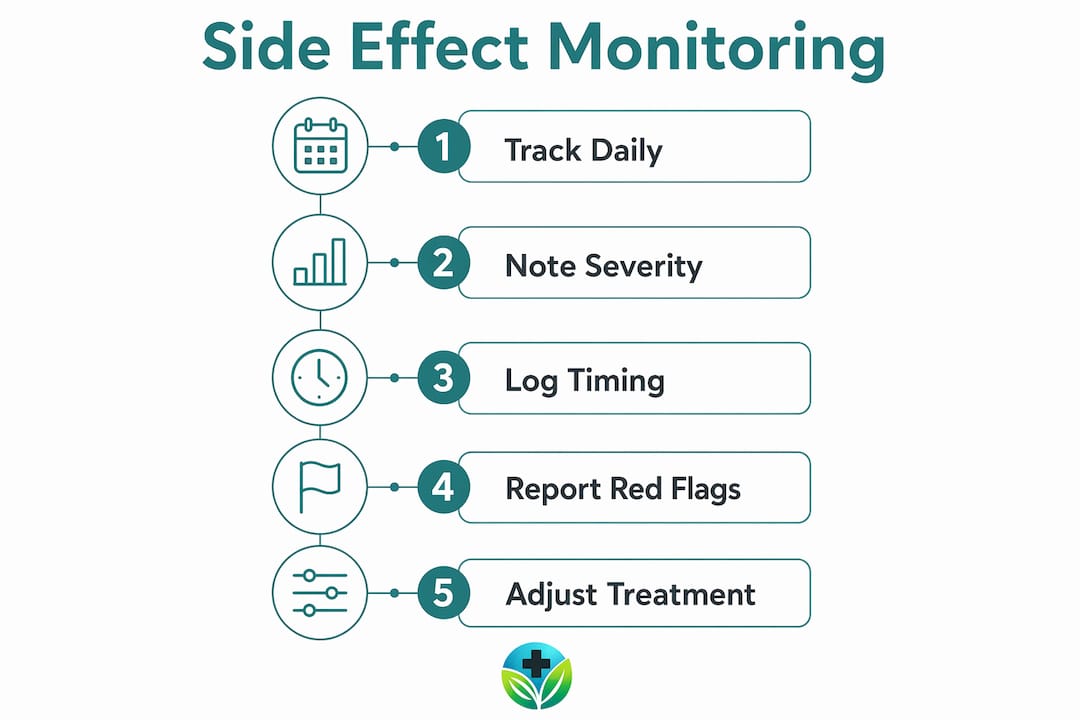
Pro Tip: Keep a simple daily log for the first 12 weeks of any new weight loss medication. Note the time, severity, and duration of any symptom. This pattern data is far more useful to your clinician than a general report of "feeling off."
Nutrient deficiencies are a slower-moving risk. Rapid caloric restriction combined with GLP-1-induced appetite suppression can reduce intake of iron, B12, magnesium, and vitamin D to levels that affect energy, cognition, and bone health over months. Monitoring weight loss effects means tracking lab values periodically, not just how you feel day to day.
How does monitoring improve safety and treatment outcomes?
Structured monitoring transforms your clinician's ability to manage your treatment. Without symptom data, dose adjustments are guesswork. With it, they become precise clinical decisions. Here is how the process works in practice:
-
Symptom reporting informs dose titration. Side effect reports influence titration decisions during escalation phases, helping clinicians slow the dose increase when GI symptoms are severe or accelerate it when tolerance is strong. This reduces treatment discontinuation.
-
Weight trend data distinguishes fat loss from fluid loss. Clinicians view rapid early weight drops as a signal worth investigating. A loss of several pounds in the first week almost always reflects fluid, not fat. Tracking this helps your provider evaluate hydration status and orthostatic symptoms rather than assuming the loss is metabolic.
-
Monitoring flags gallstone risk before symptoms become acute. Rapid weight loss increases gallstone risk because GLP-1 drugs slow gastric emptying, which affects bile saturation. Clinicians who monitor weight loss speed and nutrient status can intervene with dietary adjustments or ursodiol therapy before a gallstone becomes a surgical problem.
-
Behavioral monitoring supports long-term adherence. Self-monitoring of behaviors like food intake, physical activity, and mood correlates strongly with greater weight loss outcomes. Patients who track consistently are better positioned to identify what is working and what needs to change.
-
Medication-specific parameters catch risks that symptoms alone miss. Blood pressure monitoring with bupropion-naltrexone, for example, catches hypertension before it becomes a cardiovascular event. Feeling fine is not sufficient evidence that your blood pressure is within a safe range.
Pro Tip: Ask your provider to give you a written list of "red flag" symptoms specific to your medication at your first appointment. Knowing exactly what to watch for reduces anxiety and makes your monitoring more targeted.
The feedback loop between patient and clinician is the core mechanism of safe weight loss pharmacotherapy. Monitoring is not passive observation. It is an active clinical tool.
What are the best practices for self-monitoring weight loss and side effects?
Effective self-monitoring combines behavioral tracking with symptom documentation. Successful weight-loss programs emphasize weekly weighing and daily monitoring of eating, activity, and sleep to support long-term success. This structure gives you and your provider a reliable data stream.
Core self-monitoring practices:
- Weigh yourself once per week, at the same time of day, under the same conditions. Daily weighing amplifies normal fluctuations and creates unnecessary anxiety.
- Record food intake using apps like MyFitnessPal, Cronometer, or Lose It! to track not just calories but micronutrient patterns.
- Log physical activity and sleep quality, since both affect appetite regulation and medication tolerability.
- Document GI symptoms with a severity rating (1 to 5) and note any dietary triggers that preceded them.
- Track hydration by monitoring urine color. Pale yellow indicates adequate hydration; dark yellow or amber signals a deficit.
| Symptom category | What to track | When to contact your provider |
|---|---|---|
| GI symptoms | Frequency, severity, dietary triggers | Vomiting more than twice daily or lasting beyond 48 hours |
| Pain | Location, intensity, radiation pattern | Severe abdominal pain, especially radiating to the back |
| Hydration | Urine color, dizziness, muscle cramps | Persistent dizziness or inability to keep fluids down |
| Weight changes | Weekly trend, not daily fluctuation | Loss exceeding 2 pounds per week consistently |
| Mood and cognition | Energy, focus, emotional stability | Depressive symptoms or significant mood shifts |
Digital tools make this process manageable. Smart scales that sync to apps like Withings Health Mate or Garmin Connect provide automatic trend tracking. The best digital tools for weight care can also integrate food logs, activity data, and symptom notes into a single dashboard your provider can review remotely.
Dietary adjustments are part of monitoring too. Increasing fiber intake to 25 to 30 grams per day reduces GLP-1-related constipation. Spacing meals and eating smaller portions mitigates nausea during dose escalation. These are not just comfort measures. They are clinical interventions that improve tolerability and reduce the likelihood of discontinuation.
How do different weight loss medications compare in side effects and monitoring needs?
Not all weight loss medications carry the same risk profile, and monitoring requirements differ meaningfully between them.
| Medication | Primary side effects | Key monitoring parameters |
|---|---|---|
| Semaglutide (GLP-1) | Nausea, constipation, vomiting, pancreatitis risk | GI symptom severity, weight trend, abdominal pain pattern |
| Tirzepatide (GLP-1/GIP) | Similar GI profile, potentially stronger appetite suppression | Same as Semaglutide, plus monitoring for hypoglycemia in at-risk patients |
| Orlistat | Oily stools, fecal urgency, fat-soluble vitamin loss | Bowel habit changes, vitamin D, E, K, and A levels |
| Bupropion-naltrexone | Nausea, headache, elevated blood pressure, mood changes | Blood pressure at each visit, mood and mental health screening |
| Topiramate (combination) | Cognitive effects, kidney stones, mood changes | Cognitive function, kidney stone symptoms, mood assessment |
GLP-1 receptor agonists like Semaglutide and Tirzepatide require the most nuanced monitoring because their GI side effects overlap with symptoms of serious conditions like pancreatitis. Understanding the first weeks on GLP-1 therapy helps patients calibrate what is normal versus what warrants a call to their provider. Orlistat's risks are more predictable but require dietary fat restriction to remain tolerable. Bupropion-naltrexone demands cardiovascular vigilance that goes beyond symptom tracking into objective measurement.
The potential risks of weight loss are real across all medication classes, but they are manageable when monitoring is structured and consistent. The goal is not to eliminate side effects entirely. It is to catch the ones that matter before they escalate.
Key takeaways
Monitoring weight loss side effects is the clinical mechanism that separates safe, effective treatment from preventable harm, requiring systematic symptom tracking, medication-specific vigilance, and consistent patient-provider communication.
| Point | Details |
|---|---|
| Early detection saves outcomes | Tracking symptom patterns catches serious events like pancreatitis before they become emergencies. |
| Monitoring guides dose decisions | Side effect data allows clinicians to adjust GLP-1 titration and reduce treatment discontinuation. |
| Self-monitoring improves results | Recording food intake, activity, and symptoms correlates with greater weight loss and better adherence. |
| Medication type shapes monitoring | Each drug class requires different parameters, from blood pressure checks to GI logs to lab work. |
| Rapid loss carries hidden risks | Fast weight drops may signal dehydration or gallstone risk, not just fat loss, requiring clinical review. |
What I've learned from watching patients navigate side effect monitoring
I have spent years reviewing how patients approach weight loss treatment, and the pattern I see most often is this: people monitor the scale obsessively and ignore everything else. They track pounds lost with precision and report nausea as "fine" because they assume discomfort is the price of progress. That assumption is where things go wrong.
The patients who do best are not the ones losing weight fastest. They are the ones who build a clear picture of how their body is responding week by week. They know what their baseline GI function looks like, so they can identify when something shifts. They report symptoms early, which gives their provider room to adjust the dose before the side effect becomes a reason to quit.
What most articles do not tell you is that the anxiety around side effects is itself a clinical problem. Patients who do not understand what to expect often catastrophize normal symptoms or, conversely, dismiss serious ones. Structured monitoring solves both problems. When you know that mild nausea in week two of Semaglutide is expected, you do not panic. When you know that severe back pain is a red flag, you act immediately.
The other thing worth saying plainly: monitoring is not just for your provider's benefit. It is for yours. Patients who track their symptoms report feeling more in control of their treatment. That sense of agency improves adherence, which improves outcomes. The data you collect is not just clinical input. It is evidence that you are taking your health seriously, and that matters.
If you are using a GLP-1 medication and have not yet read about stopping GLP-1 therapy, do so before you consider discontinuing on your own. The monitoring principles that apply during treatment apply equally when you transition off it.
— Raymond
How Renewmd supports safe, monitored weight loss
Renewmd is built around the principle that medically supervised weight loss requires more than a prescription. Every patient on the Renewmd platform receives provider consultations, lab testing, and ongoing coaching as part of a fully integrated program. This structure means your side effects are not just noted. They are acted on. If you are considering a GLP-1 therapy like Semaglutide or Tirzepatide and want to understand what GLP-1 medications are and how monitoring is built into your care plan, Renewmd's licensed U.S. clinicians can walk you through every step. You can also explore GLP-1 stress and side effect management as part of your program. Start at renewmd.clinic/start to begin a treatment plan designed around your safety.
FAQ
Why is monitoring weight loss side effects important?
Monitoring weight loss side effects allows clinicians to distinguish tolerable reactions from serious adverse events, enabling timely dose adjustments and preventing complications like pancreatitis or severe dehydration. Without systematic tracking, serious symptoms can be mistaken for normal treatment responses.
What are the most serious side effects to watch during GLP-1 therapy?
Severe abdominal pain radiating to the back is the most critical symptom to watch, as it may indicate acute pancreatitis, a rare but potentially fatal complication of GLP-1 receptor agonists like Semaglutide and Tirzepatide. Persistent vomiting, dizziness, and signs of gallbladder disease also require prompt evaluation.
How often should you track your weight during a weight loss program?
Weekly weighing is the standard recommendation from programs like those outlined by the NIDDK, as it captures meaningful trends without the noise of daily fluid fluctuations. Daily tracking of food intake, activity, and symptoms provides the supporting data that makes weekly weight readings clinically useful.
Can self-monitoring improve weight loss outcomes?
Self-monitoring of behaviors including calorie intake, physical activity, and symptom patterns correlates strongly with greater weight loss, according to research published in NCBI Endotext. Consistent tracking gives both patients and providers the information needed to adjust treatment before small problems become large ones.
When should you contact your provider about a side effect?
Contact your provider immediately if you experience severe or worsening abdominal pain, persistent vomiting lasting more than 48 hours, signs of dehydration like dark urine or muscle cramps, or any mood changes that feel out of character. Mild GI symptoms in the first few weeks of GLP-1 therapy are expected, but escalating or unusual symptoms always warrant a clinical conversation.