
Medical weight loss is not a last resort reserved for the most severe cases of obesity. Many adults who should use medical weight loss are unaware they qualify, largely because the common image of "medical intervention" sets the bar too high. In reality, eligibility often comes down to your BMI, the health conditions you're managing alongside excess weight, and how your body has responded to previous efforts. This guide walks through the medical criteria, the populations who benefit most, and the practical questions you need to ask before deciding whether this path fits your health goals.
Table of Contents
- Key takeaways
- Who should use medical weight loss: eligibility criteria
- What medical weight loss programs actually involve
- Who benefits most from medical weight loss programs
- Comparing medical weight loss with other options
- How to decide if medical weight loss is right for you
- My perspective on what actually makes medical weight loss work
- Start your medical weight loss journey with Renewmd
- FAQ
Key takeaways
| Point | Details |
|---|---|
| BMI thresholds guide eligibility | Adults with a BMI of 30 or higher, or 27 or higher with a related health condition, typically qualify for prescription weight loss treatment. |
| Medical programs address root causes | Physician-supervised programs treat metabolic, hormonal, and behavioral factors, not just caloric intake. |
| Special populations often overlooked | Post-bariatric surgery patients, those with hormonal imbalances, and people with chronic comorbidities are strong medical weight loss candidates. |
| Lifestyle changes are non-negotiable | Medication works best when paired with structured nutrition, physical activity, and behavioral support. |
| Telehealth expands access | Platforms like Renewmd make medically supervised programs available nationwide without requiring in-person visits. |
Who should use medical weight loss: eligibility criteria
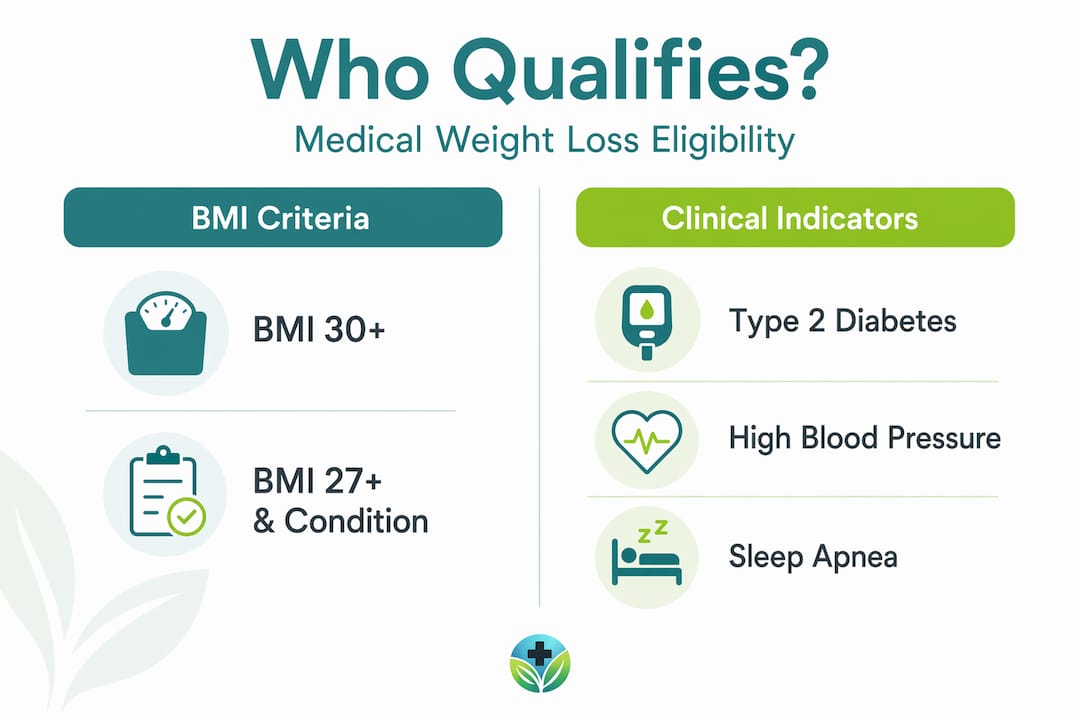
The clearest starting point is BMI. Adults with a BMI of 30 or higher, or a BMI of 27 or higher accompanied by at least one weight-related health condition, meet the general threshold for prescription weight loss medications. Weight-related conditions that count toward that lower BMI threshold include:
- Type 2 diabetes or prediabetes
- Hypertension (high blood pressure)
- High cholesterol or elevated triglycerides
- Obstructive sleep apnea
- Non-alcoholic fatty liver disease
- Osteoarthritis worsened by body weight
Clinical trials show that medication plus lifestyle changes produces 3% to 18% more total body weight lost over one year compared to lifestyle changes alone. That range is wide because outcomes depend heavily on the specific medication, the individual's metabolic profile, and adherence to behavioral recommendations.
What BMI does not capture is body composition, fat distribution, or metabolic function. Two people can share the same BMI and have dramatically different health risks. This is why medical evaluation is the essential first step. A physician reviews lab work, physical findings, and health history to confirm whether the BMI threshold translates into actual clinical need for supervised intervention.
Checking BMI eligibility for GLP-1 medications against current FDA guidelines is a useful starting point before your first consultation. The numbers provide a framework, but the full clinical picture determines whether medical weight loss is the right tool for you.
What medical weight loss programs actually involve
Medical weight loss is not a prescription handed to you at a single appointment. It is a structured, multi-disciplinary process that starts with a comprehensive evaluation including a physical examination, baseline blood work, metabolic assessment, and a lifestyle review. Programs typically involve physicians or nurse practitioners, registered dietitians, and behavioral health counselors working together toward a shared clinical goal.
A well-designed treatment plan includes several key elements:
- Nutritional guidance tailored to your metabolic needs and food preferences
- Physical activity recommendations that account for your current fitness level and any physical limitations
- Medication management with regular monitoring for efficacy and side effects
- Behavioral support addressing eating patterns, stress responses, and long-term habit formation
- Lab follow-up to track metabolic markers like fasting glucose, lipid panels, and liver enzymes
The chronic disease framing matters here. Over 40% of American adults have obesity, and the conditions driving it do not resolve with a short-term diet. Physicians who specialize in weight management treat excess weight the same way they treat hypertension: as a condition requiring ongoing management, not a one-time fix.
Pro Tip: When evaluating a medical weight loss program, ask specifically about what happens after you reach your goal weight. Programs that offer a maintenance phase with continued monitoring and lifestyle coaching are far more likely to produce lasting results than those focused only on the weight-loss phase.
Who benefits most from medical weight loss programs
Identifying who benefits from weight loss programs requires looking beyond the BMI chart. The candidates who tend to experience the most meaningful outcomes share a few characteristics.
- Adults who have made repeated, genuine efforts with diet and exercise without achieving sustainable results
- People managing obesity-related chronic conditions such as type 2 diabetes, hypertension, or sleep apnea where weight reduction would directly improve disease control
- Individuals with hormonal imbalances, such as hypothyroidism or polycystic ovary syndrome, that make weight regulation more physiologically difficult
- Post-bariatric surgery patients experiencing weight regain, where GLP-1 medications can support additional loss
- Adults who have lost weight on unregulated products and want a safer, medically guided alternative
The post-bariatric population is worth a closer look. Bariatric surgery produces significant initial weight loss, but regain is common over time. Trial participants using semaglutide lost an average of 18% of their body weight over 68 weeks compared to minimal changes in the placebo group, even in patients who had already undergone surgery. This makes GLP-1 receptor agonist therapy particularly relevant for this group. You can explore GLP-1 considerations after bariatric surgery to understand how this approach applies to your specific situation.
Medical weight loss is not only for people with extreme obesity or purely cosmetic goals. It is for anyone whose weight is measurably affecting their health and whose body has demonstrated that unsupervised approaches are not sufficient.
One significant misconception worth addressing is the idea that medical weight loss is a shortcut for people unwilling to do the work. The opposite is true. Sophisticated programs address metabolic, hormonal, and psychological factors that unsupervised programs cannot reach. The medical component makes the lifestyle work more effective, not less necessary.
Pro Tip: If you have been prescribed medications for obesity-related conditions and your physician has mentioned that weight loss would improve your management of those conditions, that is a clear clinical signal that you are a medical weight loss candidate.

Comparing medical weight loss with other options
Understanding where medical weight loss fits among your options makes the decision clearer. The table below compares the most common approaches across the factors that matter most.
| Approach | Typical candidate | Key benefits | Limitations |
|---|---|---|---|
| Lifestyle program (diet/exercise only) | BMI under 27, no comorbidities | Low cost, no medication | Limited efficacy for metabolic obesity |
| Medical weight loss (medication + lifestyle) | BMI 27+ with comorbidities or BMI 30+ | Targets metabolism, supervised, scalable | Requires ongoing medical care |
| Bariatric surgery | BMI 35+ with comorbidities or BMI 40+ | Largest initial weight loss | Irreversible, higher procedural risk |
| Emerging GLP-1 therapies (semaglutide, tirzepatide) | BMI 27+ with conditions or BMI 30+ | High efficacy, non-surgical | Long-term commitment, cost |
Standard diet and exercise programs work well for people with mild, uncomplicated excess weight. The limitation appears when weight is tied to metabolic dysfunction. Your body may actively resist weight loss through hormonal mechanisms that no amount of caloric restriction fully overcomes. This is where pharmaceutical support changes the equation.
Bariatric surgery remains the most effective single intervention for severe obesity, particularly at a BMI of 40 or higher. However, medical weight loss programs are often used alongside surgery, both before an operation to reduce surgical risk and after to sustain results. The two approaches are not mutually exclusive.
GLP-1 receptor agonists like semaglutide and tirzepatide occupy a meaningful position in medically supervised weight management. They work by mimicking the GLP-1 hormone that signals satiety to the brain, slowing gastric emptying, and modulating blood sugar. Understanding the science behind GLP-1 and blood sugar regulation can help you evaluate whether this class of medication aligns with your clinical profile.
Pro Tip: Insurance coverage for weight loss medications varies widely by plan. Before starting a program, confirm whether your insurer covers GLP-1 medications, what documentation your physician needs to submit for prior authorization, and what the out-of-pocket cost looks like under various formulary tiers.
How to decide if medical weight loss is right for you
The decision about whether medical weight loss is right for me is ultimately a clinical one, made in partnership with a physician. However, honest self-assessment before that conversation makes the consultation more productive.
Consider the following factors:
- Weight-related health impact. Are you currently managing conditions such as type 2 diabetes, hypertension, sleep apnea, or joint pain that your physician has linked to your weight?
- History of weight loss attempts. Have you made sustained, structured efforts with lifestyle changes over six months or more without achieving durable results?
- Metabolic factors. Has a physician identified insulin resistance, elevated fasting glucose, or a hormonal condition that makes weight regulation more difficult?
- Readiness for long-term commitment. Medical weight loss is not a short program. Patients using GLP-1 medications need to understand the ongoing nature of therapy and the importance of maintenance strategies to prevent weight regain.
- Safety priorities. Unregulated weight loss products from online sources carry real risks including contamination, incorrect dosing, and no clinical follow-up. Licensed programs eliminate these risks through verified pharmacy sourcing and ongoing monitoring.
Once you have worked through these questions, the next step is a comprehensive medical evaluation. Bring a record of your weight history, any current medications, lab results from the past 12 months, and a list of health conditions you are managing. The physician will use this information to determine eligibility and design a plan specific to your biology and goals.
Setting realistic expectations is part of this process. A medically supervised program may not produce dramatic results in the first month. What it should produce is a structured path toward chronic weight management that improves your metabolic health over time, not just the number on the scale.
My perspective on what actually makes medical weight loss work
In my experience working with this topic, the most consistent predictor of success in medical weight loss is not which medication someone takes. It is whether they enter the program understanding that the medication is a tool, not the treatment itself.
I have seen patients who achieve significant weight loss with GLP-1 therapy and then stop medication without any maintenance plan, expecting the results to hold. They rarely do. Failing to integrate lifestyle changes alongside medication is the most predictable route to weight regain. The biology does not change just because you hit your goal weight.
What distinguishes programs that produce lasting outcomes is the quality of behavioral and nutritional support running parallel to the medication. The decision to pursue medical weight loss should be individualized and gradual, with medication adjustments made carefully alongside real habit work.
I would also push back on anyone who frames medical weight loss as taking the easy road. Obesity is a chronic disease driven by metabolic dysregulation, not a lack of effort. Treating it with the full clinical toolkit available is not a shortcut. It is appropriate medicine. The people who do best are those who show up to the behavioral work with the same seriousness they bring to their medication schedule.
— Raymond
Start your medical weight loss journey with Renewmd
Renewmd is a telemedicine platform designed for adults who want medically supervised weight management without the complexity of navigating traditional healthcare systems. Every program is physician-led and includes GLP-1 receptor agonist therapy with Semaglutide or Tirzepatide, provider consultations, lab testing, medication delivery, and ongoing coaching. All care is delivered through licensed U.S. clinicians and pharmacies, with transparent pricing and no hidden fees.
If you are ready to move from self-assessment to clinical action, you can begin your GLP-1 program directly through the platform. Renewmd also offers educational resources on GLP-1 medications and their mechanisms for readers who want to understand the science before their first consultation. For those managing stress alongside weight, Renewmd's integrated GLP-1 care program addresses both physiological and behavioral dimensions of weight management in one plan. Access is nationwide, and the intake process is fully digital from clinical evaluation to medication receipt.
FAQ
Who qualifies for medical weight loss programs?
Adults with a BMI of 30 or higher, or a BMI of 27 or higher with at least one weight-related condition such as type 2 diabetes or hypertension, meet the standard eligibility criteria for prescription weight loss treatment.
Is medical weight loss only for severe obesity?
No. Medical weight loss candidates include adults with moderate excess weight who also have metabolic conditions. Eligibility is based on both BMI and health impact, not weight alone.
How is medical weight loss different from a regular diet plan?
Medical weight loss programs include physician oversight, lab monitoring, and prescription medications that address metabolic and hormonal factors. Standard diet plans do not include clinical evaluation or pharmaceutical support.
Can someone regain weight after stopping medical weight loss treatment?
Yes. Weight regain is common after stopping medication if lifestyle changes are not maintained. Programs that include a structured maintenance phase and continued coaching produce significantly better long-term outcomes.
How do I know if medical weight loss is right for me?
If you have a qualifying BMI, manage obesity-related health conditions, and have not achieved lasting results with unsupervised approaches, a comprehensive medical evaluation is the appropriate next step to confirm candidacy.