

Adjusting a weight loss plan safely is defined as making gradual, evidence-based modifications that protect lean muscle, preserve metabolic rate, and sustain fat loss over time. Clinicians refer to this process as personalized weight loss plan modification, and it applies whether you have hit a plateau, changed your activity level, or started a new medication. The core principle is consistent: safe weight loss targets 0.5 to 2 pounds per week, achieved through a controlled calorie deficit and adequate protein intake. Knowing how to adjust weight loss plan safely means understanding the science behind these numbers, not just following generic advice.
How to adjust your weight loss plan safely
Safe weight loss adjustments follow one clinical rule: the rate of loss matters as much as the total amount lost. The CDC, WHO, and the National Institutes of Health all align on a target of 0.5 to 2 pounds per week, achieved through a daily calorie deficit of 500 to 750 calories. That range exists because it is large enough to produce meaningful fat loss while small enough to protect muscle tissue and micronutrient status.
Losing weight faster than 2 pounds per week carries real clinical risks. Faster weight loss is directly linked to muscle loss, fatigue, and nutrient deficiencies. Those consequences are not cosmetic. Muscle loss slows your basal metabolic rate, making future weight management harder.
"Weight loss plans should be viewed as living documents, adapted carefully with ongoing medical oversight." — NIDDK
Slow, steady fat loss also produces better long-term adherence. When your body is not under extreme caloric stress, hunger hormones like ghrelin remain more stable, making it easier to stay consistent. That consistency is what separates a plan that works for six months from one that works for six years.
The risks of rapid weight loss include:
- Lean muscle breakdown, which lowers resting metabolic rate
- Micronutrient deficiencies, particularly in iron, B12, and magnesium
- Fatigue and reduced physical performance
- Gallstone formation, which increases with very low calorie diets
- Metabolic adaptation, where the body reduces energy expenditure to compensate
How do you assess your current plan before changing it?
Before making any modifications, you need a clear picture of where your plan currently stands. The clinical term for this baseline evaluation is total daily energy expenditure (TDEE) assessment. TDEE combines your basal metabolic rate with the calories burned through daily movement, exercise, and digestion.
- Calculate your TDEE. Use a validated calculator such as those based on the Mifflin-St Jeor equation, which accounts for age, sex, height, weight, and activity level. This gives you a reliable calorie target to work from.
- Track your current intake for 7 to 14 days. Apps like MyFitnessPal, Cronometer, or Lose It! provide detailed macronutrient breakdowns. Most people underestimate their intake by 20% or more without tracking.
- Evaluate protein and fiber sufficiency. Protein supports muscle retention during a deficit. Fiber supports satiety and gut health. Both are commonly under-consumed when people cut calories.
- Monitor body composition, not just scale weight. A DEXA scan or bioelectrical impedance device gives you a fat-to-muscle ratio. Scale weight alone can mislead you, especially when you are gaining muscle while losing fat.
- Audit your habits for 2 to 4 weeks before making drastic changes. Weight loss plateaus often stem from habit creep, which is the gradual, unconscious drift toward larger portions or less movement. Identifying that drift first prevents unnecessary over-correction.
Pro Tip: Before cutting calories further, spend two weeks logging every meal without changing anything. You will almost always find the gap between what you think you eat and what you actually eat.
What are the safest ways to adjust calorie intake?
Modifying calorie intake is the most direct lever in any weight loss plan. The key is doing it incrementally, not drastically. Deficits beyond 1,000 calories per day consistently produce muscle loss and metabolic slowdown, regardless of how much protein you eat.
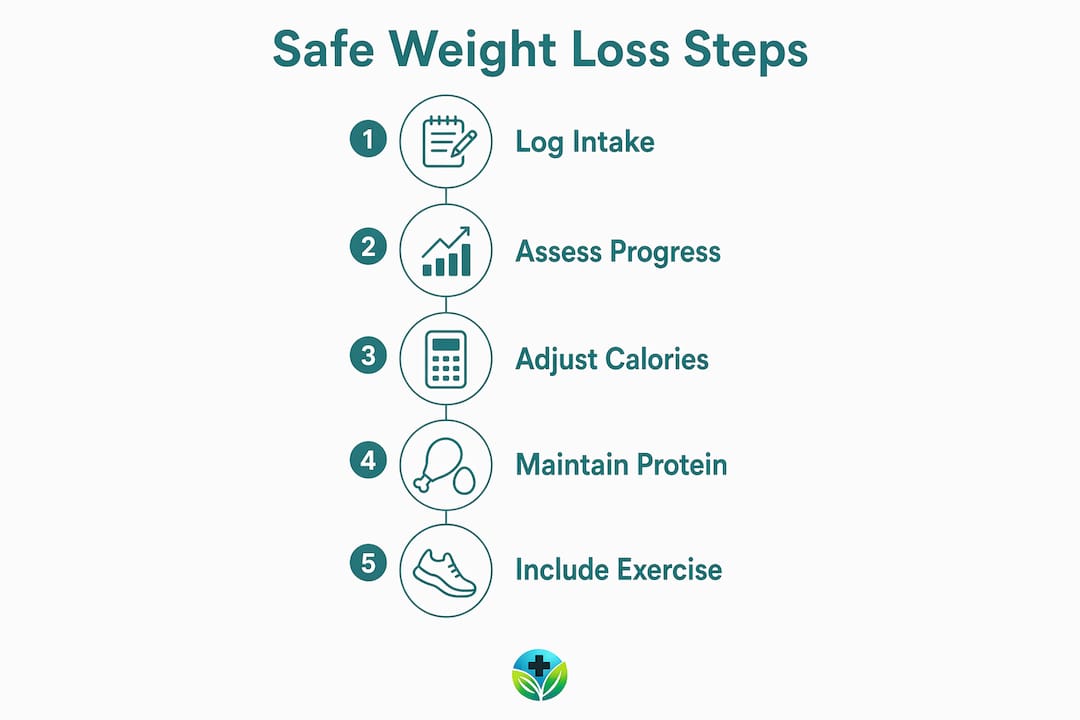
The table below compares common calorie adjustment approaches by safety and effectiveness:
| Approach | Calorie Change | Safety Level | Best For |
|---|---|---|---|
| Moderate deficit | 500–750 calories/day below TDEE | High | Steady fat loss with muscle retention |
| Aggressive deficit | 750–1,000 calories/day below TDEE | Moderate | Short-term use with physician oversight |
| Very low calorie diet | Below 800 calories/day | Low | Medical supervision only |
| Reverse dieting | Add ~100 calories/day for 1–2 weeks | High | Rebuilding metabolism after prolonged deficit |
Protein intake is the most important macronutrient to protect during any calorie reduction. Target 1.2 to 1.6 grams per kilogram of ideal body weight. For a 170-pound adult, that translates to roughly 93 to 124 grams of protein per day. Sources like chicken breast, Greek yogurt, eggs, cottage cheese, and legumes make hitting that target practical.
Reverse dieting is a technique worth knowing if you have been in a prolonged deficit. It involves gradually increasing calories by about 100 per day over one to two weeks. This approach helps restore metabolic rate without triggering rapid fat regain. It is particularly useful after aggressive cuts or extended dieting phases.
Avoid fad diets that eliminate entire food groups. Balanced fiber-rich carbohydrates from sources like oats, sweet potatoes, and lentils support gut health and provide sustained energy. Healthy fats from avocado, olive oil, and nuts support hormonal function. Cutting either group entirely creates nutritional gaps that compound over time.
Pro Tip: Change one dietary variable at a time. If you reduce carbohydrates and increase protein simultaneously, you cannot identify which change is driving results. Isolate variables to build a flexible plan that you can actually refine.
How should you modify exercise when adjusting your plan?
Exercise modification is the second major lever in safe weight loss adjustments. Combining diet and exercise produces better results than either approach alone, because calories burned through exercise are frequently overestimated when used as the sole strategy.

The American Heart Association recommends at least 200 minutes per week of combined moderate aerobic activity and resistance training to overcome plateaus and support metabolic health. That breaks down to roughly 30 minutes per day across most days of the week, which is achievable for most adults.
Changing your exercise routine safely involves these principles:
- Add resistance training first. Strength training preserves lean muscle during a calorie deficit and increases basal metabolic rate. Programs like StrongLifts 5x5 or NASM-designed progressive overload routines are well-structured starting points.
- Increase intensity or frequency gradually. Adding no more than 10% to your weekly training volume per week reduces injury risk significantly.
- Incorporate NEAT (non-exercise activity thermogenesis). NEAT refers to all movement outside formal workouts: walking to meetings, taking stairs, standing at a desk. Small increases in NEAT, like adding 3,000 steps per day, can add up to 150 to 200 extra calories burned daily.
- Use platforms like HollyFit for science-backed exercise programming that supports sustainable weight management without overtraining.
- Track recovery as carefully as training. Sleep quality and rest days directly affect cortisol levels, which influence fat storage and muscle retention.
Muscle-preserving resistance training is not optional during weight loss. It is the primary defense against metabolic slowdown. Adults who skip strength work during a calorie deficit lose proportionally more muscle than those who include it.
What if you are using glp-1 medications?
GLP-1 receptor agonists like Semaglutide and Tirzepatide change the weight loss equation in meaningful ways. These medications reduce appetite by acting on receptors in the hypothalamus, the brain region that regulates hunger and satiety. Faster weight loss becomes possible, but it requires closer clinical oversight, not less.
Key considerations for adjusting your plan while on GLP-1 therapy include:
- Protein intake becomes more critical. The recommended target of 1.2 to 1.6 g/kg of ideal body weight applies specifically to patients on GLP-1 medications, where appetite suppression can make it easy to under-eat protein.
- Monitor body composition, not just the scale. Rapid weight loss on GLP-1s can include muscle loss if nutrition and resistance training are not prioritized.
- Dose titration must be coordinated with a physician. Adjusting medication dose without clinical guidance can accelerate weight loss beyond safe rates.
- Lab monitoring supports safety. Tracking metabolic markers, kidney function, and nutrient levels helps catch deficiencies early.
- Unsupervised rapid adjustments carry real risk. Patients on GLP-1s require clinical monitoring, including body composition assessment and structured dose titration, to maintain safe progress.
The medication does not replace the fundamentals. Nutrition quality, resistance training, and consistent monitoring remain the foundation of any safe plan modification.
Key takeaways
Safe weight loss plan modification requires controlled calorie deficits, adequate protein intake, and combined aerobic and resistance training to protect muscle and sustain fat loss long-term.
| Point | Details |
|---|---|
| Target 0.5–2 lbs per week | A 500–750 calorie daily deficit produces safe, sustainable fat loss without muscle damage. |
| Audit before adjusting | Track intake and habits for 2–4 weeks before changing anything to identify real gaps. |
| Protect protein intake | Aim for 1.2–1.6 g/kg of ideal body weight to preserve lean muscle during any calorie cut. |
| Combine diet and exercise | Aerobic and resistance training together outperform either approach used alone. |
| Change one variable at a time | Isolating changes lets you identify what is actually working and prevents over-correction. |
Why most people adjust their plans the wrong way
After years of reviewing weight management research and working alongside clinicians, one pattern stands out clearly: most people adjust their plans by doing more of everything at once. They cut calories further, add more cardio, eliminate carbohydrates, and start a new supplement, all in the same week. Then, when something works or fails, they have no idea which change made the difference.
Adherence is the ultimate success metric in weight management. A plan that is 80% optimal but 100% sustainable will always outperform a plan that is theoretically perfect but practically impossible to follow. That is not a motivational statement. It is what the data consistently shows.
The most underrated adjustment strategy is restraint. Changing one variable, waiting two to three weeks, and measuring the outcome gives you real information. It also prevents the psychological burnout that comes from overhauling everything simultaneously. Weight loss plans are not fixed documents. They are frameworks that should evolve with your body, your schedule, and your goals. The best weight management strategies treat the plan as a feedback loop, not a prescription.
Seek professional guidance when you are uncertain. That is not a sign of weakness. It is the most efficient path to results that last.
— Raymond
How Renewmd supports safe, medically supervised plan adjustments
Renewmd offers a fully integrated telemedicine program designed for adults who need expert oversight when modifying their weight loss approach. Through Renewmd's medical weight loss telemedicine platform, licensed U.S. clinicians build personalized calorie and exercise plans, supervise GLP-1 medications like Semaglutide and Tirzepatide, and monitor body composition and lab results throughout your program. Every adjustment is guided by clinical data, not guesswork. Renewmd includes provider consultations, medication delivery, lab testing, and coaching in one transparent program, with no hidden fees. If you are ready to modify your plan with the safety and precision it deserves, Renewmd provides the medical structure to do it right.
FAQ
What is a safe rate of weight loss per week?
A safe rate of weight loss is 0.5 to 2 pounds per week, achieved through a daily calorie deficit of 500 to 750 calories. Losing faster than this increases the risk of muscle loss and nutrient deficiencies.
How do i know when to adjust my weight loss plan?
Adjust your plan when progress stalls for two to four consecutive weeks despite consistent adherence, or when your activity level, health status, or medication changes significantly. Audit your habits before making changes to confirm the plateau is real.
Can i adjust my calorie intake without losing muscle?
Yes, by maintaining protein intake at 1.2 to 1.6 grams per kilogram of ideal body weight and including resistance training at least two to three times per week. Protein and strength work together are the primary defenses against muscle loss during a calorie deficit.
Is it safe to adjust my plan while on glp-1 medications?
Adjustments are safe when made under physician supervision. GLP-1 receptor agonists like Semaglutide and Tirzepatide require coordinated dose titration, protein monitoring, and body composition tracking to prevent muscle loss and ensure safe progress rates.
What is reverse dieting and when should i use it?
Reverse dieting is the practice of gradually increasing calorie intake by approximately 100 calories per day over one to two weeks to restore metabolic rate after a prolonged deficit. Use it when you have been in an aggressive calorie cut for an extended period and notice fatigue, stalled progress, or reduced performance.